Misinformation, Propaganda, and the Struggle for Control Over Cosmic Projects / Question 1
ASX-24-021-Q01 · Part II · Interstellar Architecture · Chapter 4: The Transplanetary Stage
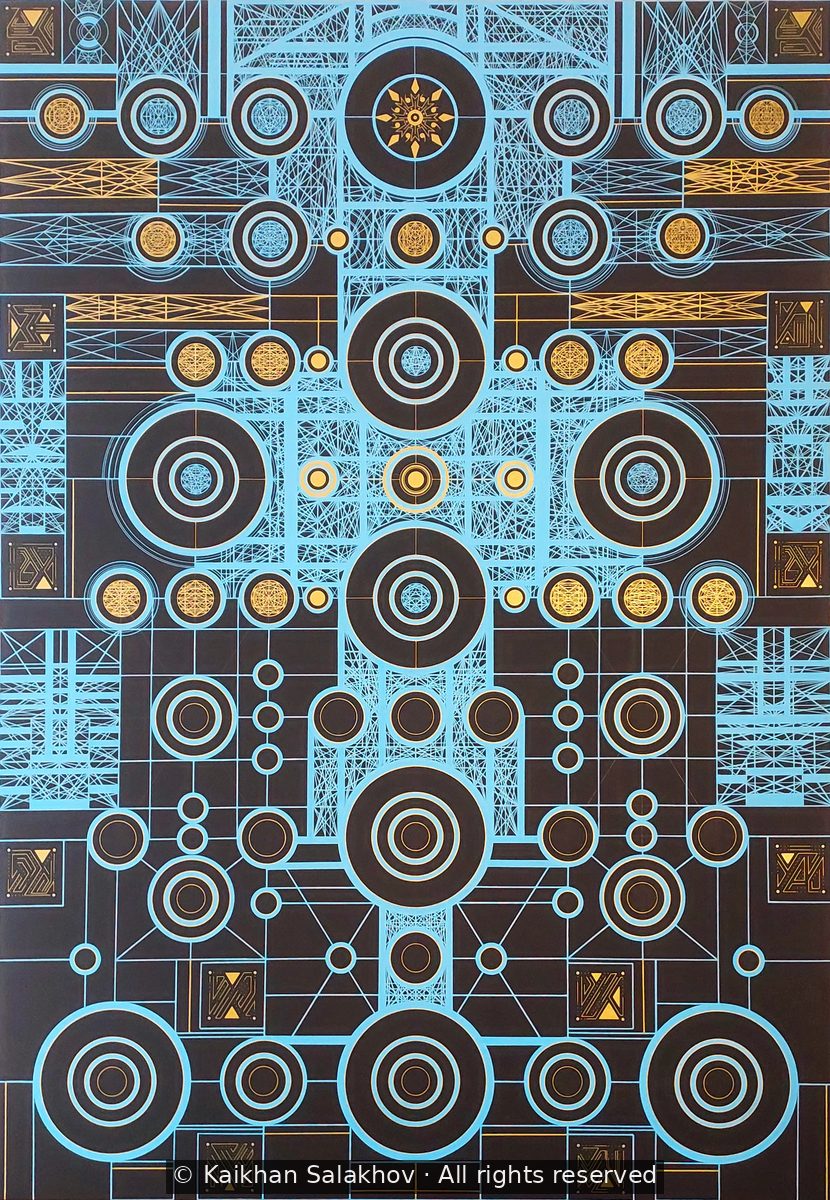
Technologies Across Life Forms
Cooperation, exchange and incompatibility among technical systems shaped by different environments, cognitive architectures and institutions.
Read the full painting meaning →This question examines data integrity. Altered, inaccessible, or misleading information can undermine decisions across connected systems. Its surrounding discussion also concerns synthetic media: fabricated recordings and personalized content can disrupt shared standards for establishing what occurred.
The analytical issue is how these conditions affect message access, authenticity, interpretation, delay, and the integrity of exchanged information. The node treats the potential dysfunction as an open problem: its identification does not demonstrate that the anticipated outcome will occur or that an assumed technology is feasible.
Main problem
Altered, inaccessible, or misleading information can undermine decisions across connected systems.
Central question
How could information provenance and integrity be maintained without making verification a mechanism of control?
Analytical connections
Communication
For this data integrity problem, communication examines message access, authenticity, interpretation, delay, and the integrity of exchanged information.
Technology
For this data integrity problem, technology examines the proposed mechanism, technical dependencies, control interfaces, and failure conditions.
Resource Allocation / Economy
For this data integrity problem, resource allocation / economy examines ownership, access to scarce inputs, dependency, and incentives affecting allocation.
Environmental Systems
For this data integrity problem, environmental systems examines environmental dependencies, unintended ecological effects, and conditions required for habitation.
Original source prose and question wording remain in the book. The summary and central question are analytical restatements; the author’s complete wording remains in the cited source.
ASX positions and scientific context
- P4 scope
- C3 thematic relevance
- C position: not established
- Speculative scenario
Physical scope and coordination themes describe fields of inquiry. They do not establish a measured capability or scientific validation.
Cross-domain dependencies
Conditional analytical comparisons; question-level access follows the parent discussion.
Deception and information integrity
Manipulated information can alter trust, resource decisions, collective memory and political legitimacy. The links compare this mechanism across domains; quantum or photonic deception retains the scientific limitations of the cited scenario.
ASX-14-011: Information Splits and Bubbles, pp. 40–40; ASX-24-021: Misinformation, Propaganda, and the Struggle for Control Over Cosmic Projects, pp. 131–132.
Open ASX-14-011Control of communication infrastructure / Resource access and concentration of power / Long-term survival and intervention / Infrastructure and strategic conflict
An operator who controls access, routing or records can change what other institutions can verify and communicate. Political safeguards and ownership rules in turn determine who can exercise this control.
Unequal access to energy, technology, transport or information can create dependence and unequal bargaining power. Institutions and dominant operators may reinforce or reduce the same inequalities through allocation and access rules.
Assumptions about long-term environmental change influence preservation strategies and resource commitments. These scenarios compare choices under uncertain boundary conditions; proposed control over universal or multiversal processes is not established engineering.
Infrastructure can become both a strategic asset and a target. Conflict may disrupt energy, transport or communications, while dependence on those services can be exploited to constrain decisions.
ASX-24-021: Misinformation, Propaganda, and the Struggle for Control Over Cosmic Projects, pp. 131–132; ASX-54-003: Adaptive and Inclusive Governance Systems. Integrating Stages of Consciousness into Transgalactic Expansion, pp. 471–473.
Open ASX-54-003Control of communication infrastructure / Deception and information integrity / Resource access and concentration of power / Infrastructure and strategic conflict
An operator who controls access, routing or records can change what other institutions can verify and communicate. Political safeguards and ownership rules in turn determine who can exercise this control.
Manipulated information can alter trust, resource decisions, collective memory and political legitimacy. The links compare this mechanism across domains; quantum or photonic deception retains the scientific limitations of the cited scenario.
Unequal access to energy, technology, transport or information can create dependence and unequal bargaining power. Institutions and dominant operators may reinforce or reduce the same inequalities through allocation and access rules.
Infrastructure can become both a strategic asset and a target. Conflict may disrupt energy, transport or communications, while dependence on those services can be exploited to constrain decisions.
ASX-24-021: Misinformation, Propaganda, and the Struggle for Control Over Cosmic Projects, pp. 131–132; ASX-74-002: Transplanetary Proxy Wars — The Times of the Fading Terran Hegemony and The Disintegration Into Galactic Civilization, pp. 718–720.
Open ASX-74-002Long-term survival and intervention / Infrastructure and strategic conflict
Assumptions about long-term environmental change influence preservation strategies and resource commitments. These scenarios compare choices under uncertain boundary conditions; proposed control over universal or multiversal processes is not established engineering.
Infrastructure can become both a strategic asset and a target. Conflict may disrupt energy, transport or communications, while dependence on those services can be exploited to constrain decisions.
ASX-14-020: The Avoidance of a Dark Future. An Ethical Blueprint for a Unified Civilization, pp. 42–42; ASX-24-021: Misinformation, Propaganda, and the Struggle for Control Over Cosmic Projects, pp. 131–132.
Open ASX-14-020Control of communication infrastructure / Resource access and concentration of power
An operator who controls access, routing or records can change what other institutions can verify and communicate. Political safeguards and ownership rules in turn determine who can exercise this control.
Unequal access to energy, technology, transport or information can create dependence and unequal bargaining power. Institutions and dominant operators may reinforce or reduce the same inequalities through allocation and access rules.
ASX-14-017: Spiritual Cleansing. The Purge of Divergent Beliefs, pp. 41–42; ASX-24-021: Misinformation, Propaganda, and the Struggle for Control Over Cosmic Projects, pp. 131–132.
Open ASX-14-017Control of communication infrastructure / Infrastructure and strategic conflict
An operator who controls access, routing or records can change what other institutions can verify and communicate. Political safeguards and ownership rules in turn determine who can exercise this control.
Infrastructure can become both a strategic asset and a target. Conflict may disrupt energy, transport or communications, while dependence on those services can be exploited to constrain decisions.
ASX-24-021: Misinformation, Propaganda, and the Struggle for Control Over Cosmic Projects, pp. 131–132; ASX-44-005: Interstellar Communication and Coordination. Bridging the Transplanetary Divide, pp. 330–330.
Open ASX-44-005Control of communication infrastructure / Deception and information integrity / Resource access and concentration of power
An operator who controls access, routing or records can change what other institutions can verify and communicate. Political safeguards and ownership rules in turn determine who can exercise this control.
Manipulated information can alter trust, resource decisions, collective memory and political legitimacy. The links compare this mechanism across domains; quantum or photonic deception retains the scientific limitations of the cited scenario.
Unequal access to energy, technology, transport or information can create dependence and unequal bargaining power. Institutions and dominant operators may reinforce or reduce the same inequalities through allocation and access rules.
ASX-24-021: Misinformation, Propaganda, and the Struggle for Control Over Cosmic Projects, pp. 131–132; ASX-34-008: The Rise of Transplanetary Digital Ghettos, pp. 256–258.
Open ASX-34-008Control of communication infrastructure / Deception and information integrity / Resource access and concentration of power / Infrastructure and strategic conflict
An operator who controls access, routing or records can change what other institutions can verify and communicate. Political safeguards and ownership rules in turn determine who can exercise this control.
Manipulated information can alter trust, resource decisions, collective memory and political legitimacy. The links compare this mechanism across domains; quantum or photonic deception retains the scientific limitations of the cited scenario.
Unequal access to energy, technology, transport or information can create dependence and unequal bargaining power. Institutions and dominant operators may reinforce or reduce the same inequalities through allocation and access rules.
Infrastructure can become both a strategic asset and a target. Conflict may disrupt energy, transport or communications, while dependence on those services can be exploited to constrain decisions.
ASX-14-019: The Role of Technology in Facilitating and Preventing Atrocities, pp. 42–42; ASX-24-021: Misinformation, Propaganda, and the Struggle for Control Over Cosmic Projects, pp. 131–132.
Open ASX-14-019Control of communication infrastructure / Deception and information integrity / Resource access and concentration of power / Infrastructure and strategic conflict
An operator who controls access, routing or records can change what other institutions can verify and communicate. Political safeguards and ownership rules in turn determine who can exercise this control.
Manipulated information can alter trust, resource decisions, collective memory and political legitimacy. The links compare this mechanism across domains; quantum or photonic deception retains the scientific limitations of the cited scenario.
Unequal access to energy, technology, transport or information can create dependence and unequal bargaining power. Institutions and dominant operators may reinforce or reduce the same inequalities through allocation and access rules.
Infrastructure can become both a strategic asset and a target. Conflict may disrupt energy, transport or communications, while dependence on those services can be exploited to constrain decisions.
ASX-24-021: Misinformation, Propaganda, and the Struggle for Control Over Cosmic Projects, pp. 131–132; ASX-34-003: Maintaining Simulation Integrity using Quantum Communication Technologies, pp. 248–250.
Open ASX-34-003Control of communication infrastructure / Deception and information integrity / Resource access and concentration of power / Infrastructure and strategic conflict
An operator who controls access, routing or records can change what other institutions can verify and communicate. Political safeguards and ownership rules in turn determine who can exercise this control.
Manipulated information can alter trust, resource decisions, collective memory and political legitimacy. The links compare this mechanism across domains; quantum or photonic deception retains the scientific limitations of the cited scenario.
Unequal access to energy, technology, transport or information can create dependence and unequal bargaining power. Institutions and dominant operators may reinforce or reduce the same inequalities through allocation and access rules.
Infrastructure can become both a strategic asset and a target. Conflict may disrupt energy, transport or communications, while dependence on those services can be exploited to constrain decisions.
ASX-24-021: Misinformation, Propaganda, and the Struggle for Control Over Cosmic Projects, pp. 131–132; ASX-44-019: Corporate Espionage and Hacking AI in a Competitive Transplanetary Market, pp. 340–342.
Open ASX-44-019Deception and information integrity / Resource access and concentration of power / Long-term survival and intervention / Infrastructure and strategic conflict
Manipulated information can alter trust, resource decisions, collective memory and political legitimacy. The links compare this mechanism across domains; quantum or photonic deception retains the scientific limitations of the cited scenario.
Unequal access to energy, technology, transport or information can create dependence and unequal bargaining power. Institutions and dominant operators may reinforce or reduce the same inequalities through allocation and access rules.
Assumptions about long-term environmental change influence preservation strategies and resource commitments. These scenarios compare choices under uncertain boundary conditions; proposed control over universal or multiversal processes is not established engineering.
Infrastructure can become both a strategic asset and a target. Conflict may disrupt energy, transport or communications, while dependence on those services can be exploited to constrain decisions.
ASX-24-021: Misinformation, Propaganda, and the Struggle for Control Over Cosmic Projects, pp. 131–132; ASX-54-004: Cosmic Diversity. The Development of Civilization within the Wilber-Combs Lattice, pp. 473–475.
Open ASX-54-004Control of communication infrastructure / Deception and information integrity / Resource access and concentration of power / Infrastructure and strategic conflict
An operator who controls access, routing or records can change what other institutions can verify and communicate. Political safeguards and ownership rules in turn determine who can exercise this control.
Manipulated information can alter trust, resource decisions, collective memory and political legitimacy. The links compare this mechanism across domains; quantum or photonic deception retains the scientific limitations of the cited scenario.
Unequal access to energy, technology, transport or information can create dependence and unequal bargaining power. Institutions and dominant operators may reinforce or reduce the same inequalities through allocation and access rules.
Infrastructure can become both a strategic asset and a target. Conflict may disrupt energy, transport or communications, while dependence on those services can be exploited to constrain decisions.
ASX-24-021: Misinformation, Propaganda, and the Struggle for Control Over Cosmic Projects, pp. 131–132; ASX-74-001: Cosmogeopolitical Games of the Interstellar Great Powers at the Transplanetary Stage. Play at the Level of Billions of Star Systems, pp. 716–718.
Open ASX-74-001Control of communication infrastructure / Resource access and concentration of power / Infrastructure and strategic conflict
An operator who controls access, routing or records can change what other institutions can verify and communicate. Political safeguards and ownership rules in turn determine who can exercise this control.
Unequal access to energy, technology, transport or information can create dependence and unequal bargaining power. Institutions and dominant operators may reinforce or reduce the same inequalities through allocation and access rules.
Infrastructure can become both a strategic asset and a target. Conflict may disrupt energy, transport or communications, while dependence on those services can be exploited to constrain decisions.
ASX-24-021: Misinformation, Propaganda, and the Struggle for Control Over Cosmic Projects, pp. 131–132; ASX-64-002: Infrastructure Maintenance and Repair Challenges in a Multispecies Galaxy, pp. 595–596.
Open ASX-64-002Control of communication infrastructure / Resource access and concentration of power / Infrastructure and strategic conflict
An operator who controls access, routing or records can change what other institutions can verify and communicate. Political safeguards and ownership rules in turn determine who can exercise this control.
Unequal access to energy, technology, transport or information can create dependence and unequal bargaining power. Institutions and dominant operators may reinforce or reduce the same inequalities through allocation and access rules.
Infrastructure can become both a strategic asset and a target. Conflict may disrupt energy, transport or communications, while dependence on those services can be exploited to constrain decisions.
ASX-24-021: Misinformation, Propaganda, and the Struggle for Control Over Cosmic Projects, pp. 131–132; ASX-64-003: Adaptive Design-Military Technologies in Multispecies Galactic Societies. Balancing Diversity, Functionality, and Ethics, pp. 596–598.
Open ASX-64-003Deception and information integrity / Resource access and concentration of power / Long-term survival and intervention
Manipulated information can alter trust, resource decisions, collective memory and political legitimacy. The links compare this mechanism across domains; quantum or photonic deception retains the scientific limitations of the cited scenario.
Unequal access to energy, technology, transport or information can create dependence and unequal bargaining power. Institutions and dominant operators may reinforce or reduce the same inequalities through allocation and access rules.
Assumptions about long-term environmental change influence preservation strategies and resource commitments. These scenarios compare choices under uncertain boundary conditions; proposed control over universal or multiversal processes is not established engineering.
ASX-24-021: Misinformation, Propaganda, and the Struggle for Control Over Cosmic Projects, pp. 131–132; ASX-74-009: Cosmic Self-Correction. Invisible Limits to Galactic Ambition at the Transplanetary Phase, pp. 731–733.
Open ASX-74-009Associated paintings
- Astral Space Exploration: Renovatio
- Astral Space Exploration: The Cosmic Engineering. Part I
- Astral Space Exploration: The Cosmic Engineering. Part II
- Astral Space Exploration: The Cosmic Engineering. Part III
- Astral Space Exploration: The Cosmic Engineering. Part IV
- Technologies Across Life Forms
- Cosmogeopolitics Across Life Forms
Source organization
- part of: ASX-24-021
Citation
Kaikhan Salakhov (2024). Astral Space Exploration: The Cosmic Renaissance: The Fundamental Principles of Cosmocybernetics. Part II, “Astral Space Exploration Grid: Interstellar Architecture Through Stages of Development”; Chapter 4, “The Transplanetary Stage”; discussion: “Misinformation, Propaganda, and the Struggle for Control Over Cosmic Projects”; question 1, p. 132. Page references follow the supplied 852-page edition; pagination in other editions may differ. Library reference: ASX-24-021-Q01. https://www.asxgrid.app/library/records/ASX-24-021-Q01.html
Page references follow the supplied 852-page edition; pagination in other editions may differ..
Book publication: . Map created: . Map revised: .