Exploiting Unchecked Galaxies. Diverse Approaches and Potential Conflicts at the Multigalactic Stage / Question 3
ASX-26-020-Q03 · Part II · Interstellar Architecture · Chapter 6: The Multigalactic Stage
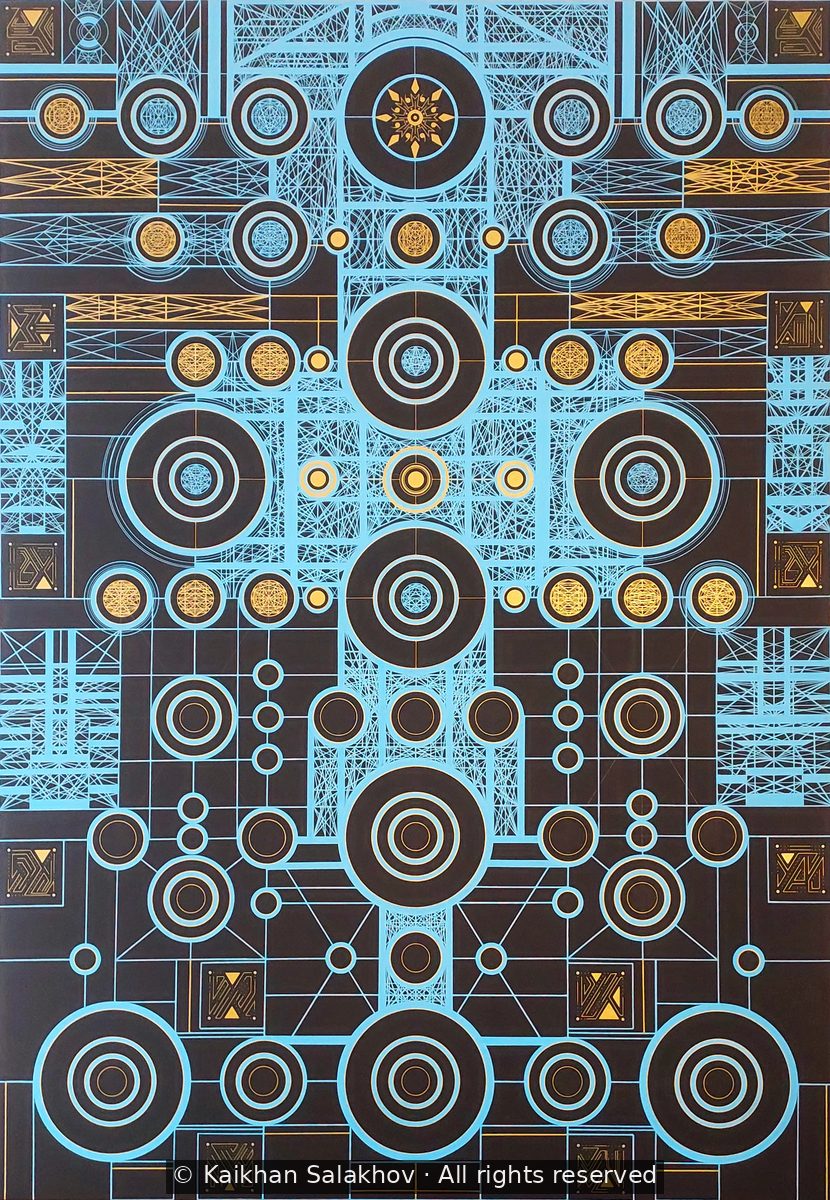
Technologies Across Life Forms
Cooperation, exchange and incompatibility among technical systems shaped by different environments, cognitive architectures and institutions.
Read the full painting meaning →This question examines resource access. Unequal access to essential resources can create dependence and constrain meaningful participation. Its surrounding discussion also concerns conscious experience: the discussion depends on how experience is attributed to beings whose internal states may be inaccessible.
The analytical issue is how these conditions affect the proposed mechanism, technical dependencies, control interfaces, and failure conditions. The node treats the potential dysfunction as an open problem: its identification does not demonstrate that the anticipated outcome will occur or that an assumed technology is feasible.
Main problem
Unequal access to essential resources can create dependence and constrain meaningful participation.
Central question
What allocation arrangements would address scarcity without concentrating control over dependent populations?
Analytical connections
Technology
For this resource access problem, technology examines the proposed mechanism, technical dependencies, control interfaces, and failure conditions.
Resource Allocation / Economy
For this resource access problem, resource allocation / economy examines ownership, access to scarce inputs, dependency, and incentives affecting allocation.
Ethics / Moral Consideration
For this resource access problem, ethics / moral consideration examines consent, exposure to harm, unequal treatment, and the scope of moral protection.
Reliability / Systemic Resilience
For this resource access problem, reliability / systemic resilience examines cascading failure, redundant capacity, recovery procedures, and continuity of essential functions.
Contact Disposition
For this resource access problem, contact disposition examines relations between groups, conflict escalation, cooperation, and responses to unfamiliar agents.
Physical Capability (Reach)
For this resource access problem, physical capability (reach) examines the spatial boundary of operations, dependence between locations, and delays affecting intervention.
Consciousness / Psychology
For this resource access problem, consciousness / psychology examines subjective experience, identity, agency, and the psychological effects of the scenario.
Governance
For this resource access problem, governance examines decision rights, oversight, institutional responsibility, and mechanisms for challenging authority.
Environmental Systems
For this resource access problem, environmental systems examines environmental dependencies, unintended ecological effects, and conditions required for habitation.
Temporality
For this resource access problem, temporality examines decision horizons, asynchronous experience, institutional duration, and long-term commitments.
Original source prose and question wording remain in the book. The summary and central question are analytical restatements; the author’s complete wording remains in the cited source.
ASX positions and scientific context
- P4 scope
- P6 scope
- C2 thematic relevance
- C3 thematic relevance
- C position: not established
- Speculative scenario
Physical scope and coordination themes describe fields of inquiry. They do not establish a measured capability or scientific validation.
Cross-domain dependencies
Conditional analytical comparisons; question-level access follows the parent discussion.
Knowledge and cultural continuity / Infrastructure and strategic conflict / System failure and recovery
Continuity depends on storage, interpretation, education and communication. Changes to those systems can alter shared knowledge, while communities and institutions decide which records and practices are preserved or excluded.
Infrastructure can become both a strategic asset and a target. Conflict may disrupt energy, transport or communications, while dependence on those services can be exploited to constrain decisions.
A technical failure can propagate into dependent services and institutions when redundancy and recovery are insufficient. The comparison preserves the distinction between ordinary reliability problems and the speculative mechanisms in individual source scenarios.
ASX-16-006: Multigalactic Heresy on the Rise as Transmission Failures Plague Quantum Networks of Communication, pp. 53–53; ASX-26-020: Exploiting Unchecked Galaxies. Diverse Approaches and Potential Conflicts at the Multigalactic Stage, pp. 163–164.
Open ASX-16-006Resource access and concentration of power / Regulation across heterogeneous systems / Infrastructure and strategic conflict / System failure and recovery
Unequal access to energy, technology, transport or information can create dependence and unequal bargaining power. Institutions and dominant operators may reinforce or reduce the same inequalities through allocation and access rules.
Different legal and regulatory assumptions can obstruct cooperation, maintenance, migration or technology exchange. The comparison concerns compatibility of authority and obligations, not proof that one legal design is universally appropriate.
Infrastructure can become both a strategic asset and a target. Conflict may disrupt energy, transport or communications, while dependence on those services can be exploited to constrain decisions.
A technical failure can propagate into dependent services and institutions when redundancy and recovery are insufficient. The comparison preserves the distinction between ordinary reliability problems and the speculative mechanisms in individual source scenarios.
ASX-26-020: Exploiting Unchecked Galaxies. Diverse Approaches and Potential Conflicts at the Multigalactic Stage, pp. 163–164; ASX-36-004: Technological Failures and Quantum Anomalies, pp. 277–279.
Open ASX-36-004Ecological intervention and habitation / Knowledge and cultural continuity / Infrastructure and strategic conflict / System failure and recovery
Habitats and life-support systems depend on environmental conditions; engineering and resource extraction can change those conditions. Institutional priorities determine acceptable interventions, whose consequences can then alter settlement viability and social choices.
Continuity depends on storage, interpretation, education and communication. Changes to those systems can alter shared knowledge, while communities and institutions decide which records and practices are preserved or excluded.
Infrastructure can become both a strategic asset and a target. Conflict may disrupt energy, transport or communications, while dependence on those services can be exploited to constrain decisions.
A technical failure can propagate into dependent services and institutions when redundancy and recovery are insufficient. The comparison preserves the distinction between ordinary reliability problems and the speculative mechanisms in individual source scenarios.
ASX-26-020: Exploiting Unchecked Galaxies. Diverse Approaches and Potential Conflicts at the Multigalactic Stage, pp. 163–164; ASX-46-008: Multigalactic Exploration, Colonization, and Infrastructure Using Robotics, pp. 390–392.
Open ASX-46-008Ecological intervention and habitation / Knowledge and cultural continuity / Resource access and concentration of power / Regulation across heterogeneous systems / Infrastructure and strategic conflict / System failure and recovery
Habitats and life-support systems depend on environmental conditions; engineering and resource extraction can change those conditions. Institutional priorities determine acceptable interventions, whose consequences can then alter settlement viability and social choices.
Continuity depends on storage, interpretation, education and communication. Changes to those systems can alter shared knowledge, while communities and institutions decide which records and practices are preserved or excluded.
Unequal access to energy, technology, transport or information can create dependence and unequal bargaining power. Institutions and dominant operators may reinforce or reduce the same inequalities through allocation and access rules.
Different legal and regulatory assumptions can obstruct cooperation, maintenance, migration or technology exchange. The comparison concerns compatibility of authority and obligations, not proof that one legal design is universally appropriate.
Infrastructure can become both a strategic asset and a target. Conflict may disrupt energy, transport or communications, while dependence on those services can be exploited to constrain decisions.
A technical failure can propagate into dependent services and institutions when redundancy and recovery are insufficient. The comparison preserves the distinction between ordinary reliability problems and the speculative mechanisms in individual source scenarios.
ASX-26-020: Exploiting Unchecked Galaxies. Diverse Approaches and Potential Conflicts at the Multigalactic Stage, pp. 163–164; ASX-66-001: Xenoanthropology at the Multicellular Intergalactic Stage. The Complexity of Intergalactic Civilizations, pp. 633–636.
Open ASX-66-001Ecological intervention and habitation / Knowledge and cultural continuity / Infrastructure and strategic conflict / System failure and recovery
Habitats and life-support systems depend on environmental conditions; engineering and resource extraction can change those conditions. Institutional priorities determine acceptable interventions, whose consequences can then alter settlement viability and social choices.
Continuity depends on storage, interpretation, education and communication. Changes to those systems can alter shared knowledge, while communities and institutions decide which records and practices are preserved or excluded.
Infrastructure can become both a strategic asset and a target. Conflict may disrupt energy, transport or communications, while dependence on those services can be exploited to constrain decisions.
A technical failure can propagate into dependent services and institutions when redundancy and recovery are insufficient. The comparison preserves the distinction between ordinary reliability problems and the speculative mechanisms in individual source scenarios.
ASX-26-020: Exploiting Unchecked Galaxies. Diverse Approaches and Potential Conflicts at the Multigalactic Stage, pp. 163–164; ASX-56-009: Disaster Recovery Mechanism Design in a Multigalactic Setup. A Balance between Conflicting Priorities, Capabilities, and Philosophies, pp. 518–521.
Open ASX-56-009Ecological intervention and habitation / Knowledge and cultural continuity / Resource access and concentration of power / Regulation across heterogeneous systems / System failure and recovery
Habitats and life-support systems depend on environmental conditions; engineering and resource extraction can change those conditions. Institutional priorities determine acceptable interventions, whose consequences can then alter settlement viability and social choices.
Continuity depends on storage, interpretation, education and communication. Changes to those systems can alter shared knowledge, while communities and institutions decide which records and practices are preserved or excluded.
Unequal access to energy, technology, transport or information can create dependence and unequal bargaining power. Institutions and dominant operators may reinforce or reduce the same inequalities through allocation and access rules.
Different legal and regulatory assumptions can obstruct cooperation, maintenance, migration or technology exchange. The comparison concerns compatibility of authority and obligations, not proof that one legal design is universally appropriate.
A technical failure can propagate into dependent services and institutions when redundancy and recovery are insufficient. The comparison preserves the distinction between ordinary reliability problems and the speculative mechanisms in individual source scenarios.
ASX-26-020: Exploiting Unchecked Galaxies. Diverse Approaches and Potential Conflicts at the Multigalactic Stage, pp. 163–164; ASX-76-006: Universe Self-Correction Problems as a Challenge to Pre-Transgalactic Expansion into Superclusters, pp. 769–771.
Open ASX-76-006Knowledge and cultural continuity / Resource access and concentration of power / Regulation across heterogeneous systems / Infrastructure and strategic conflict / System failure and recovery
Continuity depends on storage, interpretation, education and communication. Changes to those systems can alter shared knowledge, while communities and institutions decide which records and practices are preserved or excluded.
Unequal access to energy, technology, transport or information can create dependence and unequal bargaining power. Institutions and dominant operators may reinforce or reduce the same inequalities through allocation and access rules.
Different legal and regulatory assumptions can obstruct cooperation, maintenance, migration or technology exchange. The comparison concerns compatibility of authority and obligations, not proof that one legal design is universally appropriate.
Infrastructure can become both a strategic asset and a target. Conflict may disrupt energy, transport or communications, while dependence on those services can be exploited to constrain decisions.
A technical failure can propagate into dependent services and institutions when redundancy and recovery are insufficient. The comparison preserves the distinction between ordinary reliability problems and the speculative mechanisms in individual source scenarios.
ASX-26-020: Exploiting Unchecked Galaxies. Diverse Approaches and Potential Conflicts at the Multigalactic Stage, pp. 163–164; ASX-56-005: The Dark Side of Multigalactic Expansion. Quantum-Informational Warfare Vulnerabilities and Consciousness Fragmentation, pp. 511–513.
Open ASX-56-005Ecological intervention and habitation / Knowledge and cultural continuity / Resource access and concentration of power / Infrastructure and strategic conflict / System failure and recovery
Habitats and life-support systems depend on environmental conditions; engineering and resource extraction can change those conditions. Institutional priorities determine acceptable interventions, whose consequences can then alter settlement viability and social choices.
Continuity depends on storage, interpretation, education and communication. Changes to those systems can alter shared knowledge, while communities and institutions decide which records and practices are preserved or excluded.
Unequal access to energy, technology, transport or information can create dependence and unequal bargaining power. Institutions and dominant operators may reinforce or reduce the same inequalities through allocation and access rules.
Infrastructure can become both a strategic asset and a target. Conflict may disrupt energy, transport or communications, while dependence on those services can be exploited to constrain decisions.
A technical failure can propagate into dependent services and institutions when redundancy and recovery are insufficient. The comparison preserves the distinction between ordinary reliability problems and the speculative mechanisms in individual source scenarios.
ASX-26-020: Exploiting Unchecked Galaxies. Diverse Approaches and Potential Conflicts at the Multigalactic Stage, pp. 163–164; ASX-76-004: Cosmogeopolitical Ideology Wars Within Multigalactic Contexts. Philosophical, Ethical, Spiritual, and Cultural Warfare across Galaxy Clusters, pp. 761–766.
Open ASX-76-004Ecological intervention and habitation / Knowledge and cultural continuity / Resource access and concentration of power / Regulation across heterogeneous systems / Infrastructure and strategic conflict
Habitats and life-support systems depend on environmental conditions; engineering and resource extraction can change those conditions. Institutional priorities determine acceptable interventions, whose consequences can then alter settlement viability and social choices.
Continuity depends on storage, interpretation, education and communication. Changes to those systems can alter shared knowledge, while communities and institutions decide which records and practices are preserved or excluded.
Unequal access to energy, technology, transport or information can create dependence and unequal bargaining power. Institutions and dominant operators may reinforce or reduce the same inequalities through allocation and access rules.
Different legal and regulatory assumptions can obstruct cooperation, maintenance, migration or technology exchange. The comparison concerns compatibility of authority and obligations, not proof that one legal design is universally appropriate.
Infrastructure can become both a strategic asset and a target. Conflict may disrupt energy, transport or communications, while dependence on those services can be exploited to constrain decisions.
ASX-26-020: Exploiting Unchecked Galaxies. Diverse Approaches and Potential Conflicts at the Multigalactic Stage, pp. 163–164; ASX-56-004: Multigalactic Map of Consciousness. Quantum Technologies and Creation of a 4D Interactive Civilization Atlas, pp. 509–511.
Open ASX-56-004Ecological intervention and habitation / Resource access and concentration of power / Regulation across heterogeneous systems / Infrastructure and strategic conflict / System failure and recovery
Habitats and life-support systems depend on environmental conditions; engineering and resource extraction can change those conditions. Institutional priorities determine acceptable interventions, whose consequences can then alter settlement viability and social choices.
Unequal access to energy, technology, transport or information can create dependence and unequal bargaining power. Institutions and dominant operators may reinforce or reduce the same inequalities through allocation and access rules.
Different legal and regulatory assumptions can obstruct cooperation, maintenance, migration or technology exchange. The comparison concerns compatibility of authority and obligations, not proof that one legal design is universally appropriate.
Infrastructure can become both a strategic asset and a target. Conflict may disrupt energy, transport or communications, while dependence on those services can be exploited to constrain decisions.
A technical failure can propagate into dependent services and institutions when redundancy and recovery are insufficient. The comparison preserves the distinction between ordinary reliability problems and the speculative mechanisms in individual source scenarios.
ASX-26-020: Exploiting Unchecked Galaxies. Diverse Approaches and Potential Conflicts at the Multigalactic Stage, pp. 163–164; ASX-66-002: Ethical Navigation in the Multigalactic Stage. Integration of Xenoanthropology and Xenocybernetics, pp. 636–640.
Open ASX-66-002Knowledge and cultural continuity / Regulation across heterogeneous systems / Infrastructure and strategic conflict / System failure and recovery
Continuity depends on storage, interpretation, education and communication. Changes to those systems can alter shared knowledge, while communities and institutions decide which records and practices are preserved or excluded.
Different legal and regulatory assumptions can obstruct cooperation, maintenance, migration or technology exchange. The comparison concerns compatibility of authority and obligations, not proof that one legal design is universally appropriate.
Infrastructure can become both a strategic asset and a target. Conflict may disrupt energy, transport or communications, while dependence on those services can be exploited to constrain decisions.
A technical failure can propagate into dependent services and institutions when redundancy and recovery are insufficient. The comparison preserves the distinction between ordinary reliability problems and the speculative mechanisms in individual source scenarios.
ASX-16-020: The Cosmic Safeguard: The Impossibility of Single-Form Dominance in Multigalactic Expansion, pp. 58–58; ASX-26-020: Exploiting Unchecked Galaxies. Diverse Approaches and Potential Conflicts at the Multigalactic Stage, pp. 163–164.
Open ASX-16-020Knowledge and cultural continuity / Resource access and concentration of power / Infrastructure and strategic conflict / System failure and recovery
Continuity depends on storage, interpretation, education and communication. Changes to those systems can alter shared knowledge, while communities and institutions decide which records and practices are preserved or excluded.
Unequal access to energy, technology, transport or information can create dependence and unequal bargaining power. Institutions and dominant operators may reinforce or reduce the same inequalities through allocation and access rules.
Infrastructure can become both a strategic asset and a target. Conflict may disrupt energy, transport or communications, while dependence on those services can be exploited to constrain decisions.
A technical failure can propagate into dependent services and institutions when redundancy and recovery are insufficient. The comparison preserves the distinction between ordinary reliability problems and the speculative mechanisms in individual source scenarios.
ASX-16-008: Galactic Spiritual Verification and the Problem of Distance, pp. 53–54; ASX-26-020: Exploiting Unchecked Galaxies. Diverse Approaches and Potential Conflicts at the Multigalactic Stage, pp. 163–164.
Open ASX-16-008Ecological intervention and habitation / Knowledge and cultural continuity / Resource access and concentration of power / Infrastructure and strategic conflict
Habitats and life-support systems depend on environmental conditions; engineering and resource extraction can change those conditions. Institutional priorities determine acceptable interventions, whose consequences can then alter settlement viability and social choices.
Continuity depends on storage, interpretation, education and communication. Changes to those systems can alter shared knowledge, while communities and institutions decide which records and practices are preserved or excluded.
Unequal access to energy, technology, transport or information can create dependence and unequal bargaining power. Institutions and dominant operators may reinforce or reduce the same inequalities through allocation and access rules.
Infrastructure can become both a strategic asset and a target. Conflict may disrupt energy, transport or communications, while dependence on those services can be exploited to constrain decisions.
ASX-26-020: Exploiting Unchecked Galaxies. Diverse Approaches and Potential Conflicts at the Multigalactic Stage, pp. 163–164; ASX-36-002: The Fate of Intergalactic Civilizations in a Drifting and Merging Universe, pp. 275–276.
Open ASX-36-002Ecological intervention and habitation / Resource access and concentration of power / Regulation across heterogeneous systems / Infrastructure and strategic conflict
Habitats and life-support systems depend on environmental conditions; engineering and resource extraction can change those conditions. Institutional priorities determine acceptable interventions, whose consequences can then alter settlement viability and social choices.
Unequal access to energy, technology, transport or information can create dependence and unequal bargaining power. Institutions and dominant operators may reinforce or reduce the same inequalities through allocation and access rules.
Different legal and regulatory assumptions can obstruct cooperation, maintenance, migration or technology exchange. The comparison concerns compatibility of authority and obligations, not proof that one legal design is universally appropriate.
Infrastructure can become both a strategic asset and a target. Conflict may disrupt energy, transport or communications, while dependence on those services can be exploited to constrain decisions.
ASX-26-020: Exploiting Unchecked Galaxies. Diverse Approaches and Potential Conflicts at the Multigalactic Stage, pp. 163–164; ASX-46-004: Ethical Governance of Advanced AI. Wayfinding for Diversity in Standards and Regulations across Multigalactic Clusters, pp. 382–383.
Open ASX-46-004Ecological intervention and habitation / Resource access and concentration of power / Regulation across heterogeneous systems / Infrastructure and strategic conflict / System failure and recovery
Habitats and life-support systems depend on environmental conditions; engineering and resource extraction can change those conditions. Institutional priorities determine acceptable interventions, whose consequences can then alter settlement viability and social choices.
Unequal access to energy, technology, transport or information can create dependence and unequal bargaining power. Institutions and dominant operators may reinforce or reduce the same inequalities through allocation and access rules.
Different legal and regulatory assumptions can obstruct cooperation, maintenance, migration or technology exchange. The comparison concerns compatibility of authority and obligations, not proof that one legal design is universally appropriate.
Infrastructure can become both a strategic asset and a target. Conflict may disrupt energy, transport or communications, while dependence on those services can be exploited to constrain decisions.
A technical failure can propagate into dependent services and institutions when redundancy and recovery are insufficient. The comparison preserves the distinction between ordinary reliability problems and the speculative mechanisms in individual source scenarios.
ASX-26-020: Exploiting Unchecked Galaxies. Diverse Approaches and Potential Conflicts at the Multigalactic Stage, pp. 163–164; ASX-56-003: Integrating Diverse Civilizations across Stages of Consciousness, Technological Development, and Cosmic Perspectives, pp. 506–509.
Open ASX-56-003Ecological intervention and habitation / Resource access and concentration of power / Regulation across heterogeneous systems / Infrastructure and strategic conflict
Habitats and life-support systems depend on environmental conditions; engineering and resource extraction can change those conditions. Institutional priorities determine acceptable interventions, whose consequences can then alter settlement viability and social choices.
Unequal access to energy, technology, transport or information can create dependence and unequal bargaining power. Institutions and dominant operators may reinforce or reduce the same inequalities through allocation and access rules.
Different legal and regulatory assumptions can obstruct cooperation, maintenance, migration or technology exchange. The comparison concerns compatibility of authority and obligations, not proof that one legal design is universally appropriate.
Infrastructure can become both a strategic asset and a target. Conflict may disrupt energy, transport or communications, while dependence on those services can be exploited to constrain decisions.
ASX-26-020: Exploiting Unchecked Galaxies. Diverse Approaches and Potential Conflicts at the Multigalactic Stage, pp. 163–164; ASX-46-005: Multigalactic Robotics in Intercivilization Diplomacy Across Galactic Clusters, pp. 384–386.
Open ASX-46-005Associated paintings
- Astral Space Exploration: Renovatio
- Astral Space Exploration: The Cosmic Engineering. Part I
- Astral Space Exploration: The Cosmic Engineering. Part II
- Astral Space Exploration: The Cosmic Engineering. Part III
- Astral Space Exploration: The Cosmic Engineering. Part IV
- Technologies Across Life Forms
- Interstellar Conflict Across Life Forms
Source organization
- part of: ASX-26-020
Citation
Kaikhan Salakhov (2024). Astral Space Exploration: The Cosmic Renaissance: The Fundamental Principles of Cosmocybernetics. Part II, “Astral Space Exploration Grid: Interstellar Architecture Through Stages of Development”; Chapter 6, “The Multigalactic Stage”; discussion: “Exploiting Unchecked Galaxies. Diverse Approaches and Potential Conflicts at the Multigalactic Stage”; question 3, p. 164. Page references follow the supplied 852-page edition; pagination in other editions may differ. Library reference: ASX-26-020-Q03. https://www.asxgrid.app/library/records/ASX-26-020-Q03.html
Page references follow the supplied 852-page edition; pagination in other editions may differ..
Book publication: . Map created: . Map revised: .