Simulations for Scientific Enquiry / Question 5
ASX-32-003-Q05 · Part III · Interstellar Simulation Technologies · Chapter 2: The Planetary Stage
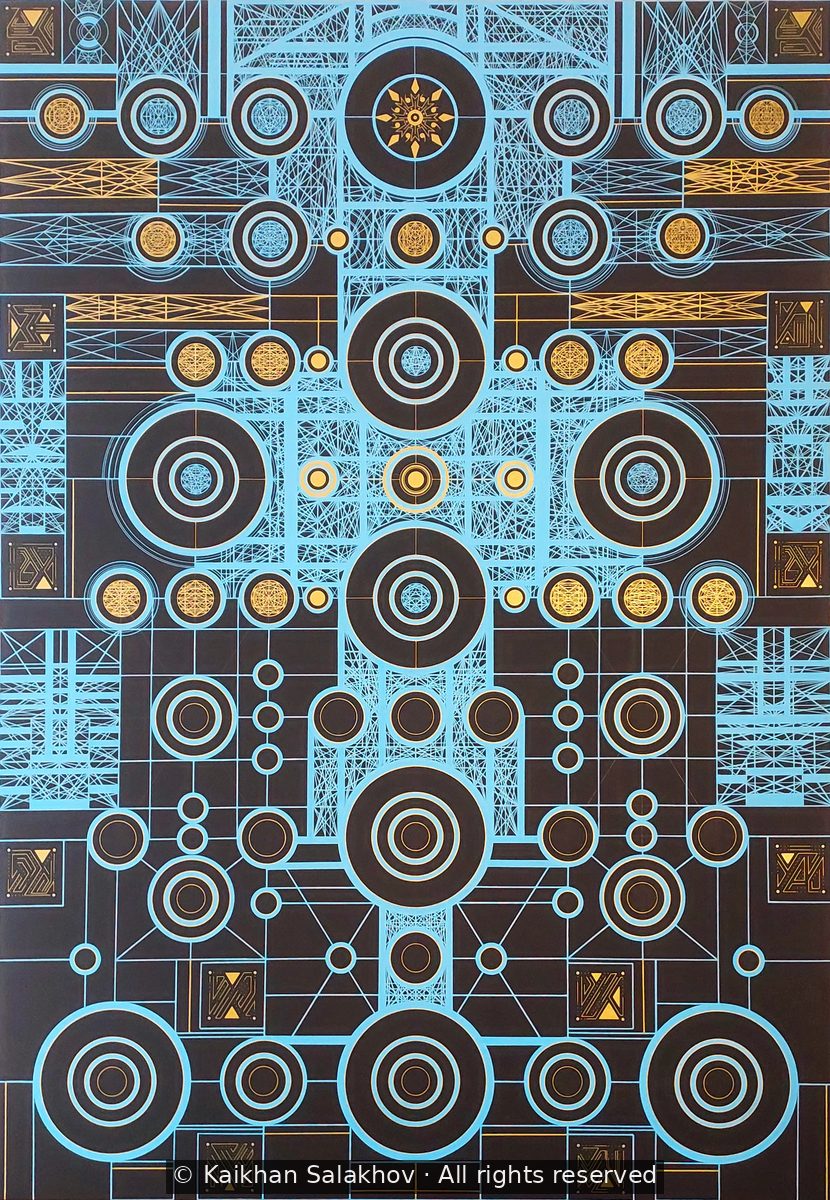
Technologies Across Life Forms
Cooperation, exchange and incompatibility among technical systems shaped by different environments, cognitive architectures and institutions.
Read the full painting meaning →This question examines ethical inclusion. The boundaries of moral concern may exclude beings whose form or capacities differ from familiar examples. Its surrounding discussion also concerns conscious experience: the discussion depends on how experience is attributed to beings whose internal states may be inaccessible.
The analytical issue is how these conditions affect the proposed mechanism, technical dependencies, control interfaces, and failure conditions. The node treats the potential dysfunction as an open problem: its identification does not demonstrate that the anticipated outcome will occur or that an assumed technology is feasible.
Main problem
The boundaries of moral concern may exclude beings whose form or capacities differ from familiar examples.
Central question
Which criteria would justify protection, responsibility, and inclusion across different kinds of agents?
Analytical connections
Technology
For this ethical inclusion problem, technology examines the proposed mechanism, technical dependencies, control interfaces, and failure conditions.
Ethics / Moral Consideration
For this ethical inclusion problem, ethics / moral consideration examines consent, exposure to harm, unequal treatment, and the scope of moral protection.
Communication
For this ethical inclusion problem, communication examines message access, authenticity, interpretation, delay, and the integrity of exchanged information.
Governance
For this ethical inclusion problem, governance examines decision rights, oversight, institutional responsibility, and mechanisms for challenging authority.
Environmental Systems
For this ethical inclusion problem, environmental systems examines environmental dependencies, unintended ecological effects, and conditions required for habitation.
Resource Allocation / Economy
For this ethical inclusion problem, resource allocation / economy examines ownership, access to scarce inputs, dependency, and incentives affecting allocation.
Reliability / Systemic Resilience
For this ethical inclusion problem, reliability / systemic resilience examines cascading failure, redundant capacity, recovery procedures, and continuity of essential functions.
Original source prose and question wording remain in the book. The summary and central question are analytical restatements; the author’s complete wording remains in the cited source.
ASX positions and scientific context
- P1 scope
- P2 scope
- C position: not established
- Not assessed as validated
Physical scope and coordination themes describe fields of inquiry. They do not establish a measured capability or scientific validation.
Cross-domain dependencies
Conditional analytical comparisons; question-level access follows the parent discussion.
Deception and information integrity / Ecological intervention and habitation / Knowledge and cultural continuity / System failure and recovery
Manipulated information can alter trust, resource decisions, collective memory and political legitimacy. The links compare this mechanism across domains; quantum or photonic deception retains the scientific limitations of the cited scenario.
Habitats and life-support systems depend on environmental conditions; engineering and resource extraction can change those conditions. Institutional priorities determine acceptable interventions, whose consequences can then alter settlement viability and social choices.
Continuity depends on storage, interpretation, education and communication. Changes to those systems can alter shared knowledge, while communities and institutions decide which records and practices are preserved or excluded.
A technical failure can propagate into dependent services and institutions when redundancy and recovery are insufficient. The comparison preserves the distinction between ordinary reliability problems and the speculative mechanisms in individual source scenarios.
ASX-32-003: Simulations for Scientific Enquiry, pp. 220–222; ASX-72-002: Planetary Hierarchies and Cosmic Sovereignty. The Earth’s Claim to Dominion in Contrast to Emerging Free Stellar Personalities, pp. 687–690.
Open ASX-72-002Deception and information integrity / Ecological intervention and habitation / Knowledge and cultural continuity
Manipulated information can alter trust, resource decisions, collective memory and political legitimacy. The links compare this mechanism across domains; quantum or photonic deception retains the scientific limitations of the cited scenario.
Habitats and life-support systems depend on environmental conditions; engineering and resource extraction can change those conditions. Institutional priorities determine acceptable interventions, whose consequences can then alter settlement viability and social choices.
Continuity depends on storage, interpretation, education and communication. Changes to those systems can alter shared knowledge, while communities and institutions decide which records and practices are preserved or excluded.
ASX-32-003: Simulations for Scientific Enquiry, pp. 220–222; ASX-72-005: The Role of Tier 2 Consciousness in Governance and Diplomacy. Cosmocentrism Tracks the Challenges of Cosmogeopolism, pp. 695–697.
Open ASX-72-005Deception and information integrity / Ecological intervention and habitation / Knowledge and cultural continuity / Simulation, dependency and coercion
Manipulated information can alter trust, resource decisions, collective memory and political legitimacy. The links compare this mechanism across domains; quantum or photonic deception retains the scientific limitations of the cited scenario.
Habitats and life-support systems depend on environmental conditions; engineering and resource extraction can change those conditions. Institutional priorities determine acceptable interventions, whose consequences can then alter settlement viability and social choices.
Continuity depends on storage, interpretation, education and communication. Changes to those systems can alter shared knowledge, while communities and institutions decide which records and practices are preserved or excluded.
Control of a simulated environment can create dependence through access, representation, property or exit restrictions. Economic and political power outside the simulation can influence the rules enforced within it.
ASX-32-003: Simulations for Scientific Enquiry, pp. 220–222; ASX-52-006: Surveillance and Control in the Solar System. The Dark Potential of Space-Based Dystopian Governance, pp. 450–452.
Open ASX-52-006Deception and information integrity / Knowledge and cultural continuity / Simulation, dependency and coercion / System failure and recovery
Manipulated information can alter trust, resource decisions, collective memory and political legitimacy. The links compare this mechanism across domains; quantum or photonic deception retains the scientific limitations of the cited scenario.
Continuity depends on storage, interpretation, education and communication. Changes to those systems can alter shared knowledge, while communities and institutions decide which records and practices are preserved or excluded.
Control of a simulated environment can create dependence through access, representation, property or exit restrictions. Economic and political power outside the simulation can influence the rules enforced within it.
A technical failure can propagate into dependent services and institutions when redundancy and recovery are insufficient. The comparison preserves the distinction between ordinary reliability problems and the speculative mechanisms in individual source scenarios.
ASX-32-003: Simulations for Scientific Enquiry, pp. 220–222; ASX-72-003: The Dangers Here Include Risks of AI-Driven Information Bubbles, Concentration in Quantum Communication, and an Erosion of Liberty, pp. 690–692.
Open ASX-72-003Ecological intervention and habitation / System failure and recovery
Habitats and life-support systems depend on environmental conditions; engineering and resource extraction can change those conditions. Institutional priorities determine acceptable interventions, whose consequences can then alter settlement viability and social choices.
A technical failure can propagate into dependent services and institutions when redundancy and recovery are insufficient. The comparison preserves the distinction between ordinary reliability problems and the speculative mechanisms in individual source scenarios.
ASX-22-018: AI and Robotics in Ecosystem Management. Earth's Environments with Precision Control, pp. 91–92; ASX-32-003: Simulations for Scientific Enquiry, pp. 220–222.
Open ASX-22-018Ecological intervention and habitation / System failure and recovery
Habitats and life-support systems depend on environmental conditions; engineering and resource extraction can change those conditions. Institutional priorities determine acceptable interventions, whose consequences can then alter settlement viability and social choices.
A technical failure can propagate into dependent services and institutions when redundancy and recovery are insufficient. The comparison preserves the distinction between ordinary reliability problems and the speculative mechanisms in individual source scenarios.
ASX-22-027: Restorative Robotics. Healing Earth's Ecosystems, pp. 94–95; ASX-32-003: Simulations for Scientific Enquiry, pp. 220–222.
Open ASX-22-027Ecological intervention and habitation / System failure and recovery
Habitats and life-support systems depend on environmental conditions; engineering and resource extraction can change those conditions. Institutional priorities determine acceptable interventions, whose consequences can then alter settlement viability and social choices.
A technical failure can propagate into dependent services and institutions when redundancy and recovery are insufficient. The comparison preserves the distinction between ordinary reliability problems and the speculative mechanisms in individual source scenarios.
ASX-22-024: Biomechanical-Biocentric Probes. AI Converges with the Biosphere and the Risks, pp. 93–94; ASX-32-003: Simulations for Scientific Enquiry, pp. 220–222.
Open ASX-22-024Deception and information integrity / Simulation, dependency and coercion
Manipulated information can alter trust, resource decisions, collective memory and political legitimacy. The links compare this mechanism across domains; quantum or photonic deception retains the scientific limitations of the cited scenario.
Control of a simulated environment can create dependence through access, representation, property or exit restrictions. Economic and political power outside the simulation can influence the rules enforced within it.
ASX-32-003: Simulations for Scientific Enquiry, pp. 220–222; ASX-42-015: An Algorithmically Atomized Digital World. The Rise of Deepfakes, AI Manipulation, and Fragmented Society, pp. 302–303.
Open ASX-42-015Ecological intervention and habitation / Knowledge and cultural continuity / System failure and recovery
Habitats and life-support systems depend on environmental conditions; engineering and resource extraction can change those conditions. Institutional priorities determine acceptable interventions, whose consequences can then alter settlement viability and social choices.
Continuity depends on storage, interpretation, education and communication. Changes to those systems can alter shared knowledge, while communities and institutions decide which records and practices are preserved or excluded.
A technical failure can propagate into dependent services and institutions when redundancy and recovery are insufficient. The comparison preserves the distinction between ordinary reliability problems and the speculative mechanisms in individual source scenarios.
ASX-22-029: The Challenges of Traditional Architecture. Its Preservation in Times of Rapid Change, pp. 95–95; ASX-32-003: Simulations for Scientific Enquiry, pp. 220–222.
Open ASX-22-029Deception and information integrity / System failure and recovery
Manipulated information can alter trust, resource decisions, collective memory and political legitimacy. The links compare this mechanism across domains; quantum or photonic deception retains the scientific limitations of the cited scenario.
A technical failure can propagate into dependent services and institutions when redundancy and recovery are insufficient. The comparison preserves the distinction between ordinary reliability problems and the speculative mechanisms in individual source scenarios.
ASX-32-003: Simulations for Scientific Enquiry, pp. 220–222; ASX-42-019: Light Transhumanism and Light AI. Maybe a Beacon in the Saga of Dark Transhumanism and Rogue AI on the Planetary Stage, pp. 307–308.
Open ASX-42-019Deception and information integrity / System failure and recovery
Manipulated information can alter trust, resource decisions, collective memory and political legitimacy. The links compare this mechanism across domains; quantum or photonic deception retains the scientific limitations of the cited scenario.
A technical failure can propagate into dependent services and institutions when redundancy and recovery are insufficient. The comparison preserves the distinction between ordinary reliability problems and the speculative mechanisms in individual source scenarios.
ASX-32-003: Simulations for Scientific Enquiry, pp. 220–222; ASX-52-005: Interstellar Freedom of Speech. The Issues of Regulating Communication, Decentralization, and Ethical Frameworks within Off-Planet Settlements, pp. 448–450.
Open ASX-52-005Ecological intervention and habitation / Knowledge and cultural continuity
Habitats and life-support systems depend on environmental conditions; engineering and resource extraction can change those conditions. Institutional priorities determine acceptable interventions, whose consequences can then alter settlement viability and social choices.
Continuity depends on storage, interpretation, education and communication. Changes to those systems can alter shared knowledge, while communities and institutions decide which records and practices are preserved or excluded.
ASX-22-033: To a Harmonious Architectural Future, pp. 97–97; ASX-32-003: Simulations for Scientific Enquiry, pp. 220–222.
Open ASX-22-033Ecological intervention and habitation / System failure and recovery
Habitats and life-support systems depend on environmental conditions; engineering and resource extraction can change those conditions. Institutional priorities determine acceptable interventions, whose consequences can then alter settlement viability and social choices.
A technical failure can propagate into dependent services and institutions when redundancy and recovery are insufficient. The comparison preserves the distinction between ordinary reliability problems and the speculative mechanisms in individual source scenarios.
ASX-22-017: Technocentric Dominance. The Rise and Risks of Sci-Fi Smart Cities, pp. 91–91; ASX-32-003: Simulations for Scientific Enquiry, pp. 220–222.
Open ASX-22-017Ecological intervention and habitation / System failure and recovery
Habitats and life-support systems depend on environmental conditions; engineering and resource extraction can change those conditions. Institutional priorities determine acceptable interventions, whose consequences can then alter settlement viability and social choices.
A technical failure can propagate into dependent services and institutions when redundancy and recovery are insufficient. The comparison preserves the distinction between ordinary reliability problems and the speculative mechanisms in individual source scenarios.
ASX-22-019: Nanodrones, pp. 92–92; ASX-32-003: Simulations for Scientific Enquiry, pp. 220–222.
Open ASX-22-019Ecological intervention and habitation / System failure and recovery
Habitats and life-support systems depend on environmental conditions; engineering and resource extraction can change those conditions. Institutional priorities determine acceptable interventions, whose consequences can then alter settlement viability and social choices.
A technical failure can propagate into dependent services and institutions when redundancy and recovery are insufficient. The comparison preserves the distinction between ordinary reliability problems and the speculative mechanisms in individual source scenarios.
ASX-22-004: Experimenting with Natural Processes and Architectural Impact on the Biosphere: I, pp. 87–87; ASX-32-003: Simulations for Scientific Enquiry, pp. 220–222.
Open ASX-22-004Ecological intervention and habitation / System failure and recovery
Habitats and life-support systems depend on environmental conditions; engineering and resource extraction can change those conditions. Institutional priorities determine acceptable interventions, whose consequences can then alter settlement viability and social choices.
A technical failure can propagate into dependent services and institutions when redundancy and recovery are insufficient. The comparison preserves the distinction between ordinary reliability problems and the speculative mechanisms in individual source scenarios.
ASX-22-023: Biocentric Architecture. Back to Natural Harmony, pp. 93–93; ASX-32-003: Simulations for Scientific Enquiry, pp. 220–222.
Open ASX-22-023Ecological intervention and habitation / System failure and recovery
Habitats and life-support systems depend on environmental conditions; engineering and resource extraction can change those conditions. Institutional priorities determine acceptable interventions, whose consequences can then alter settlement viability and social choices.
A technical failure can propagate into dependent services and institutions when redundancy and recovery are insufficient. The comparison preserves the distinction between ordinary reliability problems and the speculative mechanisms in individual source scenarios.
ASX-22-043: Malfunctions and Failures in Planetary Engineering. Addressing the Risks, pp. 100–100; ASX-32-003: Simulations for Scientific Enquiry, pp. 220–222.
Open ASX-22-043Ecological intervention and habitation / System failure and recovery
Habitats and life-support systems depend on environmental conditions; engineering and resource extraction can change those conditions. Institutional priorities determine acceptable interventions, whose consequences can then alter settlement viability and social choices.
A technical failure can propagate into dependent services and institutions when redundancy and recovery are insufficient. The comparison preserves the distinction between ordinary reliability problems and the speculative mechanisms in individual source scenarios.
ASX-22-011: Preservation of Biodiversity. Preserving Earth's Ecosystems in Face of Human Expansion, pp. 88–88; ASX-32-003: Simulations for Scientific Enquiry, pp. 220–222.
Open ASX-22-011Associated paintings
Source organization
- part of: ASX-32-003
Citation
Kaikhan Salakhov (2024). Astral Space Exploration: The Cosmic Renaissance: The Fundamental Principles of Cosmocybernetics. Part III, “Astral Space Exploration Grid: Interstellar Simulation Technologies Through Stages of Development”; Chapter 2, “The Planetary Stage”; discussion: “Simulations for Scientific Enquiry”; question 5, p. 221. Page references follow the supplied 852-page edition; pagination in other editions may differ. Library reference: ASX-32-003-Q05. https://www.asxgrid.app/library/records/ASX-32-003-Q05.html
Page references follow the supplied 852-page edition; pagination in other editions may differ..
Book publication: . Map created: . Map revised: .