Cultural Divergence and Fragmentation
ASX-33-002 · Part III · Interstellar Simulation Technologies · Chapter 3: The Multiplanetary Stage
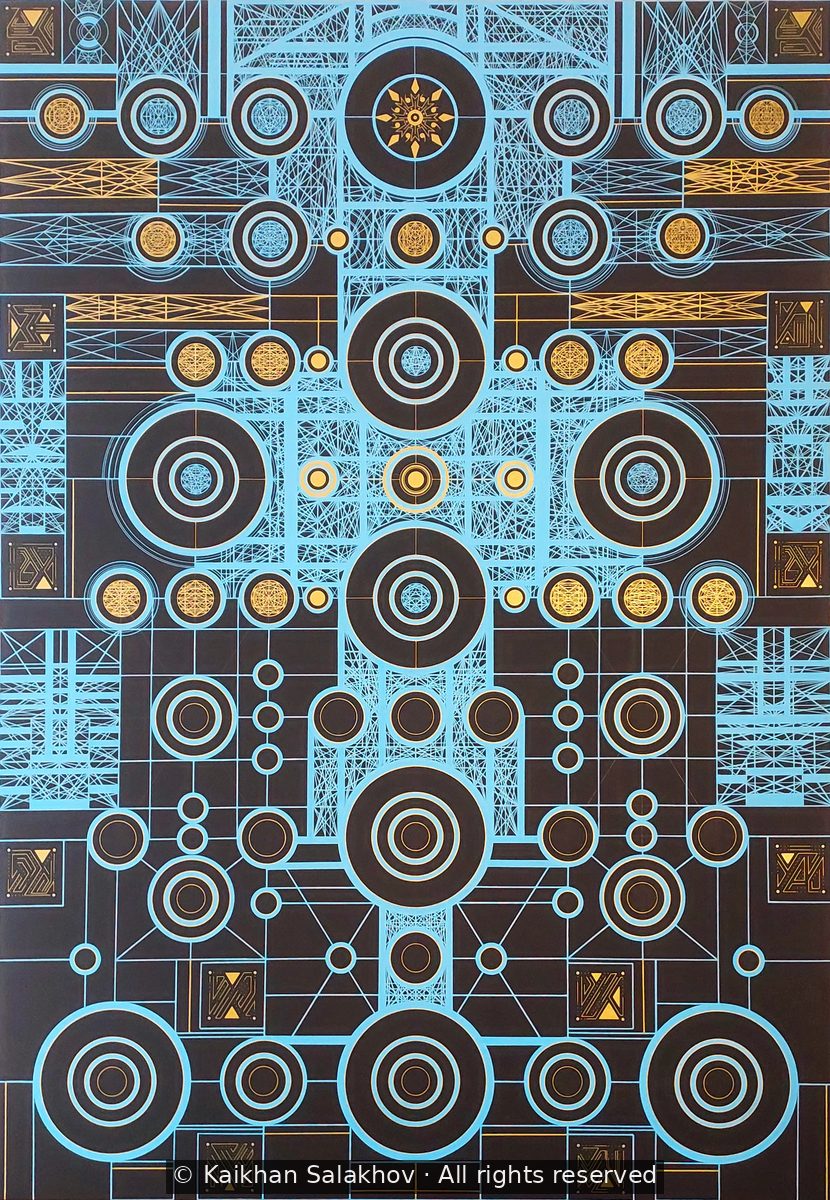
Technologies Across Life Forms
Cooperation, exchange and incompatibility among technical systems shaped by different environments, cognitive architectures and institutions.
Read the full painting meaning →This discussion examines cultural differentiation. Divergent practices and identities can complicate shared institutions and mutual interpretation. Its surrounding discussion also concerns identity continuity: alteration, duplication, or transfer of an agent can make persistence of identity and responsibility ambiguous.
The analytical issue is how these conditions affect group membership, social differentiation, cohesion, and the distribution of roles. The node treats the potential dysfunction as an open problem: its identification does not demonstrate that the anticipated outcome will occur or that an assumed technology is feasible.
Main problem
Divergent practices and identities can complicate shared institutions and mutual interpretation.
Central question
How could groups coordinate while maintaining cultural variation and reciprocal recognition?
Analytical connections
Social Structure
For this cultural differentiation problem, social structure examines group membership, social differentiation, cohesion, and the distribution of roles.
Technology
For this cultural differentiation problem, technology examines the proposed mechanism, technical dependencies, control interfaces, and failure conditions.
Environmental Systems
For this cultural differentiation problem, environmental systems examines environmental dependencies, unintended ecological effects, and conditions required for habitation.
Worldview / Philosophy
For this cultural differentiation problem, worldview / philosophy examines assumptions about knowledge, identity, reality, and the criteria used to justify conclusions.
Physical Capability (Reach)
For this cultural differentiation problem, physical capability (reach) examines the spatial boundary of operations, dependence between locations, and delays affecting intervention.
Communication
For this cultural differentiation problem, communication examines message access, authenticity, interpretation, delay, and the integrity of exchanged information.
Contact Disposition
For this cultural differentiation problem, contact disposition examines relations between groups, conflict escalation, cooperation, and responses to unfamiliar agents.
Religion / Spirituality / Ultimate Meaning
For this cultural differentiation problem, religion / spirituality / ultimate meaning examines belief communities, religious authority, continuity of meaning, and freedom of interpretation.
Temporality
For this cultural differentiation problem, temporality examines decision horizons, asynchronous experience, institutional duration, and long-term commitments.
Original source prose and question wording remain in the book. The summary and central question are analytical restatements; the author’s complete wording remains in the cited source.
ASX positions and scientific context
- P4 scope
- C2 thematic relevance
- C position: not established
- Speculative scenario
Physical scope and coordination themes describe fields of inquiry. They do not establish a measured capability or scientific validation.
Cross-domain dependencies
Conditional analytical comparisons; question-level access follows the parent discussion.
Knowledge and cultural continuity
Continuity depends on storage, interpretation, education and communication. Changes to those systems can alter shared knowledge, while communities and institutions decide which records and practices are preserved or excluded.
ASX-13-007: Preserving Earth's Spiritual and Cultural Heritage. Ensuring Continuity Amidst Expansion, pp. 32–32; ASX-33-002: Cultural Divergence and Fragmentation, pp. 232–233.
Open ASX-13-007Knowledge and cultural continuity
Continuity depends on storage, interpretation, education and communication. Changes to those systems can alter shared knowledge, while communities and institutions decide which records and practices are preserved or excluded.
ASX-23-032: Cultural Divergence and the Loss of Shared Heritage, pp. 114–114; ASX-33-002: Cultural Divergence and Fragmentation, pp. 232–233.
Open ASX-23-032Communication failure and continuity / Exclusion, segregation and conflict / Knowledge and cultural continuity / Technical and cognitive interoperability / Infrastructure and strategic conflict
Loss or corruption of a shared communication service can interrupt coordination, maintenance and transmission of cultural or spiritual knowledge. The dependency applies when the systems actually share that service; similar titles alone do not establish a historical causal event.
Exclusionary classifications or doctrines can legitimate segregation and coercion. Conflict and coercive governance can in turn intensify mistrust and separation. These are conditional feedback mechanisms, not inevitable consequences of cultural difference.
Continuity depends on storage, interpretation, education and communication. Changes to those systems can alter shared knowledge, while communities and institutions decide which records and practices are preserved or excluded.
Interoperation depends on compatible interfaces and sufficiently shared interpretations. Standards, translation and access arrangements affect cooperation, while biological and cognitive differences can change what a usable interface requires.
Infrastructure can become both a strategic asset and a target. Conflict may disrupt energy, transport or communications, while dependence on those services can be exploited to constrain decisions.
ASX-33-002: Cultural Divergence and Fragmentation, pp. 232–233; ASX-73-005: Deepfakes, AI-designed Information Bubbles and Mind Control, pp. 706–708.
Open ASX-73-005Communication failure and continuity / Exclusion, segregation and conflict / Knowledge and cultural continuity / Technical and cognitive interoperability / Long-term survival and intervention / Infrastructure and strategic conflict
Loss or corruption of a shared communication service can interrupt coordination, maintenance and transmission of cultural or spiritual knowledge. The dependency applies when the systems actually share that service; similar titles alone do not establish a historical causal event.
Exclusionary classifications or doctrines can legitimate segregation and coercion. Conflict and coercive governance can in turn intensify mistrust and separation. These are conditional feedback mechanisms, not inevitable consequences of cultural difference.
Continuity depends on storage, interpretation, education and communication. Changes to those systems can alter shared knowledge, while communities and institutions decide which records and practices are preserved or excluded.
Interoperation depends on compatible interfaces and sufficiently shared interpretations. Standards, translation and access arrangements affect cooperation, while biological and cognitive differences can change what a usable interface requires.
Assumptions about long-term environmental change influence preservation strategies and resource commitments. These scenarios compare choices under uncertain boundary conditions; proposed control over universal or multiversal processes is not established engineering.
Infrastructure can become both a strategic asset and a target. Conflict may disrupt energy, transport or communications, while dependence on those services can be exploited to constrain decisions.
ASX-33-002: Cultural Divergence and Fragmentation, pp. 232–233; ASX-63-002: The Emergence of Stellar Identities: Political Patterning and Social Stratification In Multiplanetary Human Societies, pp. 578–580.
Open ASX-63-002Communication failure and continuity / Exclusion, segregation and conflict / Knowledge and cultural continuity / Technical and cognitive interoperability / Long-term survival and intervention / Simulation, dependency and coercion / Infrastructure and strategic conflict
Loss or corruption of a shared communication service can interrupt coordination, maintenance and transmission of cultural or spiritual knowledge. The dependency applies when the systems actually share that service; similar titles alone do not establish a historical causal event.
Exclusionary classifications or doctrines can legitimate segregation and coercion. Conflict and coercive governance can in turn intensify mistrust and separation. These are conditional feedback mechanisms, not inevitable consequences of cultural difference.
Continuity depends on storage, interpretation, education and communication. Changes to those systems can alter shared knowledge, while communities and institutions decide which records and practices are preserved or excluded.
Interoperation depends on compatible interfaces and sufficiently shared interpretations. Standards, translation and access arrangements affect cooperation, while biological and cognitive differences can change what a usable interface requires.
Assumptions about long-term environmental change influence preservation strategies and resource commitments. These scenarios compare choices under uncertain boundary conditions; proposed control over universal or multiversal processes is not established engineering.
Control of a simulated environment can create dependence through access, representation, property or exit restrictions. Economic and political power outside the simulation can influence the rules enforced within it.
Infrastructure can become both a strategic asset and a target. Conflict may disrupt energy, transport or communications, while dependence on those services can be exploited to constrain decisions.
ASX-33-002: Cultural Divergence and Fragmentation, pp. 232–233; ASX-53-004: Interstellar Misconception. The Difficulty of Human Communication Across the Stars, pp. 461–464.
Open ASX-53-004Communication failure and continuity / Exclusion, segregation and conflict / Technical and cognitive interoperability
Loss or corruption of a shared communication service can interrupt coordination, maintenance and transmission of cultural or spiritual knowledge. The dependency applies when the systems actually share that service; similar titles alone do not establish a historical causal event.
Exclusionary classifications or doctrines can legitimate segregation and coercion. Conflict and coercive governance can in turn intensify mistrust and separation. These are conditional feedback mechanisms, not inevitable consequences of cultural difference.
Interoperation depends on compatible interfaces and sufficiently shared interpretations. Standards, translation and access arrangements affect cooperation, while biological and cognitive differences can change what a usable interface requires.
ASX-13-006: Spiritual Fragmentation and Isolation Due to Disruption or Malfunction of Quantum Communication Technologies, pp. 32–32; ASX-33-002: Cultural Divergence and Fragmentation, pp. 232–233.
Open ASX-13-006Technical and cognitive interoperability / Infrastructure and strategic conflict
Interoperation depends on compatible interfaces and sufficiently shared interpretations. Standards, translation and access arrangements affect cooperation, while biological and cognitive differences can change what a usable interface requires.
Infrastructure can become both a strategic asset and a target. Conflict may disrupt energy, transport or communications, while dependence on those services can be exploited to constrain decisions.
ASX-13-005: Cultural and Spiritual Conflicts Between Human and Post-Human Populations. Bridging the Divide, pp. 31–32; ASX-33-002: Cultural Divergence and Fragmentation, pp. 232–233.
Open ASX-13-005Communication failure and continuity / Exclusion, segregation and conflict / Technical and cognitive interoperability / Infrastructure and strategic conflict
Loss or corruption of a shared communication service can interrupt coordination, maintenance and transmission of cultural or spiritual knowledge. The dependency applies when the systems actually share that service; similar titles alone do not establish a historical causal event.
Exclusionary classifications or doctrines can legitimate segregation and coercion. Conflict and coercive governance can in turn intensify mistrust and separation. These are conditional feedback mechanisms, not inevitable consequences of cultural difference.
Interoperation depends on compatible interfaces and sufficiently shared interpretations. Standards, translation and access arrangements affect cooperation, while biological and cognitive differences can change what a usable interface requires.
Infrastructure can become both a strategic asset and a target. Conflict may disrupt energy, transport or communications, while dependence on those services can be exploited to constrain decisions.
ASX-13-017: Reconciling Spiritual Differences without Quantum Communications, pp. 34–34; ASX-33-002: Cultural Divergence and Fragmentation, pp. 232–233.
Open ASX-13-017Technical and cognitive interoperability / Infrastructure and strategic conflict
Interoperation depends on compatible interfaces and sufficiently shared interpretations. Standards, translation and access arrangements affect cooperation, while biological and cognitive differences can change what a usable interface requires.
Infrastructure can become both a strategic asset and a target. Conflict may disrupt energy, transport or communications, while dependence on those services can be exploited to constrain decisions.
ASX-13-010: The Problem of Syncretism of Interstellar Religions. Navigational Approaches to Spiritual Integration, pp. 33–33; ASX-33-002: Cultural Divergence and Fragmentation, pp. 232–233.
Open ASX-13-010Communication failure and continuity / Infrastructure and strategic conflict
Loss or corruption of a shared communication service can interrupt coordination, maintenance and transmission of cultural or spiritual knowledge. The dependency applies when the systems actually share that service; similar titles alone do not establish a historical causal event.
Infrastructure can become both a strategic asset and a target. Conflict may disrupt energy, transport or communications, while dependence on those services can be exploited to constrain decisions.
ASX-13-015: The Ethics of Sabotage of Quantum Communication Devices in Spiritual Contexts, pp. 34–34; ASX-33-002: Cultural Divergence and Fragmentation, pp. 232–233.
Open ASX-13-015Communication failure and continuity / Technical and cognitive interoperability / Infrastructure and strategic conflict
Loss or corruption of a shared communication service can interrupt coordination, maintenance and transmission of cultural or spiritual knowledge. The dependency applies when the systems actually share that service; similar titles alone do not establish a historical causal event.
Interoperation depends on compatible interfaces and sufficiently shared interpretations. Standards, translation and access arrangements affect cooperation, while biological and cognitive differences can change what a usable interface requires.
Infrastructure can become both a strategic asset and a target. Conflict may disrupt energy, transport or communications, while dependence on those services can be exploited to constrain decisions.
ASX-13-012: Receiving Alien DNA into the Body. Extension of the Spiritual Horizon, pp. 33–33; ASX-33-002: Cultural Divergence and Fragmentation, pp. 232–233.
Open ASX-13-012Technical and cognitive interoperability / Infrastructure and strategic conflict
Interoperation depends on compatible interfaces and sufficiently shared interpretations. Standards, translation and access arrangements affect cooperation, while biological and cognitive differences can change what a usable interface requires.
Infrastructure can become both a strategic asset and a target. Conflict may disrupt energy, transport or communications, while dependence on those services can be exploited to constrain decisions.
ASX-13-008: New and Old Integrations in an Expanding Universe. The Navigation of Spiritual Evolution, pp. 32–32; ASX-33-002: Cultural Divergence and Fragmentation, pp. 232–233.
Open ASX-13-008Communication failure and continuity / Knowledge and cultural continuity / Infrastructure and strategic conflict
Loss or corruption of a shared communication service can interrupt coordination, maintenance and transmission of cultural or spiritual knowledge. The dependency applies when the systems actually share that service; similar titles alone do not establish a historical causal event.
Continuity depends on storage, interpretation, education and communication. Changes to those systems can alter shared knowledge, while communities and institutions decide which records and practices are preserved or excluded.
Infrastructure can become both a strategic asset and a target. Conflict may disrupt energy, transport or communications, while dependence on those services can be exploited to constrain decisions.
ASX-13-011: Implications of Genetic Engineering on Spiritual Beliefs. The Human Soul Redefined, pp. 33–33; ASX-33-002: Cultural Divergence and Fragmentation, pp. 232–233.
Open ASX-13-011Technical and cognitive interoperability / Infrastructure and strategic conflict
Interoperation depends on compatible interfaces and sufficiently shared interpretations. Standards, translation and access arrangements affect cooperation, while biological and cognitive differences can change what a usable interface requires.
Infrastructure can become both a strategic asset and a target. Conflict may disrupt energy, transport or communications, while dependence on those services can be exploited to constrain decisions.
ASX-13-022: The Spiritual Implications of Contact with Intelligent Xenocultures, pp. 36–36; ASX-33-002: Cultural Divergence and Fragmentation, pp. 232–233.
Open ASX-13-022Communication failure and continuity / Exclusion, segregation and conflict / Knowledge and cultural continuity / Technical and cognitive interoperability / Simulation, dependency and coercion
Loss or corruption of a shared communication service can interrupt coordination, maintenance and transmission of cultural or spiritual knowledge. The dependency applies when the systems actually share that service; similar titles alone do not establish a historical causal event.
Exclusionary classifications or doctrines can legitimate segregation and coercion. Conflict and coercive governance can in turn intensify mistrust and separation. These are conditional feedback mechanisms, not inevitable consequences of cultural difference.
Continuity depends on storage, interpretation, education and communication. Changes to those systems can alter shared knowledge, while communities and institutions decide which records and practices are preserved or excluded.
Interoperation depends on compatible interfaces and sufficiently shared interpretations. Standards, translation and access arrangements affect cooperation, while biological and cognitive differences can change what a usable interface requires.
Control of a simulated environment can create dependence through access, representation, property or exit restrictions. Economic and political power outside the simulation can influence the rules enforced within it.
ASX-33-002: Cultural Divergence and Fragmentation, pp. 232–233; ASX-63-003: Cognitive-Linguistic Divergence in Multiplanetary Human Societies. How to Bridge the Interstellar Communication Gap, pp. 580–582.
Open ASX-63-003Exclusion, segregation and conflict / Technical and cognitive interoperability / Long-term survival and intervention / Infrastructure and strategic conflict
Exclusionary classifications or doctrines can legitimate segregation and coercion. Conflict and coercive governance can in turn intensify mistrust and separation. These are conditional feedback mechanisms, not inevitable consequences of cultural difference.
Interoperation depends on compatible interfaces and sufficiently shared interpretations. Standards, translation and access arrangements affect cooperation, while biological and cognitive differences can change what a usable interface requires.
Assumptions about long-term environmental change influence preservation strategies and resource commitments. These scenarios compare choices under uncertain boundary conditions; proposed control over universal or multiversal processes is not established engineering.
Infrastructure can become both a strategic asset and a target. Conflict may disrupt energy, transport or communications, while dependence on those services can be exploited to constrain decisions.
ASX-33-002: Cultural Divergence and Fragmentation, pp. 232–233; ASX-73-006: The Diaspora of Post-humans Into Post-posthumans Through the Rise of Xenocultures, Interstellar Fragmentation, and Corporational and State Manipulation, pp. 709–712.
Open ASX-73-006Knowledge and cultural continuity / Technical and cognitive interoperability / Long-term survival and intervention / Simulation, dependency and coercion / Infrastructure and strategic conflict
Continuity depends on storage, interpretation, education and communication. Changes to those systems can alter shared knowledge, while communities and institutions decide which records and practices are preserved or excluded.
Interoperation depends on compatible interfaces and sufficiently shared interpretations. Standards, translation and access arrangements affect cooperation, while biological and cognitive differences can change what a usable interface requires.
Assumptions about long-term environmental change influence preservation strategies and resource commitments. These scenarios compare choices under uncertain boundary conditions; proposed control over universal or multiversal processes is not established engineering.
Control of a simulated environment can create dependence through access, representation, property or exit restrictions. Economic and political power outside the simulation can influence the rules enforced within it.
Infrastructure can become both a strategic asset and a target. Conflict may disrupt energy, transport or communications, while dependence on those services can be exploited to constrain decisions.
ASX-33-002: Cultural Divergence and Fragmentation, pp. 232–233; ASX-53-001: Stellar Identities and Regulatory Frameworks of the Multi-Planetary Stage — Navigating Divergence in Emerging Star Systems, pp. 452–455.
Open ASX-53-001Communication failure and continuity / Knowledge and cultural continuity / Technical and cognitive interoperability / Simulation, dependency and coercion / Infrastructure and strategic conflict
Loss or corruption of a shared communication service can interrupt coordination, maintenance and transmission of cultural or spiritual knowledge. The dependency applies when the systems actually share that service; similar titles alone do not establish a historical causal event.
Continuity depends on storage, interpretation, education and communication. Changes to those systems can alter shared knowledge, while communities and institutions decide which records and practices are preserved or excluded.
Interoperation depends on compatible interfaces and sufficiently shared interpretations. Standards, translation and access arrangements affect cooperation, while biological and cognitive differences can change what a usable interface requires.
Control of a simulated environment can create dependence through access, representation, property or exit restrictions. Economic and political power outside the simulation can influence the rules enforced within it.
Infrastructure can become both a strategic asset and a target. Conflict may disrupt energy, transport or communications, while dependence on those services can be exploited to constrain decisions.
ASX-33-002: Cultural Divergence and Fragmentation, pp. 232–233; ASX-43-012: Nanorobotics and Nanoswarms. The Double-Edged Sword of Molecular, pp. 318–320.
Open ASX-43-012Exclusion, segregation and conflict / Knowledge and cultural continuity
Exclusionary classifications or doctrines can legitimate segregation and coercion. Conflict and coercive governance can in turn intensify mistrust and separation. These are conditional feedback mechanisms, not inevitable consequences of cultural difference.
Continuity depends on storage, interpretation, education and communication. Changes to those systems can alter shared knowledge, while communities and institutions decide which records and practices are preserved or excluded.
ASX-33-002: Cultural Divergence and Fragmentation, pp. 232–233; ASX-43-010: Economic and Social Impacts of Robotics in Multiplanetary Colonies, pp. 315–317.
Open ASX-43-010Communication failure and continuity / Knowledge and cultural continuity / Simulation, dependency and coercion
Loss or corruption of a shared communication service can interrupt coordination, maintenance and transmission of cultural or spiritual knowledge. The dependency applies when the systems actually share that service; similar titles alone do not establish a historical causal event.
Continuity depends on storage, interpretation, education and communication. Changes to those systems can alter shared knowledge, while communities and institutions decide which records and practices are preserved or excluded.
Control of a simulated environment can create dependence through access, representation, property or exit restrictions. Economic and political power outside the simulation can influence the rules enforced within it.
ASX-23-018: Selling Virtual Worlds as Economic Assets, pp. 108–109; ASX-33-002: Cultural Divergence and Fragmentation, pp. 232–233.
Open ASX-23-018Communication failure and continuity / Technical and cognitive interoperability / Simulation, dependency and coercion
Loss or corruption of a shared communication service can interrupt coordination, maintenance and transmission of cultural or spiritual knowledge. The dependency applies when the systems actually share that service; similar titles alone do not establish a historical causal event.
Interoperation depends on compatible interfaces and sufficiently shared interpretations. Standards, translation and access arrangements affect cooperation, while biological and cognitive differences can change what a usable interface requires.
Control of a simulated environment can create dependence through access, representation, property or exit restrictions. Economic and political power outside the simulation can influence the rules enforced within it.
ASX-23-045: Uncontrolled Environments. Rogue AI in Cosmic Engineering Autonomous Systems, pp. 120–120; ASX-33-002: Cultural Divergence and Fragmentation, pp. 232–233.
Open ASX-23-045Communication failure and continuity / Knowledge and cultural continuity / Technical and cognitive interoperability
Loss or corruption of a shared communication service can interrupt coordination, maintenance and transmission of cultural or spiritual knowledge. The dependency applies when the systems actually share that service; similar titles alone do not establish a historical causal event.
Continuity depends on storage, interpretation, education and communication. Changes to those systems can alter shared knowledge, while communities and institutions decide which records and practices are preserved or excluded.
Interoperation depends on compatible interfaces and sufficiently shared interpretations. Standards, translation and access arrangements affect cooperation, while biological and cognitive differences can change what a usable interface requires.
ASX-13-003: Single Spiritual Identities across Multiple Planets. Unity in Diversity, pp. 31–31; ASX-33-002: Cultural Divergence and Fragmentation, pp. 232–233.
Open ASX-13-003Communication failure and continuity / Technical and cognitive interoperability / Long-term survival and intervention
Loss or corruption of a shared communication service can interrupt coordination, maintenance and transmission of cultural or spiritual knowledge. The dependency applies when the systems actually share that service; similar titles alone do not establish a historical causal event.
Interoperation depends on compatible interfaces and sufficiently shared interpretations. Standards, translation and access arrangements affect cooperation, while biological and cognitive differences can change what a usable interface requires.
Assumptions about long-term environmental change influence preservation strategies and resource commitments. These scenarios compare choices under uncertain boundary conditions; proposed control over universal or multiversal processes is not established engineering.
ASX-13-025: Humanity as Aliens to Each Other, pp. 36–37; ASX-33-002: Cultural Divergence and Fragmentation, pp. 232–233.
Open ASX-13-025Communication failure and continuity / Technical and cognitive interoperability
Loss or corruption of a shared communication service can interrupt coordination, maintenance and transmission of cultural or spiritual knowledge. The dependency applies when the systems actually share that service; similar titles alone do not establish a historical causal event.
Interoperation depends on compatible interfaces and sufficiently shared interpretations. Standards, translation and access arrangements affect cooperation, while biological and cognitive differences can change what a usable interface requires.
ASX-13-004: The Independent Emergence of Separate Post-Human Species, pp. 31–31; ASX-33-002: Cultural Divergence and Fragmentation, pp. 232–233.
Open ASX-13-004Communication failure and continuity / Knowledge and cultural continuity / Infrastructure and strategic conflict
Loss or corruption of a shared communication service can interrupt coordination, maintenance and transmission of cultural or spiritual knowledge. The dependency applies when the systems actually share that service; similar titles alone do not establish a historical causal event.
Continuity depends on storage, interpretation, education and communication. Changes to those systems can alter shared knowledge, while communities and institutions decide which records and practices are preserved or excluded.
Infrastructure can become both a strategic asset and a target. Conflict may disrupt energy, transport or communications, while dependence on those services can be exploited to constrain decisions.
ASX-13-023: Moral and Theological Conundrums That Contact with Xenocultures May Bring About, pp. 36–36; ASX-33-002: Cultural Divergence and Fragmentation, pp. 232–233.
Open ASX-13-023Exclusion, segregation and conflict / Knowledge and cultural continuity / Technical and cognitive interoperability / Infrastructure and strategic conflict
Exclusionary classifications or doctrines can legitimate segregation and coercion. Conflict and coercive governance can in turn intensify mistrust and separation. These are conditional feedback mechanisms, not inevitable consequences of cultural difference.
Continuity depends on storage, interpretation, education and communication. Changes to those systems can alter shared knowledge, while communities and institutions decide which records and practices are preserved or excluded.
Interoperation depends on compatible interfaces and sufficiently shared interpretations. Standards, translation and access arrangements affect cooperation, while biological and cognitive differences can change what a usable interface requires.
Infrastructure can become both a strategic asset and a target. Conflict may disrupt energy, transport or communications, while dependence on those services can be exploited to constrain decisions.
ASX-33-002: Cultural Divergence and Fragmentation, pp. 232–233; ASX-73-007: Cosmocentric Diplomacy. The Role Beyond Species-Specific Paradigms in the Multi-Planetary Phase, pp. 712–715.
Open ASX-73-007Associated paintings
Source organization
- chapter context: CTX-33
Citation
Kaikhan Salakhov (2024). Astral Space Exploration: The Cosmic Renaissance: The Fundamental Principles of Cosmocybernetics. Part III, “Astral Space Exploration Grid: Interstellar Simulation Technologies Through Stages of Development”; Chapter 3, “The Multiplanetary Stage”; discussion: “Cultural Divergence and Fragmentation”, pp. 232–233. Page references follow the supplied 852-page edition; pagination in other editions may differ. Library reference: ASX-33-002. https://www.asxgrid.app/library/records/ASX-33-002.html
Page references follow the supplied 852-page edition; pagination in other editions may differ..
Book publication: . Map created: . Map revised: .