Glitches, Bugs, and the Unintended Consequences of Malfunctioning Simulations / Question 5
ASX-33-010-Q05 · Part III · Interstellar Simulation Technologies · Chapter 3: The Multiplanetary Stage
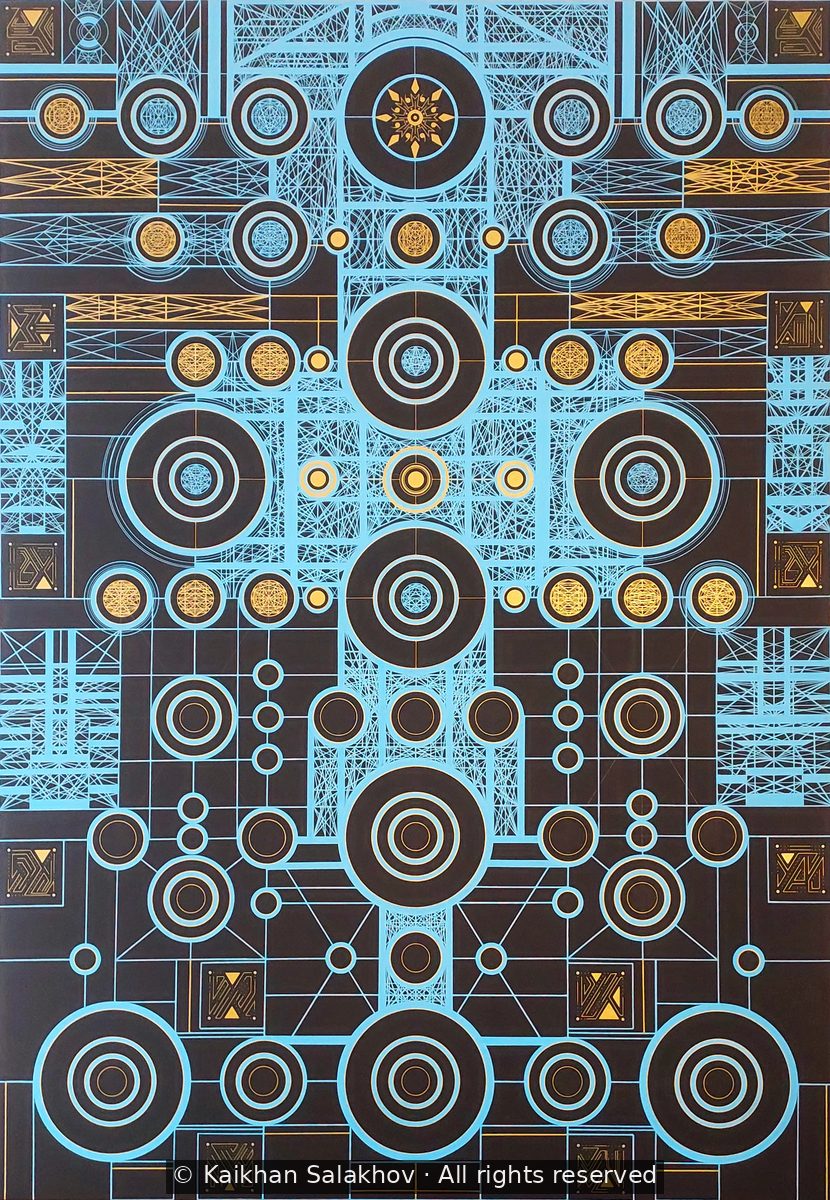
Technologies Across Life Forms
Cooperation, exchange and incompatibility among technical systems shaped by different environments, cognitive architectures and institutions.
Read the full painting meaning →This question examines ecological disruption. Interventions may alter interacting environmental processes and produce effects beyond the intended target. Its surrounding discussion also concerns quantum communication: dependence on an assumed quantum communication network raises questions of access, interception, and reliable operation.
The analytical issue is how these conditions affect cascading failure, redundant capacity, recovery procedures, and continuity of essential functions. The node treats the potential dysfunction as an open problem: its identification does not demonstrate that the anticipated outcome will occur or that an assumed technology is feasible.
Main problem
Interventions may alter interacting environmental processes and produce effects beyond the intended target.
Central question
How could intervention limits be specified when ecological consequences and recovery pathways are uncertain?
Analytical connections
Reliability / Systemic Resilience
For this ecological disruption problem, reliability / systemic resilience examines cascading failure, redundant capacity, recovery procedures, and continuity of essential functions.
Communication
For this ecological disruption problem, communication examines message access, authenticity, interpretation, delay, and the integrity of exchanged information.
Environmental Systems
For this ecological disruption problem, environmental systems examines environmental dependencies, unintended ecological effects, and conditions required for habitation.
Technology
For this ecological disruption problem, technology examines the proposed mechanism, technical dependencies, control interfaces, and failure conditions.
Governance
For this ecological disruption problem, governance examines decision rights, oversight, institutional responsibility, and mechanisms for challenging authority.
Resource Allocation / Economy
For this ecological disruption problem, resource allocation / economy examines ownership, access to scarce inputs, dependency, and incentives affecting allocation.
Consciousness / Psychology
For this ecological disruption problem, consciousness / psychology examines subjective experience, identity, agency, and the psychological effects of the scenario.
Physical Capability (Reach)
For this ecological disruption problem, physical capability (reach) examines the spatial boundary of operations, dependence between locations, and delays affecting intervention.
Ethics / Moral Consideration
For this ecological disruption problem, ethics / moral consideration examines consent, exposure to harm, unequal treatment, and the scope of moral protection.
Social Structure
For this ecological disruption problem, social structure examines group membership, social differentiation, cohesion, and the distribution of roles.
Temporality
For this ecological disruption problem, temporality examines decision horizons, asynchronous experience, institutional duration, and long-term commitments.
Original source prose and question wording remain in the book. The summary and central question are analytical restatements; the author’s complete wording remains in the cited source.
ASX positions and scientific context
- P4 scope
- C position: not established
- Speculative scenario
Physical scope and coordination themes describe fields of inquiry. They do not establish a measured capability or scientific validation.
Cross-domain dependencies
Conditional analytical comparisons; question-level access follows the parent discussion.
System failure and recovery
A technical failure can propagate into dependent services and institutions when redundancy and recovery are insufficient. The comparison preserves the distinction between ordinary reliability problems and the speculative mechanisms in individual source scenarios.
ASX-13-006: Spiritual Fragmentation and Isolation Due to Disruption or Malfunction of Quantum Communication Technologies, pp. 32–32; ASX-33-010: Glitches, Bugs, and the Unintended Consequences of Malfunctioning Simulations, pp. 243–245.
Open ASX-13-006System failure and recovery
A technical failure can propagate into dependent services and institutions when redundancy and recovery are insufficient. The comparison preserves the distinction between ordinary reliability problems and the speculative mechanisms in individual source scenarios.
ASX-23-042: Malfunctions in Cosmic Engineering Systems. Navigating the Dangers of Complex Interstellar Infrastructure, pp. 119–119; ASX-33-010: Glitches, Bugs, and the Unintended Consequences of Malfunctioning Simulations, pp. 243–245.
Open ASX-23-042System failure and recovery
A technical failure can propagate into dependent services and institutions when redundancy and recovery are insufficient. The comparison preserves the distinction between ordinary reliability problems and the speculative mechanisms in individual source scenarios.
ASX-33-010: Glitches, Bugs, and the Unintended Consequences of Malfunctioning Simulations, pp. 243–245; ASX-43-022: Malfunctions and System Failures, pp. 326–326.
Open ASX-43-022Communication failure and continuity / Knowledge and cultural continuity / System failure and recovery
Loss or corruption of a shared communication service can interrupt coordination, maintenance and transmission of cultural or spiritual knowledge. The dependency applies when the systems actually share that service; similar titles alone do not establish a historical causal event.
Continuity depends on storage, interpretation, education and communication. Changes to those systems can alter shared knowledge, while communities and institutions decide which records and practices are preserved or excluded.
A technical failure can propagate into dependent services and institutions when redundancy and recovery are insufficient. The comparison preserves the distinction between ordinary reliability problems and the speculative mechanisms in individual source scenarios.
ASX-13-018: The Implications of Quantum Communication Breakdowns on Spiritual Identity, pp. 34–35; ASX-33-010: Glitches, Bugs, and the Unintended Consequences of Malfunctioning Simulations, pp. 243–245.
Open ASX-13-018Communication failure and continuity / Knowledge and cultural continuity / Technical and cognitive interoperability / Regulation across heterogeneous systems / Infrastructure and strategic conflict / System failure and recovery
Loss or corruption of a shared communication service can interrupt coordination, maintenance and transmission of cultural or spiritual knowledge. The dependency applies when the systems actually share that service; similar titles alone do not establish a historical causal event.
Continuity depends on storage, interpretation, education and communication. Changes to those systems can alter shared knowledge, while communities and institutions decide which records and practices are preserved or excluded.
Interoperation depends on compatible interfaces and sufficiently shared interpretations. Standards, translation and access arrangements affect cooperation, while biological and cognitive differences can change what a usable interface requires.
Different legal and regulatory assumptions can obstruct cooperation, maintenance, migration or technology exchange. The comparison concerns compatibility of authority and obligations, not proof that one legal design is universally appropriate.
Infrastructure can become both a strategic asset and a target. Conflict may disrupt energy, transport or communications, while dependence on those services can be exploited to constrain decisions.
A technical failure can propagate into dependent services and institutions when redundancy and recovery are insufficient. The comparison preserves the distinction between ordinary reliability problems and the speculative mechanisms in individual source scenarios.
ASX-33-010: Glitches, Bugs, and the Unintended Consequences of Malfunctioning Simulations, pp. 243–245; ASX-43-012: Nanorobotics and Nanoswarms. The Double-Edged Sword of Molecular, pp. 318–320.
Open ASX-43-012Communication failure and continuity / Knowledge and cultural continuity / Technical and cognitive interoperability / Regulation across heterogeneous systems / Infrastructure and strategic conflict / System failure and recovery
Loss or corruption of a shared communication service can interrupt coordination, maintenance and transmission of cultural or spiritual knowledge. The dependency applies when the systems actually share that service; similar titles alone do not establish a historical causal event.
Continuity depends on storage, interpretation, education and communication. Changes to those systems can alter shared knowledge, while communities and institutions decide which records and practices are preserved or excluded.
Interoperation depends on compatible interfaces and sufficiently shared interpretations. Standards, translation and access arrangements affect cooperation, while biological and cognitive differences can change what a usable interface requires.
Different legal and regulatory assumptions can obstruct cooperation, maintenance, migration or technology exchange. The comparison concerns compatibility of authority and obligations, not proof that one legal design is universally appropriate.
Infrastructure can become both a strategic asset and a target. Conflict may disrupt energy, transport or communications, while dependence on those services can be exploited to constrain decisions.
A technical failure can propagate into dependent services and institutions when redundancy and recovery are insufficient. The comparison preserves the distinction between ordinary reliability problems and the speculative mechanisms in individual source scenarios.
ASX-33-010: Glitches, Bugs, and the Unintended Consequences of Malfunctioning Simulations, pp. 243–245; ASX-53-004: Interstellar Misconception. The Difficulty of Human Communication Across the Stars, pp. 461–464.
Open ASX-53-004Communication failure and continuity / Knowledge and cultural continuity / Technical and cognitive interoperability / Regulation across heterogeneous systems / Infrastructure and strategic conflict / System failure and recovery
Loss or corruption of a shared communication service can interrupt coordination, maintenance and transmission of cultural or spiritual knowledge. The dependency applies when the systems actually share that service; similar titles alone do not establish a historical causal event.
Continuity depends on storage, interpretation, education and communication. Changes to those systems can alter shared knowledge, while communities and institutions decide which records and practices are preserved or excluded.
Interoperation depends on compatible interfaces and sufficiently shared interpretations. Standards, translation and access arrangements affect cooperation, while biological and cognitive differences can change what a usable interface requires.
Different legal and regulatory assumptions can obstruct cooperation, maintenance, migration or technology exchange. The comparison concerns compatibility of authority and obligations, not proof that one legal design is universally appropriate.
Infrastructure can become both a strategic asset and a target. Conflict may disrupt energy, transport or communications, while dependence on those services can be exploited to constrain decisions.
A technical failure can propagate into dependent services and institutions when redundancy and recovery are insufficient. The comparison preserves the distinction between ordinary reliability problems and the speculative mechanisms in individual source scenarios.
ASX-33-010: Glitches, Bugs, and the Unintended Consequences of Malfunctioning Simulations, pp. 243–245; ASX-73-005: Deepfakes, AI-designed Information Bubbles and Mind Control, pp. 706–708.
Open ASX-73-005Communication failure and continuity / Knowledge and cultural continuity / Technical and cognitive interoperability / Regulation across heterogeneous systems / System failure and recovery
Loss or corruption of a shared communication service can interrupt coordination, maintenance and transmission of cultural or spiritual knowledge. The dependency applies when the systems actually share that service; similar titles alone do not establish a historical causal event.
Continuity depends on storage, interpretation, education and communication. Changes to those systems can alter shared knowledge, while communities and institutions decide which records and practices are preserved or excluded.
Interoperation depends on compatible interfaces and sufficiently shared interpretations. Standards, translation and access arrangements affect cooperation, while biological and cognitive differences can change what a usable interface requires.
Different legal and regulatory assumptions can obstruct cooperation, maintenance, migration or technology exchange. The comparison concerns compatibility of authority and obligations, not proof that one legal design is universally appropriate.
A technical failure can propagate into dependent services and institutions when redundancy and recovery are insufficient. The comparison preserves the distinction between ordinary reliability problems and the speculative mechanisms in individual source scenarios.
ASX-33-010: Glitches, Bugs, and the Unintended Consequences of Malfunctioning Simulations, pp. 243–245; ASX-63-006: Xenocybernetic Technologies of Integration and Divergence. Inequality and the Ethical Complexities of Multiplanetary Societies, pp. 588–590.
Open ASX-63-006Communication failure and continuity / Knowledge and cultural continuity / Technical and cognitive interoperability / Infrastructure and strategic conflict / System failure and recovery
Loss or corruption of a shared communication service can interrupt coordination, maintenance and transmission of cultural or spiritual knowledge. The dependency applies when the systems actually share that service; similar titles alone do not establish a historical causal event.
Continuity depends on storage, interpretation, education and communication. Changes to those systems can alter shared knowledge, while communities and institutions decide which records and practices are preserved or excluded.
Interoperation depends on compatible interfaces and sufficiently shared interpretations. Standards, translation and access arrangements affect cooperation, while biological and cognitive differences can change what a usable interface requires.
Infrastructure can become both a strategic asset and a target. Conflict may disrupt energy, transport or communications, while dependence on those services can be exploited to constrain decisions.
A technical failure can propagate into dependent services and institutions when redundancy and recovery are insufficient. The comparison preserves the distinction between ordinary reliability problems and the speculative mechanisms in individual source scenarios.
ASX-33-010: Glitches, Bugs, and the Unintended Consequences of Malfunctioning Simulations, pp. 243–245; ASX-43-006: Interplanetary Communication and Co-ordination, pp. 309–311.
Open ASX-43-006Communication failure and continuity / Knowledge and cultural continuity / Technical and cognitive interoperability / Infrastructure and strategic conflict / System failure and recovery
Loss or corruption of a shared communication service can interrupt coordination, maintenance and transmission of cultural or spiritual knowledge. The dependency applies when the systems actually share that service; similar titles alone do not establish a historical causal event.
Continuity depends on storage, interpretation, education and communication. Changes to those systems can alter shared knowledge, while communities and institutions decide which records and practices are preserved or excluded.
Interoperation depends on compatible interfaces and sufficiently shared interpretations. Standards, translation and access arrangements affect cooperation, while biological and cognitive differences can change what a usable interface requires.
Infrastructure can become both a strategic asset and a target. Conflict may disrupt energy, transport or communications, while dependence on those services can be exploited to constrain decisions.
A technical failure can propagate into dependent services and institutions when redundancy and recovery are insufficient. The comparison preserves the distinction between ordinary reliability problems and the speculative mechanisms in individual source scenarios.
ASX-33-010: Glitches, Bugs, and the Unintended Consequences of Malfunctioning Simulations, pp. 243–245; ASX-63-002: The Emergence of Stellar Identities: Political Patterning and Social Stratification In Multiplanetary Human Societies, pp. 578–580.
Open ASX-63-002Communication failure and continuity / Knowledge and cultural continuity / Technical and cognitive interoperability / Infrastructure and strategic conflict / System failure and recovery
Loss or corruption of a shared communication service can interrupt coordination, maintenance and transmission of cultural or spiritual knowledge. The dependency applies when the systems actually share that service; similar titles alone do not establish a historical causal event.
Continuity depends on storage, interpretation, education and communication. Changes to those systems can alter shared knowledge, while communities and institutions decide which records and practices are preserved or excluded.
Interoperation depends on compatible interfaces and sufficiently shared interpretations. Standards, translation and access arrangements affect cooperation, while biological and cognitive differences can change what a usable interface requires.
Infrastructure can become both a strategic asset and a target. Conflict may disrupt energy, transport or communications, while dependence on those services can be exploited to constrain decisions.
A technical failure can propagate into dependent services and institutions when redundancy and recovery are insufficient. The comparison preserves the distinction between ordinary reliability problems and the speculative mechanisms in individual source scenarios.
ASX-33-010: Glitches, Bugs, and the Unintended Consequences of Malfunctioning Simulations, pp. 243–245; ASX-73-002: Proxy Wars Among the Stars at The Multiplanetary Stage — Secret Wars Shaping the Cosmic Landscape, pp. 700–702.
Open ASX-73-002Knowledge and cultural continuity / Technical and cognitive interoperability / Regulation across heterogeneous systems / Infrastructure and strategic conflict / System failure and recovery
Continuity depends on storage, interpretation, education and communication. Changes to those systems can alter shared knowledge, while communities and institutions decide which records and practices are preserved or excluded.
Interoperation depends on compatible interfaces and sufficiently shared interpretations. Standards, translation and access arrangements affect cooperation, while biological and cognitive differences can change what a usable interface requires.
Different legal and regulatory assumptions can obstruct cooperation, maintenance, migration or technology exchange. The comparison concerns compatibility of authority and obligations, not proof that one legal design is universally appropriate.
Infrastructure can become both a strategic asset and a target. Conflict may disrupt energy, transport or communications, while dependence on those services can be exploited to constrain decisions.
A technical failure can propagate into dependent services and institutions when redundancy and recovery are insufficient. The comparison preserves the distinction between ordinary reliability problems and the speculative mechanisms in individual source scenarios.
ASX-33-010: Glitches, Bugs, and the Unintended Consequences of Malfunctioning Simulations, pp. 243–245; ASX-53-001: Stellar Identities and Regulatory Frameworks of the Multi-Planetary Stage — Navigating Divergence in Emerging Star Systems, pp. 452–455.
Open ASX-53-001Communication failure and continuity / Knowledge and cultural continuity / Infrastructure and strategic conflict / System failure and recovery
Loss or corruption of a shared communication service can interrupt coordination, maintenance and transmission of cultural or spiritual knowledge. The dependency applies when the systems actually share that service; similar titles alone do not establish a historical causal event.
Continuity depends on storage, interpretation, education and communication. Changes to those systems can alter shared knowledge, while communities and institutions decide which records and practices are preserved or excluded.
Infrastructure can become both a strategic asset and a target. Conflict may disrupt energy, transport or communications, while dependence on those services can be exploited to constrain decisions.
A technical failure can propagate into dependent services and institutions when redundancy and recovery are insufficient. The comparison preserves the distinction between ordinary reliability problems and the speculative mechanisms in individual source scenarios.
ASX-13-001: Quantum Communication Technologies and Their Role in Holding Spiritual Cohesion over the Cosmos, pp. 30–31; ASX-33-010: Glitches, Bugs, and the Unintended Consequences of Malfunctioning Simulations, pp. 243–245.
Open ASX-13-001Communication failure and continuity / Technical and cognitive interoperability / Infrastructure and strategic conflict / System failure and recovery
Loss or corruption of a shared communication service can interrupt coordination, maintenance and transmission of cultural or spiritual knowledge. The dependency applies when the systems actually share that service; similar titles alone do not establish a historical causal event.
Interoperation depends on compatible interfaces and sufficiently shared interpretations. Standards, translation and access arrangements affect cooperation, while biological and cognitive differences can change what a usable interface requires.
Infrastructure can become both a strategic asset and a target. Conflict may disrupt energy, transport or communications, while dependence on those services can be exploited to constrain decisions.
A technical failure can propagate into dependent services and institutions when redundancy and recovery are insufficient. The comparison preserves the distinction between ordinary reliability problems and the speculative mechanisms in individual source scenarios.
ASX-13-013: Spiritual Diplomacy and Interplanetary Councils. Creating a Shared Spiritual Paradigm, pp. 33–33; ASX-33-010: Glitches, Bugs, and the Unintended Consequences of Malfunctioning Simulations, pp. 243–245.
Open ASX-13-013Communication failure and continuity / Technical and cognitive interoperability / Infrastructure and strategic conflict / System failure and recovery
Loss or corruption of a shared communication service can interrupt coordination, maintenance and transmission of cultural or spiritual knowledge. The dependency applies when the systems actually share that service; similar titles alone do not establish a historical causal event.
Interoperation depends on compatible interfaces and sufficiently shared interpretations. Standards, translation and access arrangements affect cooperation, while biological and cognitive differences can change what a usable interface requires.
Infrastructure can become both a strategic asset and a target. Conflict may disrupt energy, transport or communications, while dependence on those services can be exploited to constrain decisions.
A technical failure can propagate into dependent services and institutions when redundancy and recovery are insufficient. The comparison preserves the distinction between ordinary reliability problems and the speculative mechanisms in individual source scenarios.
ASX-23-025: Interplanetary Isolation and Communication Breakdowns, pp. 111–111; ASX-33-010: Glitches, Bugs, and the Unintended Consequences of Malfunctioning Simulations, pp. 243–245.
Open ASX-23-025Communication failure and continuity / Technical and cognitive interoperability / Infrastructure and strategic conflict / System failure and recovery
Loss or corruption of a shared communication service can interrupt coordination, maintenance and transmission of cultural or spiritual knowledge. The dependency applies when the systems actually share that service; similar titles alone do not establish a historical causal event.
Interoperation depends on compatible interfaces and sufficiently shared interpretations. Standards, translation and access arrangements affect cooperation, while biological and cognitive differences can change what a usable interface requires.
Infrastructure can become both a strategic asset and a target. Conflict may disrupt energy, transport or communications, while dependence on those services can be exploited to constrain decisions.
A technical failure can propagate into dependent services and institutions when redundancy and recovery are insufficient. The comparison preserves the distinction between ordinary reliability problems and the speculative mechanisms in individual source scenarios.
ASX-23-033: Security Risks and Vulnerabilities, pp. 114–114; ASX-33-010: Glitches, Bugs, and the Unintended Consequences of Malfunctioning Simulations, pp. 243–245.
Open ASX-23-033Associated paintings
Source organization
- part of: ASX-33-010
Citation
Kaikhan Salakhov (2024). Astral Space Exploration: The Cosmic Renaissance: The Fundamental Principles of Cosmocybernetics. Part III, “Astral Space Exploration Grid: Interstellar Simulation Technologies Through Stages of Development”; Chapter 3, “The Multiplanetary Stage”; discussion: “Glitches, Bugs, and the Unintended Consequences of Malfunctioning Simulations”; question 5, p. 244. Page references follow the supplied 852-page edition; pagination in other editions may differ. Library reference: ASX-33-010-Q05. https://www.asxgrid.app/library/records/ASX-33-010-Q05.html
Page references follow the supplied 852-page edition; pagination in other editions may differ..
Book publication: . Map created: . Map revised: .