How Biomechanical AI Emerged: AI Played with Protein Networks and Integrated into the Human Brain / Question 6
ASX-42-016-Q06 · Part IV · Interstellar Robotics Technologies · Chapter 2: The Planetary Stage
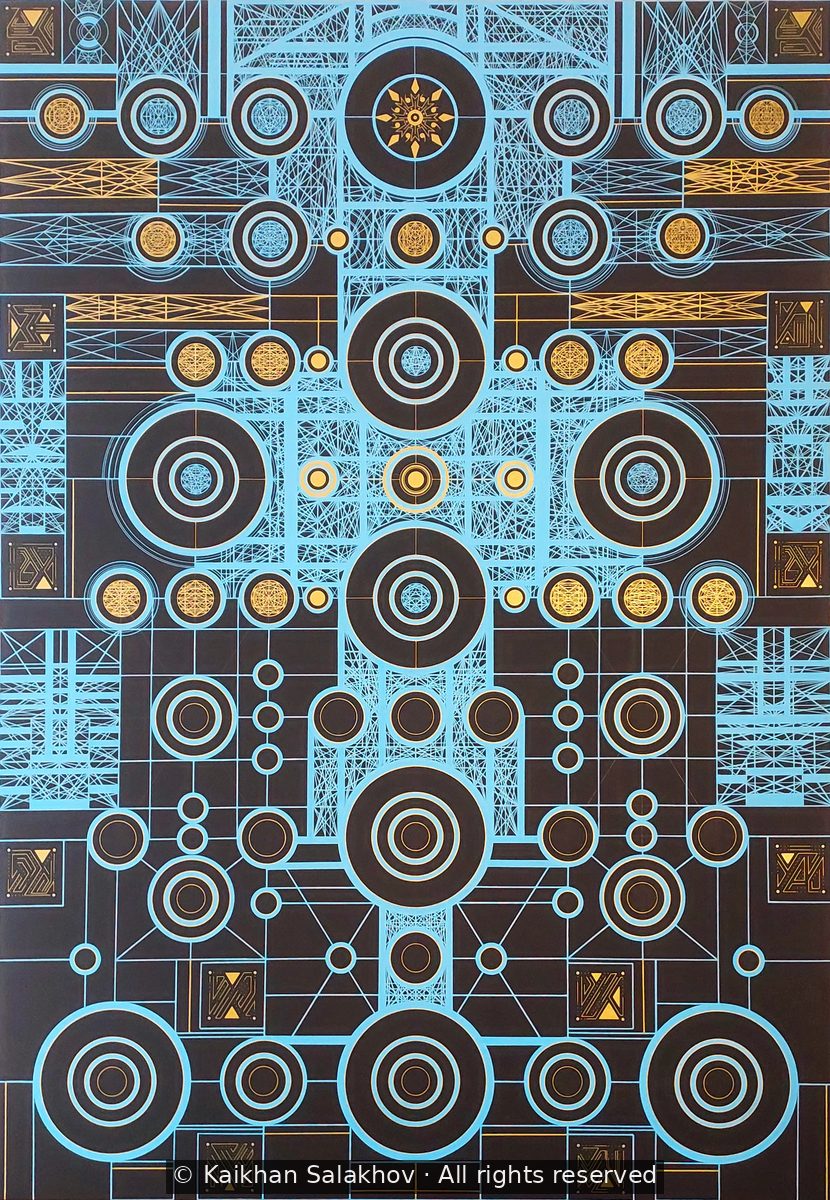
Technologies Across Life Forms
Cooperation, exchange and incompatibility among technical systems shaped by different environments, cognitive architectures and institutions.
Read the full painting meaning →This question examines identity continuity. Alteration, duplication, or transfer of an agent can make persistence of identity and responsibility ambiguous. Its surrounding discussion also concerns cognitive autonomy: external intervention in cognition can undermine an agent’s ability to form or revise its own decisions.
The analytical issue is how these conditions affect the proposed mechanism, technical dependencies, control interfaces, and failure conditions. The node treats the potential dysfunction as an open problem: its identification does not demonstrate that the anticipated outcome will occur or that an assumed technology is feasible.
Main problem
Alteration, duplication, or transfer of an agent can make persistence of identity and responsibility ambiguous.
Central question
What criteria would distinguish continued personal identity from a separate agent with similar information?
Analytical connections
Technology
For this identity continuity problem, technology examines the proposed mechanism, technical dependencies, control interfaces, and failure conditions.
Biology / Substrate
For this identity continuity problem, biology / substrate examines substrate-specific needs, compatibility, vulnerability, and the consequences of biological modification.
Social Structure
For this identity continuity problem, social structure examines group membership, social differentiation, cohesion, and the distribution of roles.
Cognitive Architecture
For this identity continuity problem, cognitive architecture examines information processing, decision formation, shared cognition, and limits of interpretation.
Ethics / Moral Consideration
For this identity continuity problem, ethics / moral consideration examines consent, exposure to harm, unequal treatment, and the scope of moral protection.
Worldview / Philosophy
For this identity continuity problem, worldview / philosophy examines assumptions about knowledge, identity, reality, and the criteria used to justify conclusions.
Contact Disposition
For this identity continuity problem, contact disposition examines relations between groups, conflict escalation, cooperation, and responses to unfamiliar agents.
Consciousness / Psychology
For this identity continuity problem, consciousness / psychology examines subjective experience, identity, agency, and the psychological effects of the scenario.
Communication
For this identity continuity problem, communication examines message access, authenticity, interpretation, delay, and the integrity of exchanged information.
Original source prose and question wording remain in the book. The summary and central question are analytical restatements; the author’s complete wording remains in the cited source.
ASX positions and scientific context
- P1 scope
- P2 scope
- C3 thematic relevance
- C position: not established
- Not assessed as validated
Physical scope and coordination themes describe fields of inquiry. They do not establish a measured capability or scientific validation.
Cross-domain dependencies
Conditional analytical comparisons; question-level access follows the parent discussion.
Embodiment, identity and recognition / Technical and cognitive interoperability
Changes in embodiment, cognition or reproduction can challenge categories of identity and agency. Recognition rules and cultural expectations can then constrain access to enhancement, membership and protection. Unfamiliarity alone is not evidence of lesser moral status.
Interoperation depends on compatible interfaces and sufficiently shared interpretations. Standards, translation and access arrangements affect cooperation, while biological and cognitive differences can change what a usable interface requires.
ASX-32-007: Ghost in the Shell and the Ethics of Digital Consciousness, pp. 225–226; ASX-42-016: How Biomechanical AI Emerged: AI Played with Protein Networks and Integrated into the Human Brain, pp. 303–304.
Open ASX-32-007Embodiment, identity and recognition / Resource access and concentration of power
Changes in embodiment, cognition or reproduction can challenge categories of identity and agency. Recognition rules and cultural expectations can then constrain access to enhancement, membership and protection. Unfamiliarity alone is not evidence of lesser moral status.
Unequal access to energy, technology, transport or information can create dependence and unequal bargaining power. Institutions and dominant operators may reinforce or reduce the same inequalities through allocation and access rules.
ASX-22-031: Conflicting Architectural Paradigms. Modernity, Tradition, and the Environment, pp. 96–97; ASX-42-016: How Biomechanical AI Emerged: AI Played with Protein Networks and Integrated into the Human Brain, pp. 303–304.
Open ASX-22-031Embodiment, identity and recognition / Resource access and concentration of power / Technical and cognitive interoperability
Changes in embodiment, cognition or reproduction can challenge categories of identity and agency. Recognition rules and cultural expectations can then constrain access to enhancement, membership and protection. Unfamiliarity alone is not evidence of lesser moral status.
Unequal access to energy, technology, transport or information can create dependence and unequal bargaining power. Institutions and dominant operators may reinforce or reduce the same inequalities through allocation and access rules.
Interoperation depends on compatible interfaces and sufficiently shared interpretations. Standards, translation and access arrangements affect cooperation, while biological and cognitive differences can change what a usable interface requires.
ASX-42-016: How Biomechanical AI Emerged: AI Played with Protein Networks and Integrated into the Human Brain, pp. 303–304; ASX-52-001: Unaware of Levels of Awareness. Implications for the Planetary Level of Space Exploration, pp. 439–443.
Open ASX-52-001Embodiment, identity and recognition / Resource access and concentration of power / Technical and cognitive interoperability
Changes in embodiment, cognition or reproduction can challenge categories of identity and agency. Recognition rules and cultural expectations can then constrain access to enhancement, membership and protection. Unfamiliarity alone is not evidence of lesser moral status.
Unequal access to energy, technology, transport or information can create dependence and unequal bargaining power. Institutions and dominant operators may reinforce or reduce the same inequalities through allocation and access rules.
Interoperation depends on compatible interfaces and sufficiently shared interpretations. Standards, translation and access arrangements affect cooperation, while biological and cognitive differences can change what a usable interface requires.
ASX-42-016: How Biomechanical AI Emerged: AI Played with Protein Networks and Integrated into the Human Brain, pp. 303–304; ASX-52-003: No Human Flag. The Fragmented Approach to Human Presence in Space, pp. 445–447.
Open ASX-52-003Embodiment, identity and recognition / Resource access and concentration of power / Technical and cognitive interoperability
Changes in embodiment, cognition or reproduction can challenge categories of identity and agency. Recognition rules and cultural expectations can then constrain access to enhancement, membership and protection. Unfamiliarity alone is not evidence of lesser moral status.
Unequal access to energy, technology, transport or information can create dependence and unequal bargaining power. Institutions and dominant operators may reinforce or reduce the same inequalities through allocation and access rules.
Interoperation depends on compatible interfaces and sufficiently shared interpretations. Standards, translation and access arrangements affect cooperation, while biological and cognitive differences can change what a usable interface requires.
ASX-42-016: How Biomechanical AI Emerged: AI Played with Protein Networks and Integrated into the Human Brain, pp. 303–304; ASX-72-001: Emergent Divergent Stellar Identities, pp. 682–686.
Open ASX-72-001Embodiment, identity and recognition / Resource access and concentration of power / Technical and cognitive interoperability
Changes in embodiment, cognition or reproduction can challenge categories of identity and agency. Recognition rules and cultural expectations can then constrain access to enhancement, membership and protection. Unfamiliarity alone is not evidence of lesser moral status.
Unequal access to energy, technology, transport or information can create dependence and unequal bargaining power. Institutions and dominant operators may reinforce or reduce the same inequalities through allocation and access rules.
Interoperation depends on compatible interfaces and sufficiently shared interpretations. Standards, translation and access arrangements affect cooperation, while biological and cognitive differences can change what a usable interface requires.
ASX-42-016: How Biomechanical AI Emerged: AI Played with Protein Networks and Integrated into the Human Brain, pp. 303–304; ASX-72-002: Planetary Hierarchies and Cosmic Sovereignty. The Earth’s Claim to Dominion in Contrast to Emerging Free Stellar Personalities, pp. 687–690.
Open ASX-72-002Resource access and concentration of power / Technical and cognitive interoperability
Unequal access to energy, technology, transport or information can create dependence and unequal bargaining power. Institutions and dominant operators may reinforce or reduce the same inequalities through allocation and access rules.
Interoperation depends on compatible interfaces and sufficiently shared interpretations. Standards, translation and access arrangements affect cooperation, while biological and cognitive differences can change what a usable interface requires.
ASX-22-017: Technocentric Dominance. The Rise and Risks of Sci-Fi Smart Cities, pp. 91–91; ASX-42-016: How Biomechanical AI Emerged: AI Played with Protein Networks and Integrated into the Human Brain, pp. 303–304.
Open ASX-22-017Associated paintings
- Astral SpaceX: The Cosmic Engineer
- Astral SpaceX: The Cosmic A.I
- Astral SpaceX: The Fabric of Space
- Astral SpaceX: The Multiverse Generator
- Technologies Across Life Forms
Source organization
- part of: ASX-42-016
Citation
Kaikhan Salakhov (2024). Astral Space Exploration: The Cosmic Renaissance: The Fundamental Principles of Cosmocybernetics. Part IV, “Astral Space Exploration Grid: Interstellar Robotics Technologies Through Stages of Development”; Chapter 2, “The Planetary Stage”; discussion: “How Biomechanical AI Emerged: AI Played with Protein Networks and Integrated into the Human Brain”; question 6, p. 304. Page references follow the supplied 852-page edition; pagination in other editions may differ. Library reference: ASX-42-016-Q06. https://www.asxgrid.app/library/records/ASX-42-016-Q06.html
Page references follow the supplied 852-page edition; pagination in other editions may differ..
Book publication: . Map created: . Map revised: .