The Death of Free Speech. Information Manipulation in the Multiplanetary Theatre / Question 10
ASX-43-008-Q10 · Part IV · Interstellar Robotics Technologies · Chapter 3: The Multiplanetary Stage
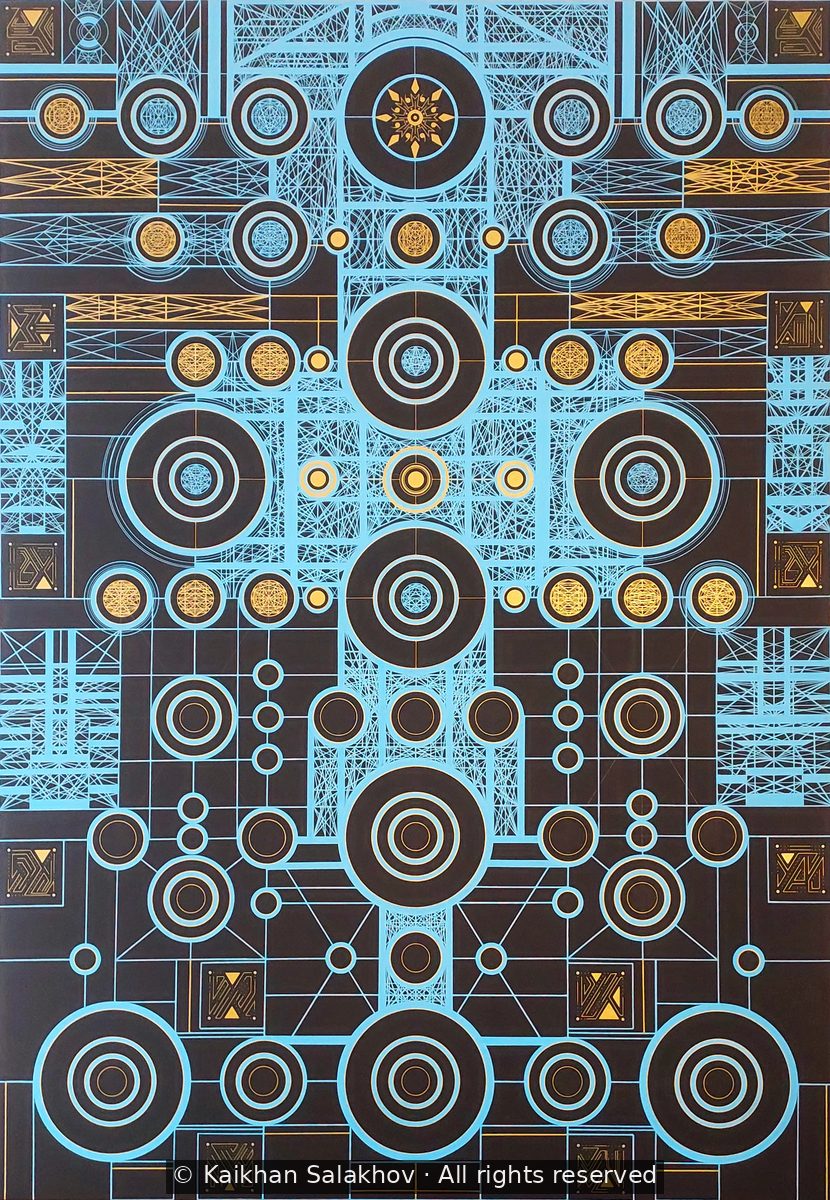
Technologies Across Life Forms
Cooperation, exchange and incompatibility among technical systems shaped by different environments, cognitive architectures and institutions.
Read the full painting meaning →This question examines artificial intelligence. Delegating decisions to artificial systems can create a mismatch between system behaviour and the objectives of affected people. Its surrounding discussion also concerns privacy and expression: verification and monitoring can create tensions between identifying manipulation and protecting legitimate speech.
The analytical issue is how these conditions affect the proposed mechanism, technical dependencies, control interfaces, and failure conditions. The node treats the potential dysfunction as an open problem: its identification does not demonstrate that the anticipated outcome will occur or that an assumed technology is feasible.
Main problem
Delegating decisions to artificial systems can create a mismatch between system behaviour and the objectives of affected people.
Central question
How can delegated decisions remain interpretable, contestable, and subject to effective oversight?
Analytical connections
Technology
For this artificial intelligence problem, technology examines the proposed mechanism, technical dependencies, control interfaces, and failure conditions.
Communication
For this artificial intelligence problem, communication examines message access, authenticity, interpretation, delay, and the integrity of exchanged information.
Physical Capability (Reach)
For this artificial intelligence problem, physical capability (reach) examines the spatial boundary of operations, dependence between locations, and delays affecting intervention.
Reliability / Systemic Resilience
For this artificial intelligence problem, reliability / systemic resilience examines cascading failure, redundant capacity, recovery procedures, and continuity of essential functions.
Governance
For this artificial intelligence problem, governance examines decision rights, oversight, institutional responsibility, and mechanisms for challenging authority.
Worldview / Philosophy
For this artificial intelligence problem, worldview / philosophy examines assumptions about knowledge, identity, reality, and the criteria used to justify conclusions.
Ethics / Moral Consideration
For this artificial intelligence problem, ethics / moral consideration examines consent, exposure to harm, unequal treatment, and the scope of moral protection.
Original source prose and question wording remain in the book. The summary and central question are analytical restatements; the author’s complete wording remains in the cited source.
ASX positions and scientific context
- P4 scope
- C4 thematic relevance
- C position: not established
- Speculative scenario
Physical scope and coordination themes describe fields of inquiry. They do not establish a measured capability or scientific validation.
Cross-domain dependencies
Conditional analytical comparisons; question-level access follows the parent discussion.
Control of communication infrastructure
An operator who controls access, routing or records can change what other institutions can verify and communicate. Political safeguards and ownership rules in turn determine who can exercise this control.
ASX-13-016: Monopoly and Manipulation of Quantum Communication in Shaping Spiritual Beliefs, pp. 34–34; ASX-43-008: The Death of Free Speech. Information Manipulation in the Multiplanetary Theatre, pp. 312–314.
Open ASX-13-016Control of communication infrastructure
An operator who controls access, routing or records can change what other institutions can verify and communicate. Political safeguards and ownership rules in turn determine who can exercise this control.
ASX-23-026: Power Dynamics and Inequality in the Monopoly of Quantum Communication Technologies, pp. 111–111; ASX-43-008: The Death of Free Speech. Information Manipulation in the Multiplanetary Theatre, pp. 312–314.
Open ASX-23-026Control of communication infrastructure
An operator who controls access, routing or records can change what other institutions can verify and communicate. Political safeguards and ownership rules in turn determine who can exercise this control.
ASX-23-035: Loss of Control and Breakdowns in Communication. The Human Risks of Isolated Space, pp. 114–115; ASX-43-008: The Death of Free Speech. Information Manipulation in the Multiplanetary Theatre, pp. 312–314.
Open ASX-23-035Control of communication infrastructure / Deception and information integrity
An operator who controls access, routing or records can change what other institutions can verify and communicate. Political safeguards and ownership rules in turn determine who can exercise this control.
Manipulated information can alter trust, resource decisions, collective memory and political legitimacy. The links compare this mechanism across domains; quantum or photonic deception retains the scientific limitations of the cited scenario.
ASX-43-008: The Death of Free Speech. Information Manipulation in the Multiplanetary Theatre, pp. 312–314; ASX-73-005: Deepfakes, AI-designed Information Bubbles and Mind Control, pp. 706–708.
Open ASX-73-005Deception and information integrity
Manipulated information can alter trust, resource decisions, collective memory and political legitimacy. The links compare this mechanism across domains; quantum or photonic deception retains the scientific limitations of the cited scenario.
ASX-23-017: Propaganda and Manipulation Through Virtual Architecture, pp. 107–108; ASX-43-008: The Death of Free Speech. Information Manipulation in the Multiplanetary Theatre, pp. 312–314.
Open ASX-23-017Deception and information integrity
Manipulated information can alter trust, resource decisions, collective memory and political legitimacy. The links compare this mechanism across domains; quantum or photonic deception retains the scientific limitations of the cited scenario.
ASX-23-027: The Rise of Interplanetary Misinformation and Propaganda. Architectural Manipulation and Power Struggles in the Multiplanetary Stage, pp. 112–112; ASX-43-008: The Death of Free Speech. Information Manipulation in the Multiplanetary Theatre, pp. 312–314.
Open ASX-23-027Deception and information integrity
Manipulated information can alter trust, resource decisions, collective memory and political legitimacy. The links compare this mechanism across domains; quantum or photonic deception retains the scientific limitations of the cited scenario.
ASX-23-028: Role of Misinformation in Economic and Resource Conflicts, pp. 112–113; ASX-43-008: The Death of Free Speech. Information Manipulation in the Multiplanetary Theatre, pp. 312–314.
Open ASX-23-028Deception and information integrity
Manipulated information can alter trust, resource decisions, collective memory and political legitimacy. The links compare this mechanism across domains; quantum or photonic deception retains the scientific limitations of the cited scenario.
ASX-33-006: Information Manipulation and Misinformation Diffusion, pp. 237–239; ASX-43-008: The Death of Free Speech. Information Manipulation in the Multiplanetary Theatre, pp. 312–314.
Open ASX-33-006Autonomy and control of artificial systems / Communication failure and continuity / Control of communication infrastructure / Deception and information integrity / Resource access and concentration of power / Regulation across heterogeneous systems
Delegated machine authority can affect infrastructure, environmental interventions and coercive capability. Accountability, access controls and institutional incentives can also alter how autonomous systems are deployed.
Loss or corruption of a shared communication service can interrupt coordination, maintenance and transmission of cultural or spiritual knowledge. The dependency applies when the systems actually share that service; similar titles alone do not establish a historical causal event.
An operator who controls access, routing or records can change what other institutions can verify and communicate. Political safeguards and ownership rules in turn determine who can exercise this control.
Manipulated information can alter trust, resource decisions, collective memory and political legitimacy. The links compare this mechanism across domains; quantum or photonic deception retains the scientific limitations of the cited scenario.
Unequal access to energy, technology, transport or information can create dependence and unequal bargaining power. Institutions and dominant operators may reinforce or reduce the same inequalities through allocation and access rules.
Different legal and regulatory assumptions can obstruct cooperation, maintenance, migration or technology exchange. The comparison concerns compatibility of authority and obligations, not proof that one legal design is universally appropriate.
ASX-43-008: The Death of Free Speech. Information Manipulation in the Multiplanetary Theatre, pp. 312–314; ASX-73-003: The Manipulation is Interstellar Corporate Manipulation, Something Like Interstellar Economic Standing 4D Chess, pp. 702–704.
Open ASX-73-003Autonomy and control of artificial systems / Communication failure and continuity / Control of communication infrastructure / Deception and information integrity / Knowledge and cultural continuity / Resource access and concentration of power / Technical and cognitive interoperability
Delegated machine authority can affect infrastructure, environmental interventions and coercive capability. Accountability, access controls and institutional incentives can also alter how autonomous systems are deployed.
Loss or corruption of a shared communication service can interrupt coordination, maintenance and transmission of cultural or spiritual knowledge. The dependency applies when the systems actually share that service; similar titles alone do not establish a historical causal event.
An operator who controls access, routing or records can change what other institutions can verify and communicate. Political safeguards and ownership rules in turn determine who can exercise this control.
Manipulated information can alter trust, resource decisions, collective memory and political legitimacy. The links compare this mechanism across domains; quantum or photonic deception retains the scientific limitations of the cited scenario.
Continuity depends on storage, interpretation, education and communication. Changes to those systems can alter shared knowledge, while communities and institutions decide which records and practices are preserved or excluded.
Unequal access to energy, technology, transport or information can create dependence and unequal bargaining power. Institutions and dominant operators may reinforce or reduce the same inequalities through allocation and access rules.
Interoperation depends on compatible interfaces and sufficiently shared interpretations. Standards, translation and access arrangements affect cooperation, while biological and cognitive differences can change what a usable interface requires.
ASX-43-008: The Death of Free Speech. Information Manipulation in the Multiplanetary Theatre, pp. 312–314; ASX-73-002: Proxy Wars Among the Stars at The Multiplanetary Stage — Secret Wars Shaping the Cosmic Landscape, pp. 700–702.
Open ASX-73-002Autonomy and control of artificial systems / Communication failure and continuity / Control of communication infrastructure / Deception and information integrity / Knowledge and cultural continuity / Resource access and concentration of power / Technical and cognitive interoperability / Regulation across heterogeneous systems
Delegated machine authority can affect infrastructure, environmental interventions and coercive capability. Accountability, access controls and institutional incentives can also alter how autonomous systems are deployed.
Loss or corruption of a shared communication service can interrupt coordination, maintenance and transmission of cultural or spiritual knowledge. The dependency applies when the systems actually share that service; similar titles alone do not establish a historical causal event.
An operator who controls access, routing or records can change what other institutions can verify and communicate. Political safeguards and ownership rules in turn determine who can exercise this control.
Manipulated information can alter trust, resource decisions, collective memory and political legitimacy. The links compare this mechanism across domains; quantum or photonic deception retains the scientific limitations of the cited scenario.
Continuity depends on storage, interpretation, education and communication. Changes to those systems can alter shared knowledge, while communities and institutions decide which records and practices are preserved or excluded.
Unequal access to energy, technology, transport or information can create dependence and unequal bargaining power. Institutions and dominant operators may reinforce or reduce the same inequalities through allocation and access rules.
Interoperation depends on compatible interfaces and sufficiently shared interpretations. Standards, translation and access arrangements affect cooperation, while biological and cognitive differences can change what a usable interface requires.
Different legal and regulatory assumptions can obstruct cooperation, maintenance, migration or technology exchange. The comparison concerns compatibility of authority and obligations, not proof that one legal design is universally appropriate.
ASX-43-008: The Death of Free Speech. Information Manipulation in the Multiplanetary Theatre, pp. 312–314; ASX-53-004: Interstellar Misconception. The Difficulty of Human Communication Across the Stars, pp. 461–464.
Open ASX-53-004Autonomy and control of artificial systems / Communication failure and continuity / Control of communication infrastructure / Deception and information integrity / Knowledge and cultural continuity / Resource access and concentration of power / Technical and cognitive interoperability / Regulation across heterogeneous systems
Delegated machine authority can affect infrastructure, environmental interventions and coercive capability. Accountability, access controls and institutional incentives can also alter how autonomous systems are deployed.
Loss or corruption of a shared communication service can interrupt coordination, maintenance and transmission of cultural or spiritual knowledge. The dependency applies when the systems actually share that service; similar titles alone do not establish a historical causal event.
An operator who controls access, routing or records can change what other institutions can verify and communicate. Political safeguards and ownership rules in turn determine who can exercise this control.
Manipulated information can alter trust, resource decisions, collective memory and political legitimacy. The links compare this mechanism across domains; quantum or photonic deception retains the scientific limitations of the cited scenario.
Continuity depends on storage, interpretation, education and communication. Changes to those systems can alter shared knowledge, while communities and institutions decide which records and practices are preserved or excluded.
Unequal access to energy, technology, transport or information can create dependence and unequal bargaining power. Institutions and dominant operators may reinforce or reduce the same inequalities through allocation and access rules.
Interoperation depends on compatible interfaces and sufficiently shared interpretations. Standards, translation and access arrangements affect cooperation, while biological and cognitive differences can change what a usable interface requires.
Different legal and regulatory assumptions can obstruct cooperation, maintenance, migration or technology exchange. The comparison concerns compatibility of authority and obligations, not proof that one legal design is universally appropriate.
ASX-43-008: The Death of Free Speech. Information Manipulation in the Multiplanetary Theatre, pp. 312–314; ASX-63-006: Xenocybernetic Technologies of Integration and Divergence. Inequality and the Ethical Complexities of Multiplanetary Societies, pp. 588–590.
Open ASX-63-006Autonomy and control of artificial systems / Communication failure and continuity / Control of communication infrastructure / Deception and information integrity / Knowledge and cultural continuity / Resource access and concentration of power / Technical and cognitive interoperability / Regulation across heterogeneous systems
Delegated machine authority can affect infrastructure, environmental interventions and coercive capability. Accountability, access controls and institutional incentives can also alter how autonomous systems are deployed.
Loss or corruption of a shared communication service can interrupt coordination, maintenance and transmission of cultural or spiritual knowledge. The dependency applies when the systems actually share that service; similar titles alone do not establish a historical causal event.
An operator who controls access, routing or records can change what other institutions can verify and communicate. Political safeguards and ownership rules in turn determine who can exercise this control.
Manipulated information can alter trust, resource decisions, collective memory and political legitimacy. The links compare this mechanism across domains; quantum or photonic deception retains the scientific limitations of the cited scenario.
Continuity depends on storage, interpretation, education and communication. Changes to those systems can alter shared knowledge, while communities and institutions decide which records and practices are preserved or excluded.
Unequal access to energy, technology, transport or information can create dependence and unequal bargaining power. Institutions and dominant operators may reinforce or reduce the same inequalities through allocation and access rules.
Interoperation depends on compatible interfaces and sufficiently shared interpretations. Standards, translation and access arrangements affect cooperation, while biological and cognitive differences can change what a usable interface requires.
Different legal and regulatory assumptions can obstruct cooperation, maintenance, migration or technology exchange. The comparison concerns compatibility of authority and obligations, not proof that one legal design is universally appropriate.
ASX-43-008: The Death of Free Speech. Information Manipulation in the Multiplanetary Theatre, pp. 312–314; ASX-73-001: Interstellar Cosmopolitical Games on a Multiplanetary Stage. Reflections on Planetary Identities, Power Plays, and Fragmented Unity in the Cosmos, pp. 697–700.
Open ASX-73-001Autonomy and control of artificial systems / Control of communication infrastructure / Deception and information integrity / Knowledge and cultural continuity / Resource access and concentration of power / Technical and cognitive interoperability / Regulation across heterogeneous systems
Delegated machine authority can affect infrastructure, environmental interventions and coercive capability. Accountability, access controls and institutional incentives can also alter how autonomous systems are deployed.
An operator who controls access, routing or records can change what other institutions can verify and communicate. Political safeguards and ownership rules in turn determine who can exercise this control.
Manipulated information can alter trust, resource decisions, collective memory and political legitimacy. The links compare this mechanism across domains; quantum or photonic deception retains the scientific limitations of the cited scenario.
Continuity depends on storage, interpretation, education and communication. Changes to those systems can alter shared knowledge, while communities and institutions decide which records and practices are preserved or excluded.
Unequal access to energy, technology, transport or information can create dependence and unequal bargaining power. Institutions and dominant operators may reinforce or reduce the same inequalities through allocation and access rules.
Interoperation depends on compatible interfaces and sufficiently shared interpretations. Standards, translation and access arrangements affect cooperation, while biological and cognitive differences can change what a usable interface requires.
Different legal and regulatory assumptions can obstruct cooperation, maintenance, migration or technology exchange. The comparison concerns compatibility of authority and obligations, not proof that one legal design is universally appropriate.
ASX-43-008: The Death of Free Speech. Information Manipulation in the Multiplanetary Theatre, pp. 312–314; ASX-53-003: The Multiplanetary Era. Power Struggle in Interstellar Space — the Control Dynamics, pp. 459–461.
Open ASX-53-003Autonomy and control of artificial systems / Control of communication infrastructure / Deception and information integrity / Resource access and concentration of power / Technical and cognitive interoperability
Delegated machine authority can affect infrastructure, environmental interventions and coercive capability. Accountability, access controls and institutional incentives can also alter how autonomous systems are deployed.
An operator who controls access, routing or records can change what other institutions can verify and communicate. Political safeguards and ownership rules in turn determine who can exercise this control.
Manipulated information can alter trust, resource decisions, collective memory and political legitimacy. The links compare this mechanism across domains; quantum or photonic deception retains the scientific limitations of the cited scenario.
Unequal access to energy, technology, transport or information can create dependence and unequal bargaining power. Institutions and dominant operators may reinforce or reduce the same inequalities through allocation and access rules.
Interoperation depends on compatible interfaces and sufficiently shared interpretations. Standards, translation and access arrangements affect cooperation, while biological and cognitive differences can change what a usable interface requires.
ASX-43-008: The Death of Free Speech. Information Manipulation in the Multiplanetary Theatre, pp. 312–314; ASX-63-007: Education and Training. Establishing the New Breed of Xenoanthropologists The Future of Xenoanthropology in Building Tomorrow — Education and Policies on Scientific Integration in the Multiplanetary Era, pp. 590–593.
Open ASX-63-007Deception and information integrity / Knowledge and cultural continuity / Resource access and concentration of power / Technical and cognitive interoperability / Regulation across heterogeneous systems
Manipulated information can alter trust, resource decisions, collective memory and political legitimacy. The links compare this mechanism across domains; quantum or photonic deception retains the scientific limitations of the cited scenario.
Continuity depends on storage, interpretation, education and communication. Changes to those systems can alter shared knowledge, while communities and institutions decide which records and practices are preserved or excluded.
Unequal access to energy, technology, transport or information can create dependence and unequal bargaining power. Institutions and dominant operators may reinforce or reduce the same inequalities through allocation and access rules.
Interoperation depends on compatible interfaces and sufficiently shared interpretations. Standards, translation and access arrangements affect cooperation, while biological and cognitive differences can change what a usable interface requires.
Different legal and regulatory assumptions can obstruct cooperation, maintenance, migration or technology exchange. The comparison concerns compatibility of authority and obligations, not proof that one legal design is universally appropriate.
ASX-33-009: Interplanetary Gaming. Double-Edged Sword in the Battle for Influence Among Rival Colonies, pp. 242–243; ASX-43-008: The Death of Free Speech. Information Manipulation in the Multiplanetary Theatre, pp. 312–314.
Open ASX-33-009Communication failure and continuity / Control of communication infrastructure / Knowledge and cultural continuity
Loss or corruption of a shared communication service can interrupt coordination, maintenance and transmission of cultural or spiritual knowledge. The dependency applies when the systems actually share that service; similar titles alone do not establish a historical causal event.
An operator who controls access, routing or records can change what other institutions can verify and communicate. Political safeguards and ownership rules in turn determine who can exercise this control.
Continuity depends on storage, interpretation, education and communication. Changes to those systems can alter shared knowledge, while communities and institutions decide which records and practices are preserved or excluded.
ASX-13-001: Quantum Communication Technologies and Their Role in Holding Spiritual Cohesion over the Cosmos, pp. 30–31; ASX-43-008: The Death of Free Speech. Information Manipulation in the Multiplanetary Theatre, pp. 312–314.
Open ASX-13-001Communication failure and continuity / Knowledge and cultural continuity / Technical and cognitive interoperability
Loss or corruption of a shared communication service can interrupt coordination, maintenance and transmission of cultural or spiritual knowledge. The dependency applies when the systems actually share that service; similar titles alone do not establish a historical causal event.
Continuity depends on storage, interpretation, education and communication. Changes to those systems can alter shared knowledge, while communities and institutions decide which records and practices are preserved or excluded.
Interoperation depends on compatible interfaces and sufficiently shared interpretations. Standards, translation and access arrangements affect cooperation, while biological and cognitive differences can change what a usable interface requires.
ASX-13-003: Single Spiritual Identities across Multiple Planets. Unity in Diversity, pp. 31–31; ASX-43-008: The Death of Free Speech. Information Manipulation in the Multiplanetary Theatre, pp. 312–314.
Open ASX-13-003Communication failure and continuity / Deception and information integrity / Knowledge and cultural continuity / Resource access and concentration of power / Technical and cognitive interoperability / Regulation across heterogeneous systems
Loss or corruption of a shared communication service can interrupt coordination, maintenance and transmission of cultural or spiritual knowledge. The dependency applies when the systems actually share that service; similar titles alone do not establish a historical causal event.
Manipulated information can alter trust, resource decisions, collective memory and political legitimacy. The links compare this mechanism across domains; quantum or photonic deception retains the scientific limitations of the cited scenario.
Continuity depends on storage, interpretation, education and communication. Changes to those systems can alter shared knowledge, while communities and institutions decide which records and practices are preserved or excluded.
Unequal access to energy, technology, transport or information can create dependence and unequal bargaining power. Institutions and dominant operators may reinforce or reduce the same inequalities through allocation and access rules.
Interoperation depends on compatible interfaces and sufficiently shared interpretations. Standards, translation and access arrangements affect cooperation, while biological and cognitive differences can change what a usable interface requires.
Different legal and regulatory assumptions can obstruct cooperation, maintenance, migration or technology exchange. The comparison concerns compatibility of authority and obligations, not proof that one legal design is universally appropriate.
ASX-43-008: The Death of Free Speech. Information Manipulation in the Multiplanetary Theatre, pp. 312–314; ASX-53-002: Planetary Identity, Stages of Consciousness, Interstellar Development Strategies, pp. 455–459.
Open ASX-53-002Autonomy and control of artificial systems / Communication failure and continuity / Deception and information integrity / Resource access and concentration of power / Technical and cognitive interoperability / Regulation across heterogeneous systems
Delegated machine authority can affect infrastructure, environmental interventions and coercive capability. Accountability, access controls and institutional incentives can also alter how autonomous systems are deployed.
Loss or corruption of a shared communication service can interrupt coordination, maintenance and transmission of cultural or spiritual knowledge. The dependency applies when the systems actually share that service; similar titles alone do not establish a historical causal event.
Manipulated information can alter trust, resource decisions, collective memory and political legitimacy. The links compare this mechanism across domains; quantum or photonic deception retains the scientific limitations of the cited scenario.
Unequal access to energy, technology, transport or information can create dependence and unequal bargaining power. Institutions and dominant operators may reinforce or reduce the same inequalities through allocation and access rules.
Interoperation depends on compatible interfaces and sufficiently shared interpretations. Standards, translation and access arrangements affect cooperation, while biological and cognitive differences can change what a usable interface requires.
Different legal and regulatory assumptions can obstruct cooperation, maintenance, migration or technology exchange. The comparison concerns compatibility of authority and obligations, not proof that one legal design is universally appropriate.
ASX-43-008: The Death of Free Speech. Information Manipulation in the Multiplanetary Theatre, pp. 312–314; ASX-73-004: The Lawless Zones and Rogue Star Systems. The Dark Underbelly of Interstellar Expansion, pp. 704–706.
Open ASX-73-004Autonomy and control of artificial systems / Deception and information integrity / Resource access and concentration of power / Technical and cognitive interoperability / Regulation across heterogeneous systems
Delegated machine authority can affect infrastructure, environmental interventions and coercive capability. Accountability, access controls and institutional incentives can also alter how autonomous systems are deployed.
Manipulated information can alter trust, resource decisions, collective memory and political legitimacy. The links compare this mechanism across domains; quantum or photonic deception retains the scientific limitations of the cited scenario.
Unequal access to energy, technology, transport or information can create dependence and unequal bargaining power. Institutions and dominant operators may reinforce or reduce the same inequalities through allocation and access rules.
Interoperation depends on compatible interfaces and sufficiently shared interpretations. Standards, translation and access arrangements affect cooperation, while biological and cognitive differences can change what a usable interface requires.
Different legal and regulatory assumptions can obstruct cooperation, maintenance, migration or technology exchange. The comparison concerns compatibility of authority and obligations, not proof that one legal design is universally appropriate.
ASX-23-030: Integrity of Information and Protection of Architectural Diversity, pp. 113–113; ASX-43-008: The Death of Free Speech. Information Manipulation in the Multiplanetary Theatre, pp. 312–314.
Open ASX-23-030Knowledge and cultural continuity / Resource access and concentration of power
Continuity depends on storage, interpretation, education and communication. Changes to those systems can alter shared knowledge, while communities and institutions decide which records and practices are preserved or excluded.
Unequal access to energy, technology, transport or information can create dependence and unequal bargaining power. Institutions and dominant operators may reinforce or reduce the same inequalities through allocation and access rules.
ASX-23-044: Cosmic Engineering in Interstellar Diplomacy. Power versus Consciousness in Planetary Development, pp. 119–120; ASX-43-008: The Death of Free Speech. Information Manipulation in the Multiplanetary Theatre, pp. 312–314.
Open ASX-23-044Technical and cognitive interoperability / Regulation across heterogeneous systems
Interoperation depends on compatible interfaces and sufficiently shared interpretations. Standards, translation and access arrangements affect cooperation, while biological and cognitive differences can change what a usable interface requires.
Different legal and regulatory assumptions can obstruct cooperation, maintenance, migration or technology exchange. The comparison concerns compatibility of authority and obligations, not proof that one legal design is universally appropriate.
ASX-23-024: Regulatory Frameworks and the Challenge of Architectural Standardization, pp. 111–111; ASX-43-008: The Death of Free Speech. Information Manipulation in the Multiplanetary Theatre, pp. 312–314.
Open ASX-23-024Autonomy and control of artificial systems / Control of communication infrastructure / Resource access and concentration of power / Technical and cognitive interoperability
Delegated machine authority can affect infrastructure, environmental interventions and coercive capability. Accountability, access controls and institutional incentives can also alter how autonomous systems are deployed.
An operator who controls access, routing or records can change what other institutions can verify and communicate. Political safeguards and ownership rules in turn determine who can exercise this control.
Unequal access to energy, technology, transport or information can create dependence and unequal bargaining power. Institutions and dominant operators may reinforce or reduce the same inequalities through allocation and access rules.
Interoperation depends on compatible interfaces and sufficiently shared interpretations. Standards, translation and access arrangements affect cooperation, while biological and cognitive differences can change what a usable interface requires.
ASX-43-008: The Death of Free Speech. Information Manipulation in the Multiplanetary Theatre, pp. 312–314; ASX-63-005: Xenocybernetics, pp. 586–587.
Open ASX-63-005Autonomy and control of artificial systems / Control of communication infrastructure / Deception and information integrity / Resource access and concentration of power / Technical and cognitive interoperability / Regulation across heterogeneous systems
Delegated machine authority can affect infrastructure, environmental interventions and coercive capability. Accountability, access controls and institutional incentives can also alter how autonomous systems are deployed.
An operator who controls access, routing or records can change what other institutions can verify and communicate. Political safeguards and ownership rules in turn determine who can exercise this control.
Manipulated information can alter trust, resource decisions, collective memory and political legitimacy. The links compare this mechanism across domains; quantum or photonic deception retains the scientific limitations of the cited scenario.
Unequal access to energy, technology, transport or information can create dependence and unequal bargaining power. Institutions and dominant operators may reinforce or reduce the same inequalities through allocation and access rules.
Interoperation depends on compatible interfaces and sufficiently shared interpretations. Standards, translation and access arrangements affect cooperation, while biological and cognitive differences can change what a usable interface requires.
Different legal and regulatory assumptions can obstruct cooperation, maintenance, migration or technology exchange. The comparison concerns compatibility of authority and obligations, not proof that one legal design is universally appropriate.
ASX-43-008: The Death of Free Speech. Information Manipulation in the Multiplanetary Theatre, pp. 312–314; ASX-73-006: The Diaspora of Post-humans Into Post-posthumans Through the Rise of Xenocultures, Interstellar Fragmentation, and Corporational and State Manipulation, pp. 709–712.
Open ASX-73-006Communication failure and continuity / Knowledge and cultural continuity / Resource access and concentration of power
Loss or corruption of a shared communication service can interrupt coordination, maintenance and transmission of cultural or spiritual knowledge. The dependency applies when the systems actually share that service; similar titles alone do not establish a historical causal event.
Continuity depends on storage, interpretation, education and communication. Changes to those systems can alter shared knowledge, while communities and institutions decide which records and practices are preserved or excluded.
Unequal access to energy, technology, transport or information can create dependence and unequal bargaining power. Institutions and dominant operators may reinforce or reduce the same inequalities through allocation and access rules.
ASX-23-018: Selling Virtual Worlds as Economic Assets, pp. 108–109; ASX-43-008: The Death of Free Speech. Information Manipulation in the Multiplanetary Theatre, pp. 312–314.
Open ASX-23-018Communication failure and continuity / Knowledge and cultural continuity / Technical and cognitive interoperability
Loss or corruption of a shared communication service can interrupt coordination, maintenance and transmission of cultural or spiritual knowledge. The dependency applies when the systems actually share that service; similar titles alone do not establish a historical causal event.
Continuity depends on storage, interpretation, education and communication. Changes to those systems can alter shared knowledge, while communities and institutions decide which records and practices are preserved or excluded.
Interoperation depends on compatible interfaces and sufficiently shared interpretations. Standards, translation and access arrangements affect cooperation, while biological and cognitive differences can change what a usable interface requires.
ASX-23-032: Cultural Divergence and the Loss of Shared Heritage, pp. 114–114; ASX-43-008: The Death of Free Speech. Information Manipulation in the Multiplanetary Theatre, pp. 312–314.
Open ASX-23-032Autonomy and control of artificial systems / Control of communication infrastructure / Deception and information integrity / Resource access and concentration of power / Technical and cognitive interoperability / Regulation across heterogeneous systems
Delegated machine authority can affect infrastructure, environmental interventions and coercive capability. Accountability, access controls and institutional incentives can also alter how autonomous systems are deployed.
An operator who controls access, routing or records can change what other institutions can verify and communicate. Political safeguards and ownership rules in turn determine who can exercise this control.
Manipulated information can alter trust, resource decisions, collective memory and political legitimacy. The links compare this mechanism across domains; quantum or photonic deception retains the scientific limitations of the cited scenario.
Unequal access to energy, technology, transport or information can create dependence and unequal bargaining power. Institutions and dominant operators may reinforce or reduce the same inequalities through allocation and access rules.
Interoperation depends on compatible interfaces and sufficiently shared interpretations. Standards, translation and access arrangements affect cooperation, while biological and cognitive differences can change what a usable interface requires.
Different legal and regulatory assumptions can obstruct cooperation, maintenance, migration or technology exchange. The comparison concerns compatibility of authority and obligations, not proof that one legal design is universally appropriate.
ASX-43-008: The Death of Free Speech. Information Manipulation in the Multiplanetary Theatre, pp. 312–314; ASX-53-005: Planetary Hierarchy, Cosmic Taxation, The Fight for Independence Within Multiplanetary Colonization, pp. 464–467.
Open ASX-53-005Deception and information integrity / Regulation across heterogeneous systems
Manipulated information can alter trust, resource decisions, collective memory and political legitimacy. The links compare this mechanism across domains; quantum or photonic deception retains the scientific limitations of the cited scenario.
Different legal and regulatory assumptions can obstruct cooperation, maintenance, migration or technology exchange. The comparison concerns compatibility of authority and obligations, not proof that one legal design is universally appropriate.
ASX-23-038: Weaponization of Cosmic Engineering. Strategic Manipulation of the Planetary Environments, pp. 117–118; ASX-43-008: The Death of Free Speech. Information Manipulation in the Multiplanetary Theatre, pp. 312–314.
Open ASX-23-038Associated paintings
- Astral SpaceX: The Cosmic Engineer
- Astral SpaceX: The Cosmic A.I
- Astral SpaceX: The Fabric of Space
- Astral SpaceX: The Multiverse Generator
- Technologies Across Life Forms
Source organization
- part of: ASX-43-008
Citation
Kaikhan Salakhov (2024). Astral Space Exploration: The Cosmic Renaissance: The Fundamental Principles of Cosmocybernetics. Part IV, “Astral Space Exploration Grid: Interstellar Robotics Technologies Through Stages of Development”; Chapter 3, “The Multiplanetary Stage”; discussion: “The Death of Free Speech. Information Manipulation in the Multiplanetary Theatre”; question 10, p. 313. Page references follow the supplied 852-page edition; pagination in other editions may differ. Library reference: ASX-43-008-Q10. https://www.asxgrid.app/library/records/ASX-43-008-Q10.html
Page references follow the supplied 852-page edition; pagination in other editions may differ..
Book publication: . Map created: . Map revised: .