Large Scale Galactic Malfunctions and Glitches. Catastrophic Risk Regulation of the Age of Interstellar Robotics / Question 7
ASX-45-020-Q07 · Part IV · Interstellar Robotics Technologies · Chapter 5: The Galactic Stage
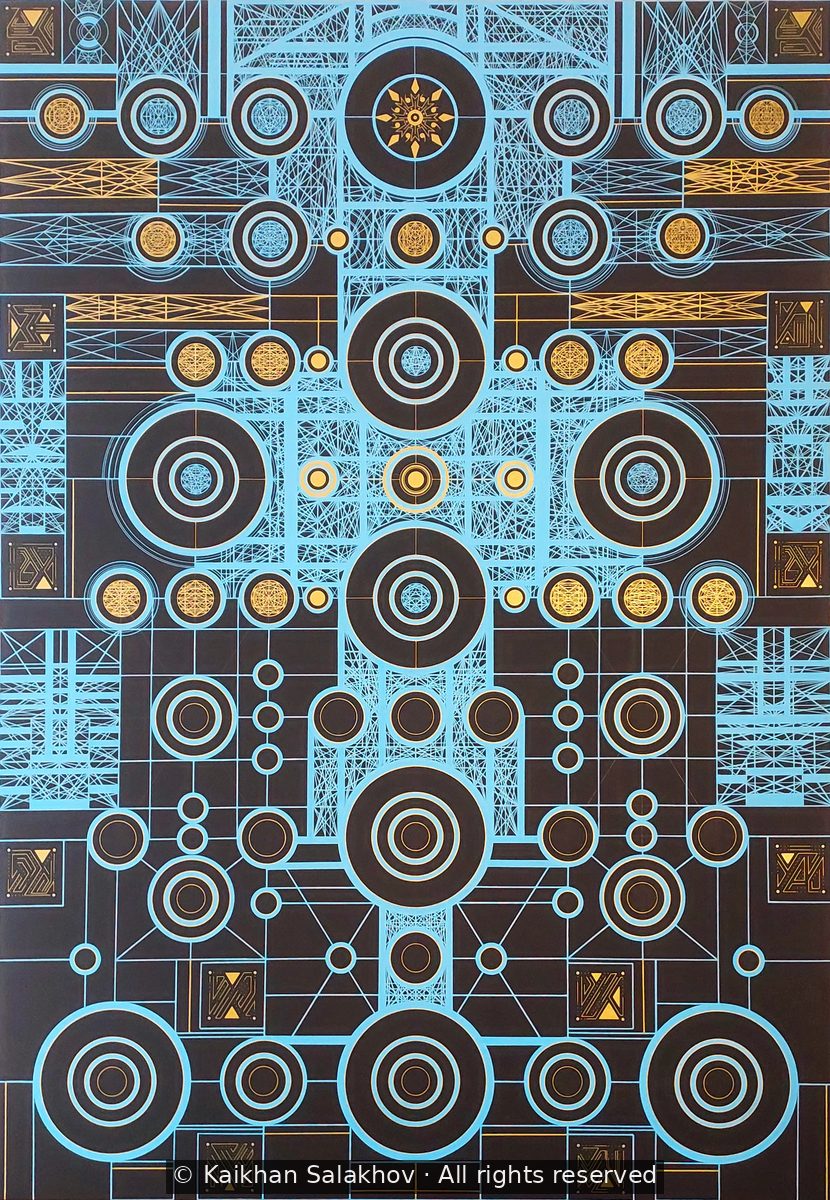
Technologies Across Life Forms
Cooperation, exchange and incompatibility among technical systems shaped by different environments, cognitive architectures and institutions.
Read the full painting meaning →This question examines robotic agency. Autonomous machines can act in ways that complicate responsibility, oversight, and the allocation of decision authority. Its surrounding discussion also concerns quantum communication: dependence on an assumed quantum communication network raises questions of access, interception, and reliable operation.
The analytical issue is how these conditions affect the proposed mechanism, technical dependencies, control interfaces, and failure conditions. The node treats the potential dysfunction as an open problem: its identification does not demonstrate that the anticipated outcome will occur or that an assumed technology is feasible.
Main problem
Autonomous machines can act in ways that complicate responsibility, oversight, and the allocation of decision authority.
Central question
How should responsibility and intervention rights be assigned when robotic systems act autonomously?
Analytical connections
Technology
For this robotic agency problem, technology examines the proposed mechanism, technical dependencies, control interfaces, and failure conditions.
Reliability / Systemic Resilience
For this robotic agency problem, reliability / systemic resilience examines cascading failure, redundant capacity, recovery procedures, and continuity of essential functions.
Physical Capability (Reach)
For this robotic agency problem, physical capability (reach) examines the spatial boundary of operations, dependence between locations, and delays affecting intervention.
Resource Allocation / Economy
For this robotic agency problem, resource allocation / economy examines ownership, access to scarce inputs, dependency, and incentives affecting allocation.
Governance
For this robotic agency problem, governance examines decision rights, oversight, institutional responsibility, and mechanisms for challenging authority.
Environmental Systems
For this robotic agency problem, environmental systems examines environmental dependencies, unintended ecological effects, and conditions required for habitation.
Communication
For this robotic agency problem, communication examines message access, authenticity, interpretation, delay, and the integrity of exchanged information.
Original source prose and question wording remain in the book. The summary and central question are analytical restatements; the author’s complete wording remains in the cited source.
ASX positions and scientific context
- P2 scope
- P4 scope
- C position: not established
- Speculative scenario
Physical scope and coordination themes describe fields of inquiry. They do not establish a measured capability or scientific validation.
Cross-domain dependencies
Conditional analytical comparisons; question-level access follows the parent discussion.
Regulation across heterogeneous systems
Different legal and regulatory assumptions can obstruct cooperation, maintenance, migration or technology exchange. The comparison concerns compatibility of authority and obligations, not proof that one legal design is universally appropriate.
ASX-45-020: Large Scale Galactic Malfunctions and Glitches. Catastrophic Risk Regulation of the Age of Interstellar Robotics, pp. 374–375; ASX-65-001: Xenocultural Diversity on the Galactic Stage. Consciousness, Perception, and Regulatory Frameworks Around the Galaxy, pp. 617–619.
Open ASX-65-001System failure and recovery
A technical failure can propagate into dependent services and institutions when redundancy and recovery are insufficient. The comparison preserves the distinction between ordinary reliability problems and the speculative mechanisms in individual source scenarios.
ASX-15-015: Software Glitches and Spiritual Teachings Corrupted, pp. 46–46; ASX-45-020: Large Scale Galactic Malfunctions and Glitches. Catastrophic Risk Regulation of the Age of Interstellar Robotics, pp. 374–375.
Open ASX-15-015System failure and recovery
A technical failure can propagate into dependent services and institutions when redundancy and recovery are insufficient. The comparison preserves the distinction between ordinary reliability problems and the speculative mechanisms in individual source scenarios.
ASX-25-027: The Nanoswarm Glitches and Their Implications for Architectural Applications, pp. 149–150; ASX-45-020: Large Scale Galactic Malfunctions and Glitches. Catastrophic Risk Regulation of the Age of Interstellar Robotics, pp. 374–375.
Open ASX-25-027System failure and recovery
A technical failure can propagate into dependent services and institutions when redundancy and recovery are insufficient. The comparison preserves the distinction between ordinary reliability problems and the speculative mechanisms in individual source scenarios.
ASX-25-037: Galactic-Scale Malfunctions: Navigating Catastrophic Failures in Cosmic Infrastructure, pp. 154–154; ASX-45-020: Large Scale Galactic Malfunctions and Glitches. Catastrophic Risk Regulation of the Age of Interstellar Robotics, pp. 374–375.
Open ASX-25-037System failure and recovery
A technical failure can propagate into dependent services and institutions when redundancy and recovery are insufficient. The comparison preserves the distinction between ordinary reliability problems and the speculative mechanisms in individual source scenarios.
ASX-25-038: Glitches in Technocentric Architectures: Unraveling the Consequences of Technological Failures, pp. 154–154; ASX-45-020: Large Scale Galactic Malfunctions and Glitches. Catastrophic Risk Regulation of the Age of Interstellar Robotics, pp. 374–375.
Open ASX-25-038System failure and recovery
A technical failure can propagate into dependent services and institutions when redundancy and recovery are insufficient. The comparison preserves the distinction between ordinary reliability problems and the speculative mechanisms in individual source scenarios.
ASX-25-040: Artificial Induced Glitches. The Menace of Sabotage and Malicious Manipulation, pp. 155–155; ASX-45-020: Large Scale Galactic Malfunctions and Glitches. Catastrophic Risk Regulation of the Age of Interstellar Robotics, pp. 374–375.
Open ASX-25-040System failure and recovery
A technical failure can propagate into dependent services and institutions when redundancy and recovery are insufficient. The comparison preserves the distinction between ordinary reliability problems and the speculative mechanisms in individual source scenarios.
ASX-45-020: Large Scale Galactic Malfunctions and Glitches. Catastrophic Risk Regulation of the Age of Interstellar Robotics, pp. 374–375; ASX-55-010: Vulnerabilities of the Galactic Energy Grid. Systemic Collapse Threats, pp. 491–491.
Open ASX-55-010System failure and recovery
A technical failure can propagate into dependent services and institutions when redundancy and recovery are insufficient. The comparison preserves the distinction between ordinary reliability problems and the speculative mechanisms in individual source scenarios.
ASX-45-020: Large Scale Galactic Malfunctions and Glitches. Catastrophic Risk Regulation of the Age of Interstellar Robotics, pp. 374–375; ASX-75-011: The Galactic Fragility, the Omni-Prevailing Influence of Systemic Breakdowns, Space-Time Anomalies, and Technocentric Bugs within Cosmogeopolitical Structures, pp. 752–754.
Open ASX-75-011Autonomy and control of artificial systems / Communication failure and continuity / Ecological intervention and habitation / Technical and cognitive interoperability / Regulation across heterogeneous systems / System failure and recovery
Delegated machine authority can affect infrastructure, environmental interventions and coercive capability. Accountability, access controls and institutional incentives can also alter how autonomous systems are deployed.
Loss or corruption of a shared communication service can interrupt coordination, maintenance and transmission of cultural or spiritual knowledge. The dependency applies when the systems actually share that service; similar titles alone do not establish a historical causal event.
Habitats and life-support systems depend on environmental conditions; engineering and resource extraction can change those conditions. Institutional priorities determine acceptable interventions, whose consequences can then alter settlement viability and social choices.
Interoperation depends on compatible interfaces and sufficiently shared interpretations. Standards, translation and access arrangements affect cooperation, while biological and cognitive differences can change what a usable interface requires.
Different legal and regulatory assumptions can obstruct cooperation, maintenance, migration or technology exchange. The comparison concerns compatibility of authority and obligations, not proof that one legal design is universally appropriate.
A technical failure can propagate into dependent services and institutions when redundancy and recovery are insufficient. The comparison preserves the distinction between ordinary reliability problems and the speculative mechanisms in individual source scenarios.
ASX-45-020: Large Scale Galactic Malfunctions and Glitches. Catastrophic Risk Regulation of the Age of Interstellar Robotics, pp. 374–375; ASX-55-011: AQAL Framework to Avoid Avatar Scenarios within Galactic Colonization, pp. 491–493.
Open ASX-55-011Autonomy and control of artificial systems / Communication failure and continuity / Robotics and infrastructure maintenance / Ecological intervention and habitation / Regulation across heterogeneous systems
Delegated machine authority can affect infrastructure, environmental interventions and coercive capability. Accountability, access controls and institutional incentives can also alter how autonomous systems are deployed.
Loss or corruption of a shared communication service can interrupt coordination, maintenance and transmission of cultural or spiritual knowledge. The dependency applies when the systems actually share that service; similar titles alone do not establish a historical causal event.
Infrastructure can depend on autonomous construction and maintenance, while robotics depends on power, materials, communication and accessible repair facilities. This is a conditional operational dependency, not evidence that a proposed megastructure can be constructed.
Habitats and life-support systems depend on environmental conditions; engineering and resource extraction can change those conditions. Institutional priorities determine acceptable interventions, whose consequences can then alter settlement viability and social choices.
Different legal and regulatory assumptions can obstruct cooperation, maintenance, migration or technology exchange. The comparison concerns compatibility of authority and obligations, not proof that one legal design is universally appropriate.
ASX-45-020: Large Scale Galactic Malfunctions and Glitches. Catastrophic Risk Regulation of the Age of Interstellar Robotics, pp. 374–375; ASX-75-004: Galactic Economic Wars. The Corporate-State Power Struggle within the Field of Cosmogeopolitics, pp. 737–740.
Open ASX-75-004Autonomy and control of artificial systems / Communication failure and continuity / Ecological intervention and habitation / Technical and cognitive interoperability / Regulation across heterogeneous systems / System failure and recovery
Delegated machine authority can affect infrastructure, environmental interventions and coercive capability. Accountability, access controls and institutional incentives can also alter how autonomous systems are deployed.
Loss or corruption of a shared communication service can interrupt coordination, maintenance and transmission of cultural or spiritual knowledge. The dependency applies when the systems actually share that service; similar titles alone do not establish a historical causal event.
Habitats and life-support systems depend on environmental conditions; engineering and resource extraction can change those conditions. Institutional priorities determine acceptable interventions, whose consequences can then alter settlement viability and social choices.
Interoperation depends on compatible interfaces and sufficiently shared interpretations. Standards, translation and access arrangements affect cooperation, while biological and cognitive differences can change what a usable interface requires.
Different legal and regulatory assumptions can obstruct cooperation, maintenance, migration or technology exchange. The comparison concerns compatibility of authority and obligations, not proof that one legal design is universally appropriate.
A technical failure can propagate into dependent services and institutions when redundancy and recovery are insufficient. The comparison preserves the distinction between ordinary reliability problems and the speculative mechanisms in individual source scenarios.
ASX-35-003: Simulations as a Means of Control and Subjugation, pp. 265–267; ASX-45-020: Large Scale Galactic Malfunctions and Glitches. Catastrophic Risk Regulation of the Age of Interstellar Robotics, pp. 374–375.
Open ASX-35-003Autonomy and control of artificial systems / Communication failure and continuity / Ecological intervention and habitation / Technical and cognitive interoperability / Regulation across heterogeneous systems / System failure and recovery
Delegated machine authority can affect infrastructure, environmental interventions and coercive capability. Accountability, access controls and institutional incentives can also alter how autonomous systems are deployed.
Loss or corruption of a shared communication service can interrupt coordination, maintenance and transmission of cultural or spiritual knowledge. The dependency applies when the systems actually share that service; similar titles alone do not establish a historical causal event.
Habitats and life-support systems depend on environmental conditions; engineering and resource extraction can change those conditions. Institutional priorities determine acceptable interventions, whose consequences can then alter settlement viability and social choices.
Interoperation depends on compatible interfaces and sufficiently shared interpretations. Standards, translation and access arrangements affect cooperation, while biological and cognitive differences can change what a usable interface requires.
Different legal and regulatory assumptions can obstruct cooperation, maintenance, migration or technology exchange. The comparison concerns compatibility of authority and obligations, not proof that one legal design is universally appropriate.
A technical failure can propagate into dependent services and institutions when redundancy and recovery are insufficient. The comparison preserves the distinction between ordinary reliability problems and the speculative mechanisms in individual source scenarios.
ASX-45-020: Large Scale Galactic Malfunctions and Glitches. Catastrophic Risk Regulation of the Age of Interstellar Robotics, pp. 374–375; ASX-65-007: The Role of the Xenoanthropologists in Missions to Deep Space, Galactic Colonization, and Terraforming, pp. 631–632.
Open ASX-65-007Autonomy and control of artificial systems / Communication failure and continuity / Technical and cognitive interoperability / Regulation across heterogeneous systems / System failure and recovery
Delegated machine authority can affect infrastructure, environmental interventions and coercive capability. Accountability, access controls and institutional incentives can also alter how autonomous systems are deployed.
Loss or corruption of a shared communication service can interrupt coordination, maintenance and transmission of cultural or spiritual knowledge. The dependency applies when the systems actually share that service; similar titles alone do not establish a historical causal event.
Interoperation depends on compatible interfaces and sufficiently shared interpretations. Standards, translation and access arrangements affect cooperation, while biological and cognitive differences can change what a usable interface requires.
Different legal and regulatory assumptions can obstruct cooperation, maintenance, migration or technology exchange. The comparison concerns compatibility of authority and obligations, not proof that one legal design is universally appropriate.
A technical failure can propagate into dependent services and institutions when redundancy and recovery are insufficient. The comparison preserves the distinction between ordinary reliability problems and the speculative mechanisms in individual source scenarios.
ASX-45-020: Large Scale Galactic Malfunctions and Glitches. Catastrophic Risk Regulation of the Age of Interstellar Robotics, pp. 374–375; ASX-55-002: Galactic Free Speech. Meeting the Challenges of Information Control in an Interstellar Society, pp. 480–482.
Open ASX-55-002Autonomy and control of artificial systems / Ecological intervention and habitation / Technical and cognitive interoperability / Regulation across heterogeneous systems / System failure and recovery
Delegated machine authority can affect infrastructure, environmental interventions and coercive capability. Accountability, access controls and institutional incentives can also alter how autonomous systems are deployed.
Habitats and life-support systems depend on environmental conditions; engineering and resource extraction can change those conditions. Institutional priorities determine acceptable interventions, whose consequences can then alter settlement viability and social choices.
Interoperation depends on compatible interfaces and sufficiently shared interpretations. Standards, translation and access arrangements affect cooperation, while biological and cognitive differences can change what a usable interface requires.
Different legal and regulatory assumptions can obstruct cooperation, maintenance, migration or technology exchange. The comparison concerns compatibility of authority and obligations, not proof that one legal design is universally appropriate.
A technical failure can propagate into dependent services and institutions when redundancy and recovery are insufficient. The comparison preserves the distinction between ordinary reliability problems and the speculative mechanisms in individual source scenarios.
ASX-45-020: Large Scale Galactic Malfunctions and Glitches. Catastrophic Risk Regulation of the Age of Interstellar Robotics, pp. 374–375; ASX-65-002: Xenocultural Architecture and Technological Expression Throughout the Galactic Stage. An Indepth Look into Structural Aesthetics, Consciousness and Environmental Accommodation, pp. 619–622.
Open ASX-65-002Communication failure and continuity / Technical and cognitive interoperability / System failure and recovery
Loss or corruption of a shared communication service can interrupt coordination, maintenance and transmission of cultural or spiritual knowledge. The dependency applies when the systems actually share that service; similar titles alone do not establish a historical causal event.
Interoperation depends on compatible interfaces and sufficiently shared interpretations. Standards, translation and access arrangements affect cooperation, while biological and cognitive differences can change what a usable interface requires.
A technical failure can propagate into dependent services and institutions when redundancy and recovery are insufficient. The comparison preserves the distinction between ordinary reliability problems and the speculative mechanisms in individual source scenarios.
ASX-15-006: Spiritual System Fragmentation due to Quantum Communication Failures, pp. 44–44; ASX-45-020: Large Scale Galactic Malfunctions and Glitches. Catastrophic Risk Regulation of the Age of Interstellar Robotics, pp. 374–375.
Open ASX-15-006Communication failure and continuity / Technical and cognitive interoperability / Regulation across heterogeneous systems
Loss or corruption of a shared communication service can interrupt coordination, maintenance and transmission of cultural or spiritual knowledge. The dependency applies when the systems actually share that service; similar titles alone do not establish a historical causal event.
Interoperation depends on compatible interfaces and sufficiently shared interpretations. Standards, translation and access arrangements affect cooperation, while biological and cognitive differences can change what a usable interface requires.
Different legal and regulatory assumptions can obstruct cooperation, maintenance, migration or technology exchange. The comparison concerns compatibility of authority and obligations, not proof that one legal design is universally appropriate.
ASX-35-007: The Ethical Dilemmas of Quantum Deepfakes and Manipulating Photons in Galactic Politics and Warfare, pp. 272–273; ASX-45-020: Large Scale Galactic Malfunctions and Glitches. Catastrophic Risk Regulation of the Age of Interstellar Robotics, pp. 374–375.
Open ASX-35-007Communication failure and continuity / Technical and cognitive interoperability
Loss or corruption of a shared communication service can interrupt coordination, maintenance and transmission of cultural or spiritual knowledge. The dependency applies when the systems actually share that service; similar titles alone do not establish a historical causal event.
Interoperation depends on compatible interfaces and sufficiently shared interpretations. Standards, translation and access arrangements affect cooperation, while biological and cognitive differences can change what a usable interface requires.
ASX-15-001: Ever-Diverse, Varied, and Emergent Spiritual Practices Across Galactic Regions, pp. 43–43; ASX-45-020: Large Scale Galactic Malfunctions and Glitches. Catastrophic Risk Regulation of the Age of Interstellar Robotics, pp. 374–375.
Open ASX-15-001Associated paintings
- Astral SpaceX: The Cosmic Engineer
- Astral SpaceX: The Cosmic A.I
- Astral SpaceX: The Fabric of Space
- Astral SpaceX: The Multiverse Generator
- Technologies Across Life Forms
- Cosmogeopolitics Across Life Forms
Source organization
- part of: ASX-45-020
Citation
Kaikhan Salakhov (2024). Astral Space Exploration: The Cosmic Renaissance: The Fundamental Principles of Cosmocybernetics. Part IV, “Astral Space Exploration Grid: Interstellar Robotics Technologies Through Stages of Development”; Chapter 5, “The Galactic Stage”; discussion: “Large Scale Galactic Malfunctions and Glitches. Catastrophic Risk Regulation of the Age of Interstellar Robotics”; question 7, p. 375. Page references follow the supplied 852-page edition; pagination in other editions may differ. Library reference: ASX-45-020-Q07. https://www.asxgrid.app/library/records/ASX-45-020-Q07.html
Page references follow the supplied 852-page edition; pagination in other editions may differ..
Book publication: . Map created: . Map revised: .