Multigalactic Map of Consciousness. Quantum Technologies and Creation of a 4D Interactive Civilization Atlas / Question 2
ASX-56-004-Q02 · Part V · Space Exploration · Chapter 6: The Multigalactic Stage
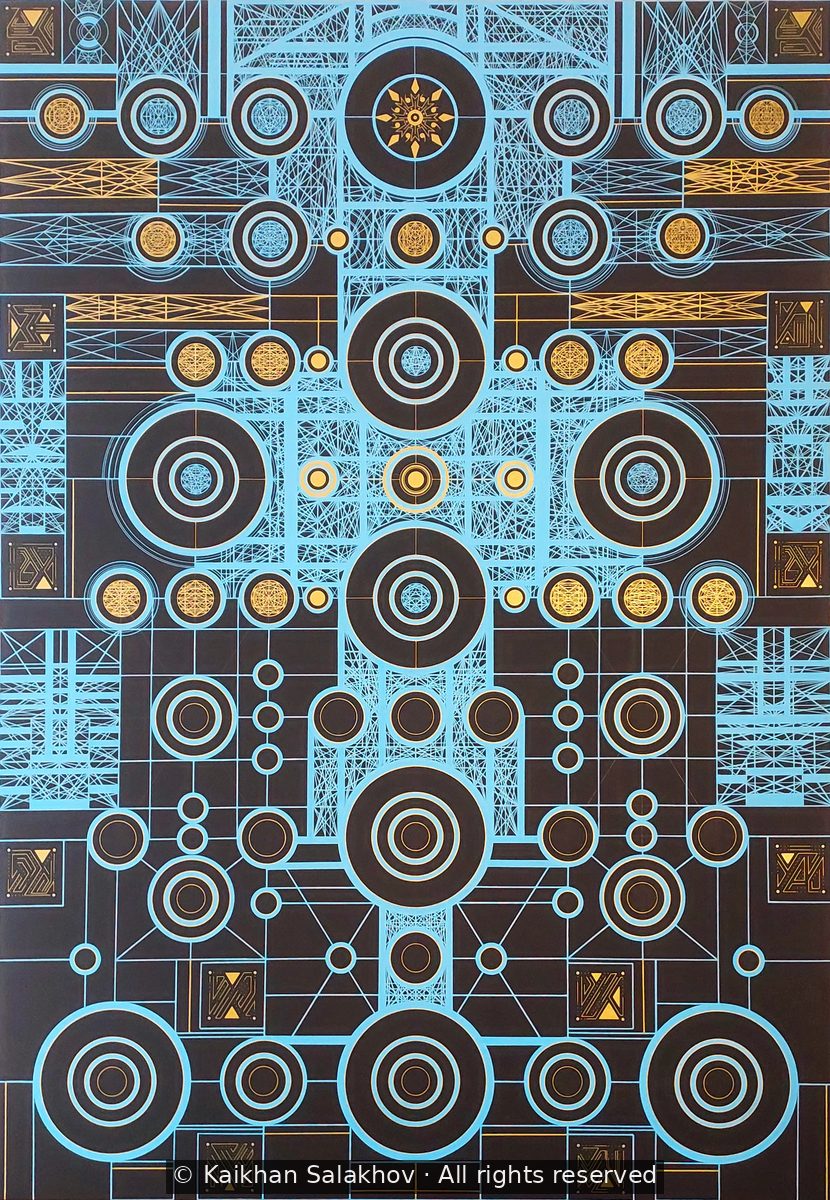
Technologies Across Life Forms
Cooperation, exchange and incompatibility among technical systems shaped by different environments, cognitive architectures and institutions.
Read the full painting meaning →This question examines galactic coordination. Distributed activity across a galaxy raises problems of delayed information, institutional divergence, and local autonomy. Its surrounding discussion also concerns quantum communication: dependence on an assumed quantum communication network raises questions of access, interception, and reliable operation.
The analytical issue is how these conditions affect ownership, access to scarce inputs, dependency, and incentives affecting allocation. The node treats the potential dysfunction as an open problem: its identification does not demonstrate that the anticipated outcome will occur or that an assumed technology is feasible.
Main problem
Distributed activity across a galaxy raises problems of delayed information, institutional divergence, and local autonomy.
Central question
What forms of coordination could remain meaningful across such extensive spatial separation?
Analytical connections
Resource Allocation / Economy
For this galactic coordination problem, resource allocation / economy examines ownership, access to scarce inputs, dependency, and incentives affecting allocation.
Technology
For this galactic coordination problem, technology examines the proposed mechanism, technical dependencies, control interfaces, and failure conditions.
Consciousness / Psychology
For this galactic coordination problem, consciousness / psychology examines subjective experience, identity, agency, and the psychological effects of the scenario.
Physical Capability (Reach)
For this galactic coordination problem, physical capability (reach) examines the spatial boundary of operations, dependence between locations, and delays affecting intervention.
Communication
For this galactic coordination problem, communication examines message access, authenticity, interpretation, delay, and the integrity of exchanged information.
Social Structure
For this galactic coordination problem, social structure examines group membership, social differentiation, cohesion, and the distribution of roles.
Governance
For this galactic coordination problem, governance examines decision rights, oversight, institutional responsibility, and mechanisms for challenging authority.
Contact Disposition
For this galactic coordination problem, contact disposition examines relations between groups, conflict escalation, cooperation, and responses to unfamiliar agents.
Worldview / Philosophy
For this galactic coordination problem, worldview / philosophy examines assumptions about knowledge, identity, reality, and the criteria used to justify conclusions.
Temporality
For this galactic coordination problem, temporality examines decision horizons, asynchronous experience, institutional duration, and long-term commitments.
Environmental Systems
For this galactic coordination problem, environmental systems examines environmental dependencies, unintended ecological effects, and conditions required for habitation.
Ethics / Moral Consideration
For this galactic coordination problem, ethics / moral consideration examines consent, exposure to harm, unequal treatment, and the scope of moral protection.
Original source prose and question wording remain in the book. The summary and central question are analytical restatements; the author’s complete wording remains in the cited source.
ASX positions and scientific context
- P2 scope
- P4 scope
- P6 scope
- C3 thematic relevance
- C4 thematic relevance
- C5 thematic relevance
- C position: not established
- Speculative scenario
Physical scope and coordination themes describe fields of inquiry. They do not establish a measured capability or scientific validation.
Cross-domain dependencies
Conditional analytical comparisons; question-level access follows the parent discussion.
Deception and information integrity / Ecological intervention and habitation / Knowledge and cultural continuity / Embodiment, identity and recognition / Resource access and concentration of power / Technical and cognitive interoperability / Infrastructure and strategic conflict
Manipulated information can alter trust, resource decisions, collective memory and political legitimacy. The links compare this mechanism across domains; quantum or photonic deception retains the scientific limitations of the cited scenario.
Habitats and life-support systems depend on environmental conditions; engineering and resource extraction can change those conditions. Institutional priorities determine acceptable interventions, whose consequences can then alter settlement viability and social choices.
Continuity depends on storage, interpretation, education and communication. Changes to those systems can alter shared knowledge, while communities and institutions decide which records and practices are preserved or excluded.
Changes in embodiment, cognition or reproduction can challenge categories of identity and agency. Recognition rules and cultural expectations can then constrain access to enhancement, membership and protection. Unfamiliarity alone is not evidence of lesser moral status.
Unequal access to energy, technology, transport or information can create dependence and unequal bargaining power. Institutions and dominant operators may reinforce or reduce the same inequalities through allocation and access rules.
Interoperation depends on compatible interfaces and sufficiently shared interpretations. Standards, translation and access arrangements affect cooperation, while biological and cognitive differences can change what a usable interface requires.
Infrastructure can become both a strategic asset and a target. Conflict may disrupt energy, transport or communications, while dependence on those services can be exploited to constrain decisions.
ASX-26-001: Diverse Architectural Traditions Across Galaxies. A Synthesis of Stages of Consciousness, Type of Civilization, and Architectural Philosophies, pp. 155–157; ASX-56-004: Multigalactic Map of Consciousness. Quantum Technologies and Creation of a 4D Interactive Civilization Atlas, pp. 509–511.
Open ASX-26-001Knowledge and cultural continuity / Technical and cognitive interoperability / Infrastructure and strategic conflict
Continuity depends on storage, interpretation, education and communication. Changes to those systems can alter shared knowledge, while communities and institutions decide which records and practices are preserved or excluded.
Interoperation depends on compatible interfaces and sufficiently shared interpretations. Standards, translation and access arrangements affect cooperation, while biological and cognitive differences can change what a usable interface requires.
Infrastructure can become both a strategic asset and a target. Conflict may disrupt energy, transport or communications, while dependence on those services can be exploited to constrain decisions.
ASX-26-028: Cross-Galactic Cultural Integration. Bridging Civilizational Divides, pp. 168–168; ASX-56-004: Multigalactic Map of Consciousness. Quantum Technologies and Creation of a 4D Interactive Civilization Atlas, pp. 509–511.
Open ASX-26-028Ecological intervention and habitation / Knowledge and cultural continuity / Resource access and concentration of power / Technical and cognitive interoperability / Regulation across heterogeneous systems / Simulation, dependency and coercion / Infrastructure and strategic conflict
Habitats and life-support systems depend on environmental conditions; engineering and resource extraction can change those conditions. Institutional priorities determine acceptable interventions, whose consequences can then alter settlement viability and social choices.
Continuity depends on storage, interpretation, education and communication. Changes to those systems can alter shared knowledge, while communities and institutions decide which records and practices are preserved or excluded.
Unequal access to energy, technology, transport or information can create dependence and unequal bargaining power. Institutions and dominant operators may reinforce or reduce the same inequalities through allocation and access rules.
Interoperation depends on compatible interfaces and sufficiently shared interpretations. Standards, translation and access arrangements affect cooperation, while biological and cognitive differences can change what a usable interface requires.
Different legal and regulatory assumptions can obstruct cooperation, maintenance, migration or technology exchange. The comparison concerns compatibility of authority and obligations, not proof that one legal design is universally appropriate.
Control of a simulated environment can create dependence through access, representation, property or exit restrictions. Economic and political power outside the simulation can influence the rules enforced within it.
Infrastructure can become both a strategic asset and a target. Conflict may disrupt energy, transport or communications, while dependence on those services can be exploited to constrain decisions.
ASX-56-004: Multigalactic Map of Consciousness. Quantum Technologies and Creation of a 4D Interactive Civilization Atlas, pp. 509–511; ASX-66-001: Xenoanthropology at the Multicellular Intergalactic Stage. The Complexity of Intergalactic Civilizations, pp. 633–636.
Open ASX-66-001Ecological intervention and habitation / Knowledge and cultural continuity / Embodiment, identity and recognition / Resource access and concentration of power / Regulation across heterogeneous systems / Infrastructure and strategic conflict
Habitats and life-support systems depend on environmental conditions; engineering and resource extraction can change those conditions. Institutional priorities determine acceptable interventions, whose consequences can then alter settlement viability and social choices.
Continuity depends on storage, interpretation, education and communication. Changes to those systems can alter shared knowledge, while communities and institutions decide which records and practices are preserved or excluded.
Changes in embodiment, cognition or reproduction can challenge categories of identity and agency. Recognition rules and cultural expectations can then constrain access to enhancement, membership and protection. Unfamiliarity alone is not evidence of lesser moral status.
Unequal access to energy, technology, transport or information can create dependence and unequal bargaining power. Institutions and dominant operators may reinforce or reduce the same inequalities through allocation and access rules.
Different legal and regulatory assumptions can obstruct cooperation, maintenance, migration or technology exchange. The comparison concerns compatibility of authority and obligations, not proof that one legal design is universally appropriate.
Infrastructure can become both a strategic asset and a target. Conflict may disrupt energy, transport or communications, while dependence on those services can be exploited to constrain decisions.
ASX-26-021: Trade in Void Galaxies. Architectural Visions, Strategic Exchanges, and Intercivilizational Conflicts, pp. 164–165; ASX-56-004: Multigalactic Map of Consciousness. Quantum Technologies and Creation of a 4D Interactive Civilization Atlas, pp. 509–511.
Open ASX-26-021Ecological intervention and habitation / Knowledge and cultural continuity / Resource access and concentration of power / Regulation across heterogeneous systems / Infrastructure and strategic conflict
Habitats and life-support systems depend on environmental conditions; engineering and resource extraction can change those conditions. Institutional priorities determine acceptable interventions, whose consequences can then alter settlement viability and social choices.
Continuity depends on storage, interpretation, education and communication. Changes to those systems can alter shared knowledge, while communities and institutions decide which records and practices are preserved or excluded.
Unequal access to energy, technology, transport or information can create dependence and unequal bargaining power. Institutions and dominant operators may reinforce or reduce the same inequalities through allocation and access rules.
Different legal and regulatory assumptions can obstruct cooperation, maintenance, migration or technology exchange. The comparison concerns compatibility of authority and obligations, not proof that one legal design is universally appropriate.
Infrastructure can become both a strategic asset and a target. Conflict may disrupt energy, transport or communications, while dependence on those services can be exploited to constrain decisions.
ASX-26-020: Exploiting Unchecked Galaxies. Diverse Approaches and Potential Conflicts at the Multigalactic Stage, pp. 163–164; ASX-56-004: Multigalactic Map of Consciousness. Quantum Technologies and Creation of a 4D Interactive Civilization Atlas, pp. 509–511.
Open ASX-26-020Ecological intervention and habitation / Knowledge and cultural continuity / Resource access and concentration of power / Technical and cognitive interoperability / Simulation, dependency and coercion / Infrastructure and strategic conflict
Habitats and life-support systems depend on environmental conditions; engineering and resource extraction can change those conditions. Institutional priorities determine acceptable interventions, whose consequences can then alter settlement viability and social choices.
Continuity depends on storage, interpretation, education and communication. Changes to those systems can alter shared knowledge, while communities and institutions decide which records and practices are preserved or excluded.
Unequal access to energy, technology, transport or information can create dependence and unequal bargaining power. Institutions and dominant operators may reinforce or reduce the same inequalities through allocation and access rules.
Interoperation depends on compatible interfaces and sufficiently shared interpretations. Standards, translation and access arrangements affect cooperation, while biological and cognitive differences can change what a usable interface requires.
Control of a simulated environment can create dependence through access, representation, property or exit restrictions. Economic and political power outside the simulation can influence the rules enforced within it.
Infrastructure can become both a strategic asset and a target. Conflict may disrupt energy, transport or communications, while dependence on those services can be exploited to constrain decisions.
ASX-36-002: The Fate of Intergalactic Civilizations in a Drifting and Merging Universe, pp. 275–276; ASX-56-004: Multigalactic Map of Consciousness. Quantum Technologies and Creation of a 4D Interactive Civilization Atlas, pp. 509–511.
Open ASX-36-002Deception and information integrity / Ecological intervention and habitation / Knowledge and cultural continuity / Embodiment, identity and recognition / Resource access and concentration of power / Technical and cognitive interoperability / Simulation, dependency and coercion / Infrastructure and strategic conflict
Manipulated information can alter trust, resource decisions, collective memory and political legitimacy. The links compare this mechanism across domains; quantum or photonic deception retains the scientific limitations of the cited scenario.
Habitats and life-support systems depend on environmental conditions; engineering and resource extraction can change those conditions. Institutional priorities determine acceptable interventions, whose consequences can then alter settlement viability and social choices.
Continuity depends on storage, interpretation, education and communication. Changes to those systems can alter shared knowledge, while communities and institutions decide which records and practices are preserved or excluded.
Changes in embodiment, cognition or reproduction can challenge categories of identity and agency. Recognition rules and cultural expectations can then constrain access to enhancement, membership and protection. Unfamiliarity alone is not evidence of lesser moral status.
Unequal access to energy, technology, transport or information can create dependence and unequal bargaining power. Institutions and dominant operators may reinforce or reduce the same inequalities through allocation and access rules.
Interoperation depends on compatible interfaces and sufficiently shared interpretations. Standards, translation and access arrangements affect cooperation, while biological and cognitive differences can change what a usable interface requires.
Control of a simulated environment can create dependence through access, representation, property or exit restrictions. Economic and political power outside the simulation can influence the rules enforced within it.
Infrastructure can become both a strategic asset and a target. Conflict may disrupt energy, transport or communications, while dependence on those services can be exploited to constrain decisions.
ASX-56-004: Multigalactic Map of Consciousness. Quantum Technologies and Creation of a 4D Interactive Civilization Atlas, pp. 509–511; ASX-76-004: Cosmogeopolitical Ideology Wars Within Multigalactic Contexts. Philosophical, Ethical, Spiritual, and Cultural Warfare across Galaxy Clusters, pp. 761–766.
Open ASX-76-004Deception and information integrity / Ecological intervention and habitation / Knowledge and cultural continuity / Embodiment, identity and recognition / Resource access and concentration of power / Technical and cognitive interoperability / Simulation, dependency and coercion / Infrastructure and strategic conflict
Manipulated information can alter trust, resource decisions, collective memory and political legitimacy. The links compare this mechanism across domains; quantum or photonic deception retains the scientific limitations of the cited scenario.
Habitats and life-support systems depend on environmental conditions; engineering and resource extraction can change those conditions. Institutional priorities determine acceptable interventions, whose consequences can then alter settlement viability and social choices.
Continuity depends on storage, interpretation, education and communication. Changes to those systems can alter shared knowledge, while communities and institutions decide which records and practices are preserved or excluded.
Changes in embodiment, cognition or reproduction can challenge categories of identity and agency. Recognition rules and cultural expectations can then constrain access to enhancement, membership and protection. Unfamiliarity alone is not evidence of lesser moral status.
Unequal access to energy, technology, transport or information can create dependence and unequal bargaining power. Institutions and dominant operators may reinforce or reduce the same inequalities through allocation and access rules.
Interoperation depends on compatible interfaces and sufficiently shared interpretations. Standards, translation and access arrangements affect cooperation, while biological and cognitive differences can change what a usable interface requires.
Control of a simulated environment can create dependence through access, representation, property or exit restrictions. Economic and political power outside the simulation can influence the rules enforced within it.
Infrastructure can become both a strategic asset and a target. Conflict may disrupt energy, transport or communications, while dependence on those services can be exploited to constrain decisions.
ASX-56-004: Multigalactic Map of Consciousness. Quantum Technologies and Creation of a 4D Interactive Civilization Atlas, pp. 509–511; ASX-76-005: Transspecies, Transgalactic Cosmocentric Cosmogeopolitics and Diplomacy in the Multigalactic Scene, pp. 766–769.
Open ASX-76-005Deception and information integrity / Knowledge and cultural continuity / Embodiment, identity and recognition / Technical and cognitive interoperability / Regulation across heterogeneous systems / Simulation, dependency and coercion / Infrastructure and strategic conflict
Manipulated information can alter trust, resource decisions, collective memory and political legitimacy. The links compare this mechanism across domains; quantum or photonic deception retains the scientific limitations of the cited scenario.
Continuity depends on storage, interpretation, education and communication. Changes to those systems can alter shared knowledge, while communities and institutions decide which records and practices are preserved or excluded.
Changes in embodiment, cognition or reproduction can challenge categories of identity and agency. Recognition rules and cultural expectations can then constrain access to enhancement, membership and protection. Unfamiliarity alone is not evidence of lesser moral status.
Interoperation depends on compatible interfaces and sufficiently shared interpretations. Standards, translation and access arrangements affect cooperation, while biological and cognitive differences can change what a usable interface requires.
Different legal and regulatory assumptions can obstruct cooperation, maintenance, migration or technology exchange. The comparison concerns compatibility of authority and obligations, not proof that one legal design is universally appropriate.
Control of a simulated environment can create dependence through access, representation, property or exit restrictions. Economic and political power outside the simulation can influence the rules enforced within it.
Infrastructure can become both a strategic asset and a target. Conflict may disrupt energy, transport or communications, while dependence on those services can be exploited to constrain decisions.
ASX-56-004: Multigalactic Map of Consciousness. Quantum Technologies and Creation of a 4D Interactive Civilization Atlas, pp. 509–511; ASX-66-004: Overview of Consciousness, Cultural Heritage, and Xenodiplomacy, pp. 642–644.
Open ASX-66-004Deception and information integrity / Ecological intervention and habitation / Resource access and concentration of power / Technical and cognitive interoperability / Regulation across heterogeneous systems / Simulation, dependency and coercion / Infrastructure and strategic conflict
Manipulated information can alter trust, resource decisions, collective memory and political legitimacy. The links compare this mechanism across domains; quantum or photonic deception retains the scientific limitations of the cited scenario.
Habitats and life-support systems depend on environmental conditions; engineering and resource extraction can change those conditions. Institutional priorities determine acceptable interventions, whose consequences can then alter settlement viability and social choices.
Unequal access to energy, technology, transport or information can create dependence and unequal bargaining power. Institutions and dominant operators may reinforce or reduce the same inequalities through allocation and access rules.
Interoperation depends on compatible interfaces and sufficiently shared interpretations. Standards, translation and access arrangements affect cooperation, while biological and cognitive differences can change what a usable interface requires.
Different legal and regulatory assumptions can obstruct cooperation, maintenance, migration or technology exchange. The comparison concerns compatibility of authority and obligations, not proof that one legal design is universally appropriate.
Control of a simulated environment can create dependence through access, representation, property or exit restrictions. Economic and political power outside the simulation can influence the rules enforced within it.
Infrastructure can become both a strategic asset and a target. Conflict may disrupt energy, transport or communications, while dependence on those services can be exploited to constrain decisions.
ASX-36-001: Diverse Practices and Technologies of Civilizations, pp. 273–275; ASX-56-004: Multigalactic Map of Consciousness. Quantum Technologies and Creation of a 4D Interactive Civilization Atlas, pp. 509–511.
Open ASX-36-001Deception and information integrity / Ecological intervention and habitation / Embodiment, identity and recognition / Resource access and concentration of power / Technical and cognitive interoperability / Regulation across heterogeneous systems / Infrastructure and strategic conflict
Manipulated information can alter trust, resource decisions, collective memory and political legitimacy. The links compare this mechanism across domains; quantum or photonic deception retains the scientific limitations of the cited scenario.
Habitats and life-support systems depend on environmental conditions; engineering and resource extraction can change those conditions. Institutional priorities determine acceptable interventions, whose consequences can then alter settlement viability and social choices.
Changes in embodiment, cognition or reproduction can challenge categories of identity and agency. Recognition rules and cultural expectations can then constrain access to enhancement, membership and protection. Unfamiliarity alone is not evidence of lesser moral status.
Unequal access to energy, technology, transport or information can create dependence and unequal bargaining power. Institutions and dominant operators may reinforce or reduce the same inequalities through allocation and access rules.
Interoperation depends on compatible interfaces and sufficiently shared interpretations. Standards, translation and access arrangements affect cooperation, while biological and cognitive differences can change what a usable interface requires.
Different legal and regulatory assumptions can obstruct cooperation, maintenance, migration or technology exchange. The comparison concerns compatibility of authority and obligations, not proof that one legal design is universally appropriate.
Infrastructure can become both a strategic asset and a target. Conflict may disrupt energy, transport or communications, while dependence on those services can be exploited to constrain decisions.
ASX-46-006: AI vs. AI Conflicts. The Conundrums of Solving Multigalactic AI Relations, pp. 386–387; ASX-56-004: Multigalactic Map of Consciousness. Quantum Technologies and Creation of a 4D Interactive Civilization Atlas, pp. 509–511.
Open ASX-46-006Deception and information integrity / Ecological intervention and habitation / Resource access and concentration of power / Technical and cognitive interoperability / Regulation across heterogeneous systems / Infrastructure and strategic conflict
Manipulated information can alter trust, resource decisions, collective memory and political legitimacy. The links compare this mechanism across domains; quantum or photonic deception retains the scientific limitations of the cited scenario.
Habitats and life-support systems depend on environmental conditions; engineering and resource extraction can change those conditions. Institutional priorities determine acceptable interventions, whose consequences can then alter settlement viability and social choices.
Unequal access to energy, technology, transport or information can create dependence and unequal bargaining power. Institutions and dominant operators may reinforce or reduce the same inequalities through allocation and access rules.
Interoperation depends on compatible interfaces and sufficiently shared interpretations. Standards, translation and access arrangements affect cooperation, while biological and cognitive differences can change what a usable interface requires.
Different legal and regulatory assumptions can obstruct cooperation, maintenance, migration or technology exchange. The comparison concerns compatibility of authority and obligations, not proof that one legal design is universally appropriate.
Infrastructure can become both a strategic asset and a target. Conflict may disrupt energy, transport or communications, while dependence on those services can be exploited to constrain decisions.
ASX-46-004: Ethical Governance of Advanced AI. Wayfinding for Diversity in Standards and Regulations across Multigalactic Clusters, pp. 382–383; ASX-56-004: Multigalactic Map of Consciousness. Quantum Technologies and Creation of a 4D Interactive Civilization Atlas, pp. 509–511.
Open ASX-46-004Knowledge and cultural continuity / Embodiment, identity and recognition / Technical and cognitive interoperability / Regulation across heterogeneous systems / Infrastructure and strategic conflict
Continuity depends on storage, interpretation, education and communication. Changes to those systems can alter shared knowledge, while communities and institutions decide which records and practices are preserved or excluded.
Changes in embodiment, cognition or reproduction can challenge categories of identity and agency. Recognition rules and cultural expectations can then constrain access to enhancement, membership and protection. Unfamiliarity alone is not evidence of lesser moral status.
Interoperation depends on compatible interfaces and sufficiently shared interpretations. Standards, translation and access arrangements affect cooperation, while biological and cognitive differences can change what a usable interface requires.
Different legal and regulatory assumptions can obstruct cooperation, maintenance, migration or technology exchange. The comparison concerns compatibility of authority and obligations, not proof that one legal design is universally appropriate.
Infrastructure can become both a strategic asset and a target. Conflict may disrupt energy, transport or communications, while dependence on those services can be exploited to constrain decisions.
ASX-16-020: The Cosmic Safeguard: The Impossibility of Single-Form Dominance in Multigalactic Expansion, pp. 58–58; ASX-56-004: Multigalactic Map of Consciousness. Quantum Technologies and Creation of a 4D Interactive Civilization Atlas, pp. 509–511.
Open ASX-16-020Deception and information integrity / Knowledge and cultural continuity / Resource access and concentration of power / Technical and cognitive interoperability / Infrastructure and strategic conflict
Manipulated information can alter trust, resource decisions, collective memory and political legitimacy. The links compare this mechanism across domains; quantum or photonic deception retains the scientific limitations of the cited scenario.
Continuity depends on storage, interpretation, education and communication. Changes to those systems can alter shared knowledge, while communities and institutions decide which records and practices are preserved or excluded.
Unequal access to energy, technology, transport or information can create dependence and unequal bargaining power. Institutions and dominant operators may reinforce or reduce the same inequalities through allocation and access rules.
Interoperation depends on compatible interfaces and sufficiently shared interpretations. Standards, translation and access arrangements affect cooperation, while biological and cognitive differences can change what a usable interface requires.
Infrastructure can become both a strategic asset and a target. Conflict may disrupt energy, transport or communications, while dependence on those services can be exploited to constrain decisions.
ASX-16-008: Galactic Spiritual Verification and the Problem of Distance, pp. 53–54; ASX-56-004: Multigalactic Map of Consciousness. Quantum Technologies and Creation of a 4D Interactive Civilization Atlas, pp. 509–511.
Open ASX-16-008Resource access and concentration of power / Technical and cognitive interoperability / Simulation, dependency and coercion / Infrastructure and strategic conflict
Unequal access to energy, technology, transport or information can create dependence and unequal bargaining power. Institutions and dominant operators may reinforce or reduce the same inequalities through allocation and access rules.
Interoperation depends on compatible interfaces and sufficiently shared interpretations. Standards, translation and access arrangements affect cooperation, while biological and cognitive differences can change what a usable interface requires.
Control of a simulated environment can create dependence through access, representation, property or exit restrictions. Economic and political power outside the simulation can influence the rules enforced within it.
Infrastructure can become both a strategic asset and a target. Conflict may disrupt energy, transport or communications, while dependence on those services can be exploited to constrain decisions.
ASX-36-003: Simulation Universes as Power Generators. The Potentials of Virtual Realities in Facing Civilizational Energy Demands, pp. 276–277; ASX-56-004: Multigalactic Map of Consciousness. Quantum Technologies and Creation of a 4D Interactive Civilization Atlas, pp. 509–511.
Open ASX-36-003Resource access and concentration of power / Regulation across heterogeneous systems / Simulation, dependency and coercion / Infrastructure and strategic conflict
Unequal access to energy, technology, transport or information can create dependence and unequal bargaining power. Institutions and dominant operators may reinforce or reduce the same inequalities through allocation and access rules.
Different legal and regulatory assumptions can obstruct cooperation, maintenance, migration or technology exchange. The comparison concerns compatibility of authority and obligations, not proof that one legal design is universally appropriate.
Control of a simulated environment can create dependence through access, representation, property or exit restrictions. Economic and political power outside the simulation can influence the rules enforced within it.
Infrastructure can become both a strategic asset and a target. Conflict may disrupt energy, transport or communications, while dependence on those services can be exploited to constrain decisions.
ASX-26-023: Simulation Universes as Energy Harnessed Powerhouses. Cosmic Energy from Virtual Activity, pp. 166–167; ASX-56-004: Multigalactic Map of Consciousness. Quantum Technologies and Creation of a 4D Interactive Civilization Atlas, pp. 509–511.
Open ASX-26-023Associated paintings
- Astral SpaceX: Meeting with the Great Architect
- Technologies Across Life Forms
- Cosmogeopolitics Across Life Forms
- Spirituality Across Life Forms
Source organization
- part of: ASX-56-004
Citation
Kaikhan Salakhov (2024). Astral Space Exploration: The Cosmic Renaissance: The Fundamental Principles of Cosmocybernetics. Part V, “Astral Space Exploration Grid: Space Exploration Through Stages of Development”; Chapter 6, “The Multigalactic Stage”; discussion: “Multigalactic Map of Consciousness. Quantum Technologies and Creation of a 4D Interactive Civilization Atlas”; question 2, p. 511. Page references follow the supplied 852-page edition; pagination in other editions may differ. Library reference: ASX-56-004-Q02. https://www.asxgrid.app/library/records/ASX-56-004-Q02.html
Page references follow the supplied 852-page edition; pagination in other editions may differ..
Book publication: . Map created: . Map revised: .