Cosmocentric Diplomacy and the Inner Dynamics of Galactic Expansion within the Framework of Cosmogeopolism / Question 5
ASX-75-012-Q05 · Part VII · Cosmogeopolism · Chapter 5: The Galactic Stage
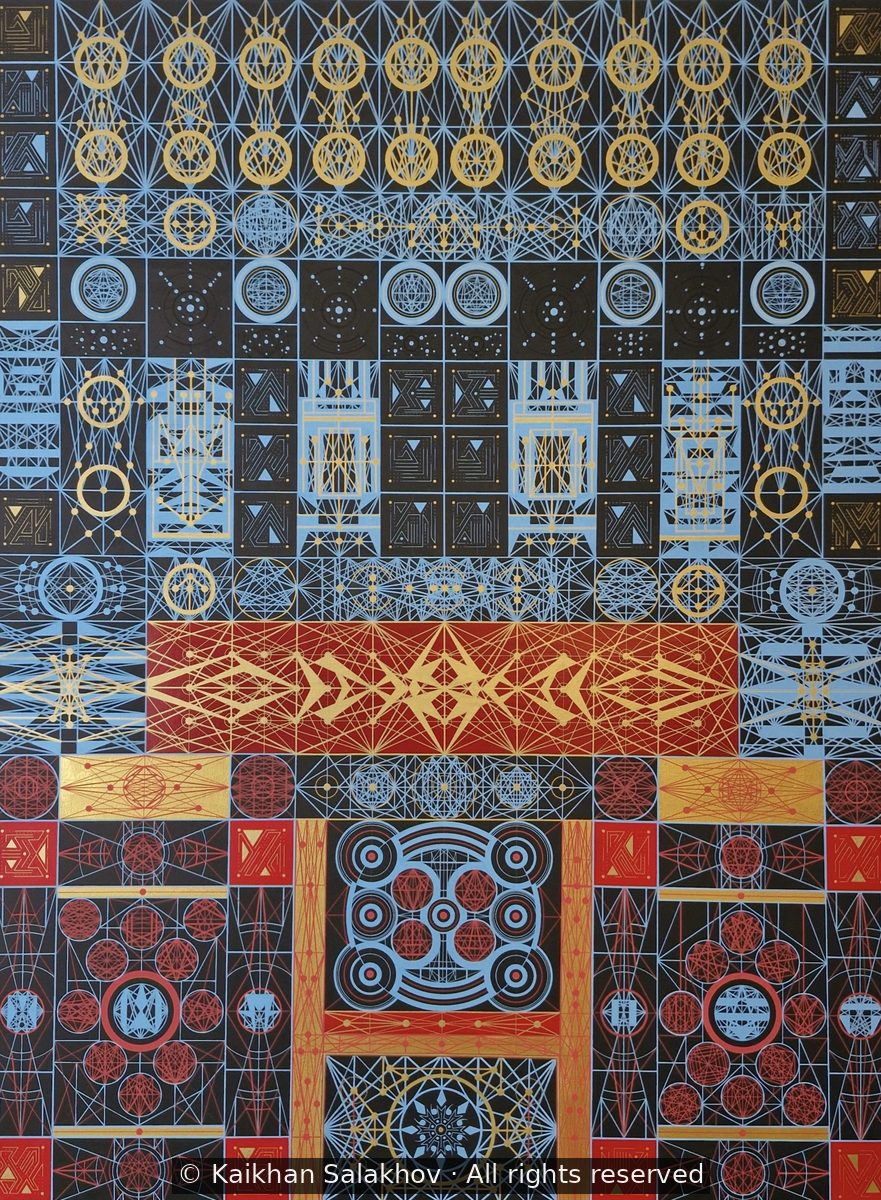
Cosmogeopolitics Across Life Forms
Political coordination, unequal resources and local autonomy under spatial separation and communication constraints.
Read the full painting meaning →This question examines political authority. The distribution of decision-making power can create conflicts between effective coordination and accountable authority. Its surrounding discussion also concerns quantum coherence: the proposed operation depends on preserving fragile quantum states and specifying how errors would be controlled.
The analytical issue is how these conditions affect decision rights, oversight, institutional responsibility, and mechanisms for challenging authority. The node treats the potential dysfunction as an open problem: its identification does not demonstrate that the anticipated outcome will occur or that an assumed technology is feasible.
Main problem
The distribution of decision-making power can create conflicts between effective coordination and accountable authority.
Central question
How should responsibilities be divided and reviewed so that coordination does not remove public accountability?
Analytical connections
Governance
For this political authority problem, governance examines decision rights, oversight, institutional responsibility, and mechanisms for challenging authority.
Physical Capability (Reach)
For this political authority problem, physical capability (reach) examines the spatial boundary of operations, dependence between locations, and delays affecting intervention.
Contact Disposition
For this political authority problem, contact disposition examines relations between groups, conflict escalation, cooperation, and responses to unfamiliar agents.
Worldview / Philosophy
For this political authority problem, worldview / philosophy examines assumptions about knowledge, identity, reality, and the criteria used to justify conclusions.
Consciousness / Psychology
For this political authority problem, consciousness / psychology examines subjective experience, identity, agency, and the psychological effects of the scenario.
Technology
For this political authority problem, technology examines the proposed mechanism, technical dependencies, control interfaces, and failure conditions.
Social Structure
For this political authority problem, social structure examines group membership, social differentiation, cohesion, and the distribution of roles.
Reliability / Systemic Resilience
For this political authority problem, reliability / systemic resilience examines cascading failure, redundant capacity, recovery procedures, and continuity of essential functions.
Original source prose and question wording remain in the book. The summary and central question are analytical restatements; the author’s complete wording remains in the cited source.
ASX positions and scientific context
- P4 scope
- C3 thematic relevance
- C6 thematic relevance
- C position: not established
- Speculative scenario
Physical scope and coordination themes describe fields of inquiry. They do not establish a measured capability or scientific validation.
Cross-domain dependencies
Conditional analytical comparisons; question-level access follows the parent discussion.
Embodiment, identity and recognition / Resource access and concentration of power / Long-term survival and intervention / System failure and recovery
Changes in embodiment, cognition or reproduction can challenge categories of identity and agency. Recognition rules and cultural expectations can then constrain access to enhancement, membership and protection. Unfamiliarity alone is not evidence of lesser moral status.
Unequal access to energy, technology, transport or information can create dependence and unequal bargaining power. Institutions and dominant operators may reinforce or reduce the same inequalities through allocation and access rules.
Assumptions about long-term environmental change influence preservation strategies and resource commitments. These scenarios compare choices under uncertain boundary conditions; proposed control over universal or multiversal processes is not established engineering.
A technical failure can propagate into dependent services and institutions when redundancy and recovery are insufficient. The comparison preserves the distinction between ordinary reliability problems and the speculative mechanisms in individual source scenarios.
ASX-65-001: Xenocultural Diversity on the Galactic Stage. Consciousness, Perception, and Regulatory Frameworks Around the Galaxy, pp. 617–619; ASX-75-012: Cosmocentric Diplomacy and the Inner Dynamics of Galactic Expansion within the Framework of Cosmogeopolism, pp. 754–755.
Open ASX-65-001Embodiment, identity and recognition / Long-term survival and intervention / System failure and recovery
Changes in embodiment, cognition or reproduction can challenge categories of identity and agency. Recognition rules and cultural expectations can then constrain access to enhancement, membership and protection. Unfamiliarity alone is not evidence of lesser moral status.
Assumptions about long-term environmental change influence preservation strategies and resource commitments. These scenarios compare choices under uncertain boundary conditions; proposed control over universal or multiversal processes is not established engineering.
A technical failure can propagate into dependent services and institutions when redundancy and recovery are insufficient. The comparison preserves the distinction between ordinary reliability problems and the speculative mechanisms in individual source scenarios.
ASX-65-002: Xenocultural Architecture and Technological Expression Throughout the Galactic Stage. An Indepth Look into Structural Aesthetics, Consciousness and Environmental Accommodation, pp. 619–622; ASX-75-012: Cosmocentric Diplomacy and the Inner Dynamics of Galactic Expansion within the Framework of Cosmogeopolism, pp. 754–755.
Open ASX-65-002Embodiment, identity and recognition / Resource access and concentration of power / System failure and recovery
Changes in embodiment, cognition or reproduction can challenge categories of identity and agency. Recognition rules and cultural expectations can then constrain access to enhancement, membership and protection. Unfamiliarity alone is not evidence of lesser moral status.
Unequal access to energy, technology, transport or information can create dependence and unequal bargaining power. Institutions and dominant operators may reinforce or reduce the same inequalities through allocation and access rules.
A technical failure can propagate into dependent services and institutions when redundancy and recovery are insufficient. The comparison preserves the distinction between ordinary reliability problems and the speculative mechanisms in individual source scenarios.
ASX-35-003: Simulations as a Means of Control and Subjugation, pp. 265–267; ASX-75-012: Cosmocentric Diplomacy and the Inner Dynamics of Galactic Expansion within the Framework of Cosmogeopolism, pp. 754–755.
Open ASX-35-003Embodiment, identity and recognition / Resource access and concentration of power / System failure and recovery
Changes in embodiment, cognition or reproduction can challenge categories of identity and agency. Recognition rules and cultural expectations can then constrain access to enhancement, membership and protection. Unfamiliarity alone is not evidence of lesser moral status.
Unequal access to energy, technology, transport or information can create dependence and unequal bargaining power. Institutions and dominant operators may reinforce or reduce the same inequalities through allocation and access rules.
A technical failure can propagate into dependent services and institutions when redundancy and recovery are insufficient. The comparison preserves the distinction between ordinary reliability problems and the speculative mechanisms in individual source scenarios.
ASX-45-013: Unknown Extraterrestrial Technologies Integration: Challenges and Opportunities on the Galactic Stage, pp. 366–368; ASX-75-012: Cosmocentric Diplomacy and the Inner Dynamics of Galactic Expansion within the Framework of Cosmogeopolism, pp. 754–755.
Open ASX-45-013Embodiment, identity and recognition / Long-term survival and intervention
Changes in embodiment, cognition or reproduction can challenge categories of identity and agency. Recognition rules and cultural expectations can then constrain access to enhancement, membership and protection. Unfamiliarity alone is not evidence of lesser moral status.
Assumptions about long-term environmental change influence preservation strategies and resource commitments. These scenarios compare choices under uncertain boundary conditions; proposed control over universal or multiversal processes is not established engineering.
ASX-55-015: An AQAL Introduction to Galactic Systems of Diplomacy and Legality. A Gateway Toward Universal Harmony and Cooperation, pp. 497–498; ASX-75-012: Cosmocentric Diplomacy and the Inner Dynamics of Galactic Expansion within the Framework of Cosmogeopolism, pp. 754–755.
Open ASX-55-015Long-term survival and intervention / System failure and recovery
Assumptions about long-term environmental change influence preservation strategies and resource commitments. These scenarios compare choices under uncertain boundary conditions; proposed control over universal or multiversal processes is not established engineering.
A technical failure can propagate into dependent services and institutions when redundancy and recovery are insufficient. The comparison preserves the distinction between ordinary reliability problems and the speculative mechanisms in individual source scenarios.
ASX-25-003: Real-time Remote Governing of Star System Boundaries, pp. 139–140; ASX-75-012: Cosmocentric Diplomacy and the Inner Dynamics of Galactic Expansion within the Framework of Cosmogeopolism, pp. 754–755.
Open ASX-25-003Resource access and concentration of power / Long-term survival and intervention
Unequal access to energy, technology, transport or information can create dependence and unequal bargaining power. Institutions and dominant operators may reinforce or reduce the same inequalities through allocation and access rules.
Assumptions about long-term environmental change influence preservation strategies and resource commitments. These scenarios compare choices under uncertain boundary conditions; proposed control over universal or multiversal processes is not established engineering.
ASX-25-008: The Galactic Mosaic. Different Trails of Perception and Form, pp. 142–143; ASX-75-012: Cosmocentric Diplomacy and the Inner Dynamics of Galactic Expansion within the Framework of Cosmogeopolism, pp. 754–755.
Open ASX-25-008Resource access and concentration of power / Long-term survival and intervention
Unequal access to energy, technology, transport or information can create dependence and unequal bargaining power. Institutions and dominant operators may reinforce or reduce the same inequalities through allocation and access rules.
Assumptions about long-term environmental change influence preservation strategies and resource commitments. These scenarios compare choices under uncertain boundary conditions; proposed control over universal or multiversal processes is not established engineering.
ASX-35-002: Simulating Entire Galaxies and Digital Universes, pp. 264–265; ASX-75-012: Cosmocentric Diplomacy and the Inner Dynamics of Galactic Expansion within the Framework of Cosmogeopolism, pp. 754–755.
Open ASX-35-002Resource access and concentration of power / Long-term survival and intervention
Unequal access to energy, technology, transport or information can create dependence and unequal bargaining power. Institutions and dominant operators may reinforce or reduce the same inequalities through allocation and access rules.
Assumptions about long-term environmental change influence preservation strategies and resource commitments. These scenarios compare choices under uncertain boundary conditions; proposed control over universal or multiversal processes is not established engineering.
ASX-45-012: Education and Knowledge across the Galaxy: Strategies in Dealing with Diversity of Civilizations, Consciousness Stages, and Power Relations, pp. 364–366; ASX-75-012: Cosmocentric Diplomacy and the Inner Dynamics of Galactic Expansion within the Framework of Cosmogeopolism, pp. 754–755.
Open ASX-45-012Resource access and concentration of power / Long-term survival and intervention
Unequal access to energy, technology, transport or information can create dependence and unequal bargaining power. Institutions and dominant operators may reinforce or reduce the same inequalities through allocation and access rules.
Assumptions about long-term environmental change influence preservation strategies and resource commitments. These scenarios compare choices under uncertain boundary conditions; proposed control over universal or multiversal processes is not established engineering.
ASX-55-014: Navigating the Galactic Mosaic. The Integration of Diverse Civilizations — Stages of Consciousness, Technological Development, and Cosmic Perspective, pp. 494–497; ASX-75-012: Cosmocentric Diplomacy and the Inner Dynamics of Galactic Expansion within the Framework of Cosmogeopolism, pp. 754–755.
Open ASX-55-014Associated paintings
- Astral Space Exploration: The Hidden Treasure
- Astral Space Exploration: The Cosmic Enlightenment
- Astral Space Exploration: Successive Stages of The Evolution of Space Civilization Part I
- Astral Space Exploration: Successive Stages of The Evolution of Space Civilization Part II
- Astral Space Exploration: Successive Stages of The Evolution of Space Civilization Part III
- Astral Space Exploration: Successive Stages of The Evolution of Space Civilization Part IV
- Cosmogeopolitics Across Life Forms
Source organization
- part of: ASX-75-012
Citation
Kaikhan Salakhov (2024). Astral Space Exploration: The Cosmic Renaissance: The Fundamental Principles of Cosmocybernetics. Part VII, “Astral Space Exploration Grid: Cosmogeopolism Through Stages of Development”; Chapter 5, “The Galactic Stage”; discussion: “Cosmocentric Diplomacy and the Inner Dynamics of Galactic Expansion within the Framework of Cosmogeopolism”; question 5, p. 755. Page references follow the supplied 852-page edition; pagination in other editions may differ. Library reference: ASX-75-012-Q05. https://www.asxgrid.app/library/records/ASX-75-012-Q05.html
Page references follow the supplied 852-page edition; pagination in other editions may differ..
Book publication: . Map created: . Map revised: .